
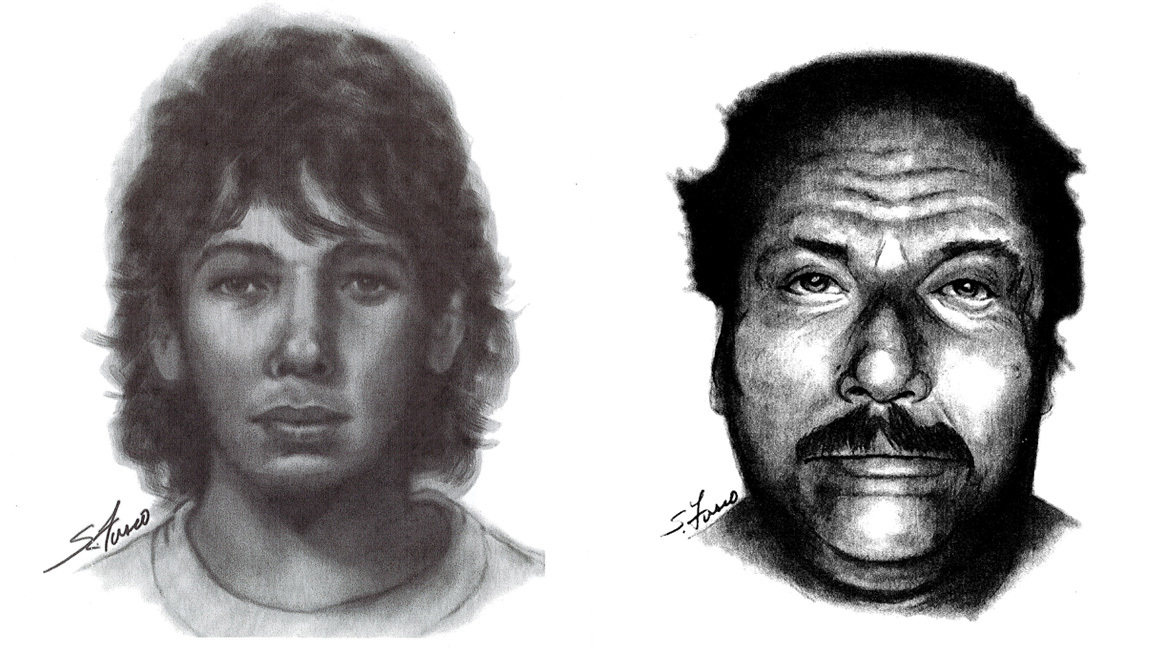
Orlando police recently used DNA technology to identify a teenager and a man found dead in the city decades ago, solving two separate cold cases, the department announced Monday.
Detectives with the Orlando Police Department were able to identify Vincent Todd Peterson, 16, whose body was found at a downtown Orlando construction site in 1982 and Keith Lloyd Landis, 49, whose remains were found in a field in southwest Orlando in 1996, the agency said in a news release.
The two were finally identified using advances made in genealogy and forensics, along with help from their families, the department said.
“Every unidentified person deserves to have their name restored. These cases demonstrate that no matter how much time has passed,” the agency said, “we remain committed to seeking the truth, utilizing the latest forensic technology, and providing answers to families who have waited decades for closure.”
Peterson’s body was found June 8, 1982 at the bottom of an elevator shaft at the construction site of what was then downtown Orlando’s 16-story Atlantic Bank building on the corner of Orange Avenue and Central Boulevard.
The Orlando Sentinel reported at the time that police said he apparently fell to his death. Police at thought the victim was in his 20s but noted there was no identification found on his body.
A list of missing Florida teenagers included in a 1985 Palm Beach Post story provided information about Peterson, including his “long redish blond hair.” The story noted Peterson had been reported missing in June, 1982 — the month his body was found — and that the teenager was last seen in Orlando.
OPD said Monday that his body was identified with the help of DNA given by his family and that there were no apparent signs of foul play.
Landis’ body was found Sept. 15, 1996, lying face down in a field on Middlebrook Road. There were no apparent signs of trauma, and it was determined that he died of natural causes.
The case remained closed for nearly 30 years until advanced DNA testing led investigators to his family. His identity was confirmed through a DNA comparison with his sister, Laura Landis, who said she hadn’t heard from him since the mid-1990s.
“Because of the hard work of everyone involved in this cold case, we finally received the answers and peace we had longed for after 30 years of questions, worries, and uncertainty,” Landis said in a statement released by the police department. “Our family now has a sense of relief, closure, and gratitude that we will be forever grateful for.”