
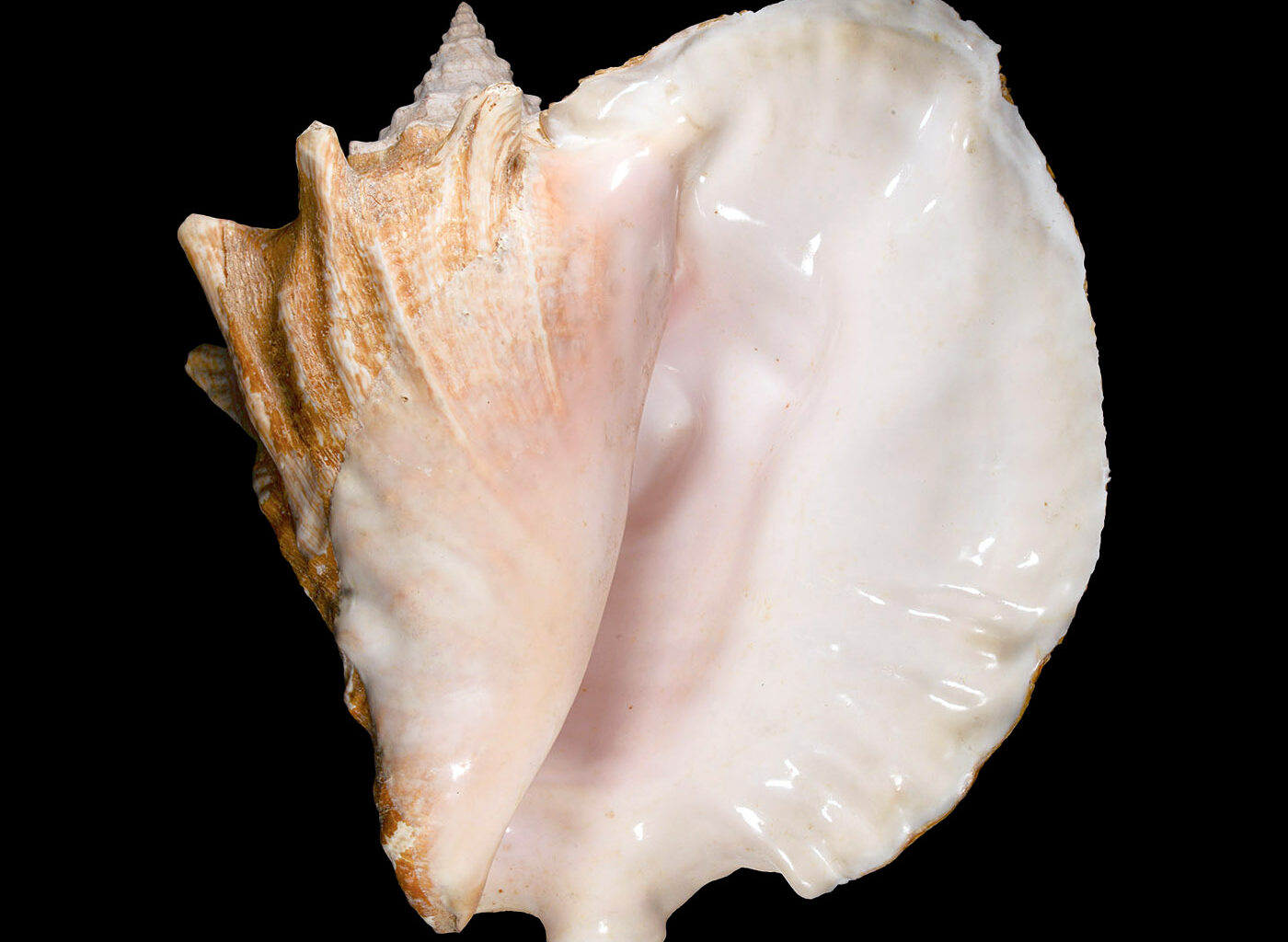
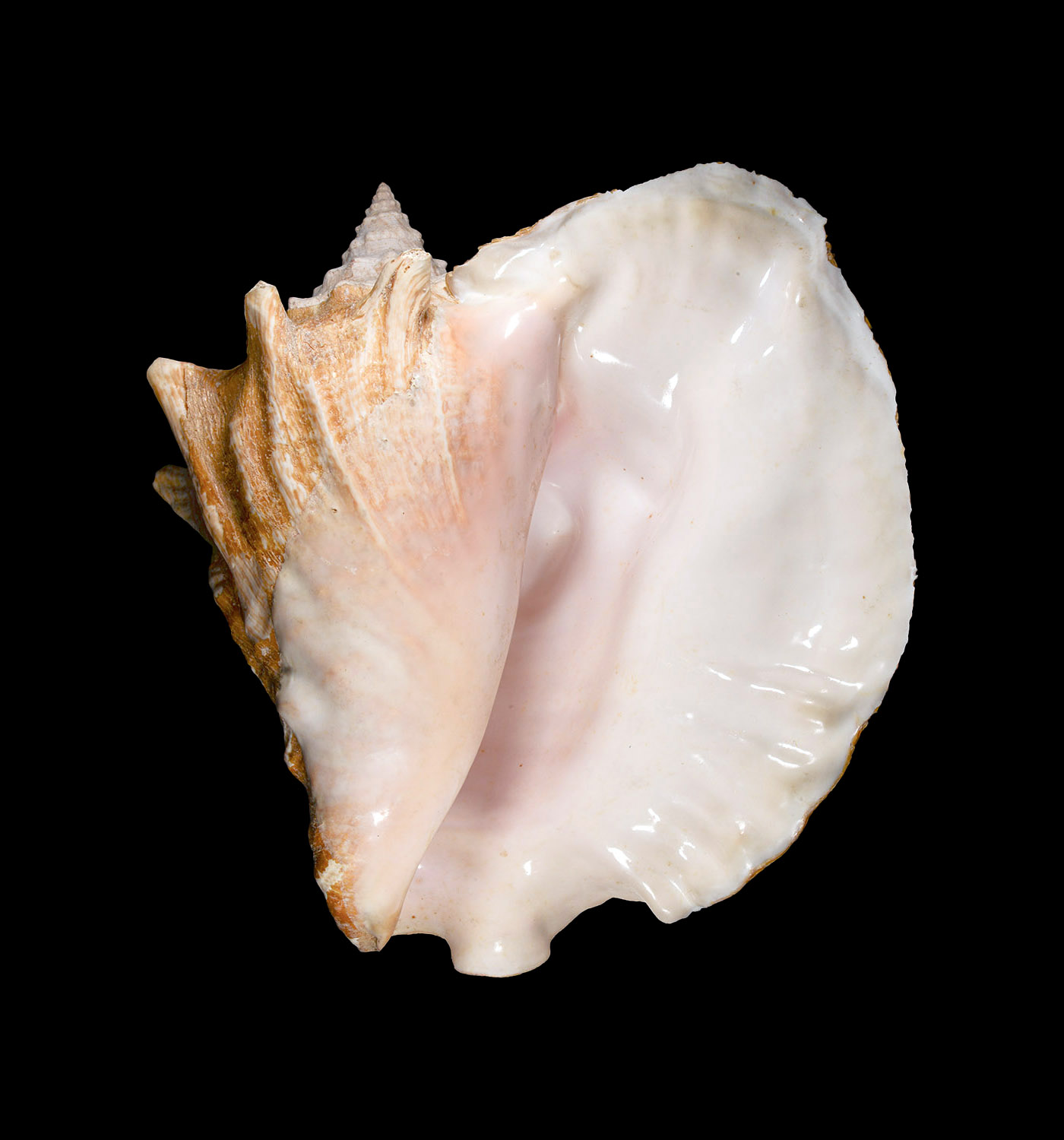
The Queen Conch, aliger gigas, is a gastropod whose fossils date back 40 million years. -BAILEY-MATTHEWS NATIONAL SHELL MUSEUM / COURTESY PHOTO
It’s a simple question: What if the bald eagle had become extinct- what would the American Republic for which it stands, have done?
Saved by the 1973 federal Endangered Species Act, the bald eagle population once dwindled to 417 breeding pairs, ornithologists have said. Now the species thrives, and Americans don’t have to find out the answer to that question.
But increasingly, Floridians are asking the same fraught question about the queen conch. And some have now jumped into an unwanted but necessary court fight to save it. They are hoping to force the responsible federal agency to do a lot more than merely list the queen conch as threatened.
Government agencies are obligated by the Endangered Species Act not only to list a species as threatened based on carefully assembled data, but also to determine its habitat and act to protect it. This seemingly sensible rule was what it took to save the bald eagle (along with a permanent ban on DDT, among other conservation actions). And it worked. In 2007, the eagle was removed from the list of species that must be protected under the Endangered Species Act, essentially a 30-year rescue.
What about the queen conch, a creature once common from Caribbean islands into the Keys? Its healthy populations hugged the Atlantic coast north of Monroe County through Miami-Dade, Broward and Palm Beach and as far as the St. Lucie Inlet in Martin County.
Not now.
“What the National Marine Fisheries Service failed to do is, after designating the queen conch as threatened under the Endangered Species Act, they’re required within one year to designate critical habitat,” said Alex Muir, an attorney for the Center for Biological Diversity.
“They didn’t do that and haven’t done it. In February of 2024, they listed it, so we’re almost one-and-a-half years past that deadline.”
Alex Muir is an attorney with the Center for Biological Diversity. -COURTESY PHOTO
And now, in one of the last robust and reproducing populations of the queen conch in Florida or the United States — on the sea bottom around Port Everglades, near where staghorn coral also thrives — a Broward County “Port Everglades inlet sand bypass project” to replenish beaches with offshore sand, and a related project to deepen Port Everglades for bigger ships, are well along in the permitting phases.
If those projects are finally undertaken, widespread plumes of sediment from the dredging could also threaten the last healthy staghorn coral reef in the United States.
As for the now-threatened queen conch, the work would almost certainly destroy the surrounding habitat that supports healthy reproducing populations, marine scientists say. All of it could happen in part because the responsible government agency has not designated any habitat for protection.
Consequently, last month, the Center for Biological Diversity filed suit against the National Marine Fisheries Service. The Service is part of NOAA, the National Oceanic and Atmospheric Administration.
Then, in an unexpected turn of events last week, the Army Corps of Engineers, which permits the dredging, put a temporary halt on it, warning it could resume as early as November.
Muir joined four other organizations working to save the queen conch and staghorn coral in an announcement.
“The U.S. Army Corps of Engineers has agreed to halt authorization of all dredging activity for Broward County’s Port Everglades Inlet Sand Bypass Project,” the public notice said.
“The Corps acknowledged…the project may (kill) threatened staghorn coral. The Corps agreed to consult with the National Marine Fisheries Service to assess…ways to minimize ecological damage.”
Those signing the public announcement also included Earthjustice, an environmental law nonprofit, Miami Waterkeeper, a nonprofit at the front of the fight to save the staghorn coral reef, the Florida Wildlife Federation, another nonprofit, and the Diving Equipment and Marketing Association.
“I hope the Army Corps’ decision to stop dredging for now is a good sign that the federal government is ready to take the conservation of Florida’s coral and queen conch seriously,” said Muir.
“After months of ignoring the need for improved protections for these corals, the agencies have finally acknowledged that the alarm bells we raised were justified,” said CEO, Miami Waterkeeper Rachel Silverstein, PhD.
But the outcome is still uncertain, and the threat remains, the advocates say.
Dr. Rachel Silverstein. -COURTESY PHOTO
Why? Why haven’t scientists at NOAA Fisheries, as they call it, designated habitat for protection, as NOAA once did for the bald eagle?
One of them, Orian Tzadik, Ph.D., said he was traveling and referred Florida Weekly’s questions to a NOAA spokeswoman, Allison Garrett.
She pointed to NOAA’s longstanding written statement about the matter: “We conclude that critical habitat is not yet determinable because data sufficient to perform the required analysis are lacking; any critical habitat designation would be proposed in a separate, future rulemaking.”
No data. That’s one thing, but not a small thing, because the government has also introduced the word “extinction.”
“We, NOAA Fisheries, are listing the queen conch as a threatened species under the Endangered Species Act (ESA),” the official statement from the beginning of 2024 said.
“We have completed a review of the status of queen conch, including efforts being made to protect the species (and) determined that the queen conch is not currently in danger of extinction…but…likely to become so within the foreseeable future.”
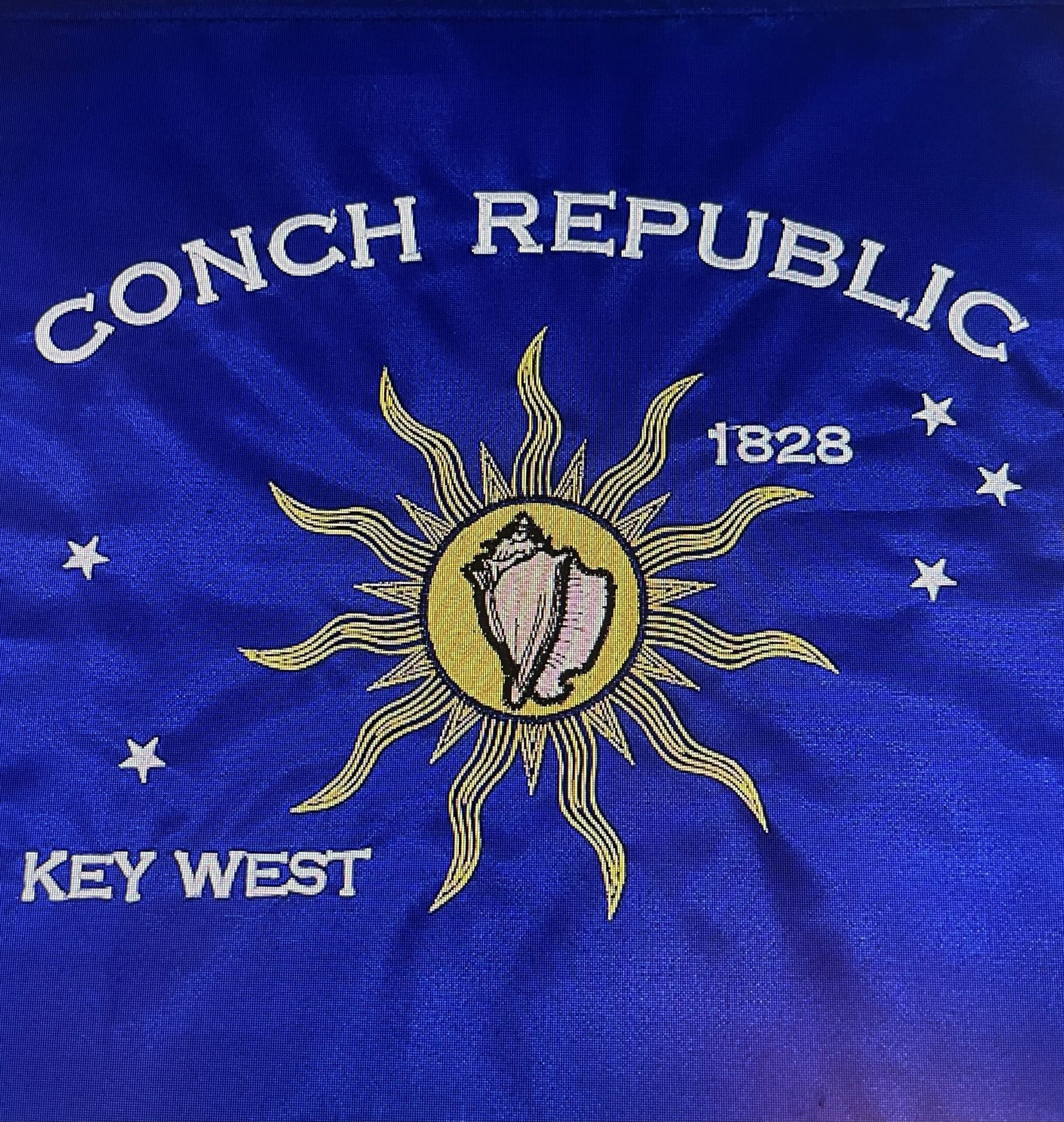
The flag of the Conch Republic. -ROGER WILLIAMS / FLORIDA WEEKLY
Likely to become in danger of extinction within the foreseeable future? That won’t do in the Conch Republic.
The native conch view
Jordan Mannix-Lachner is a Conch by heritage (with a capital “C” for the people culture). By vocation, she’s also the executive director of Keys Last Stand, “a nonprofit advocacy organization working to protect the unique environment and character of the Florida Keys through advocacy, public education and coalition-building (www.keyslaststand.org).”
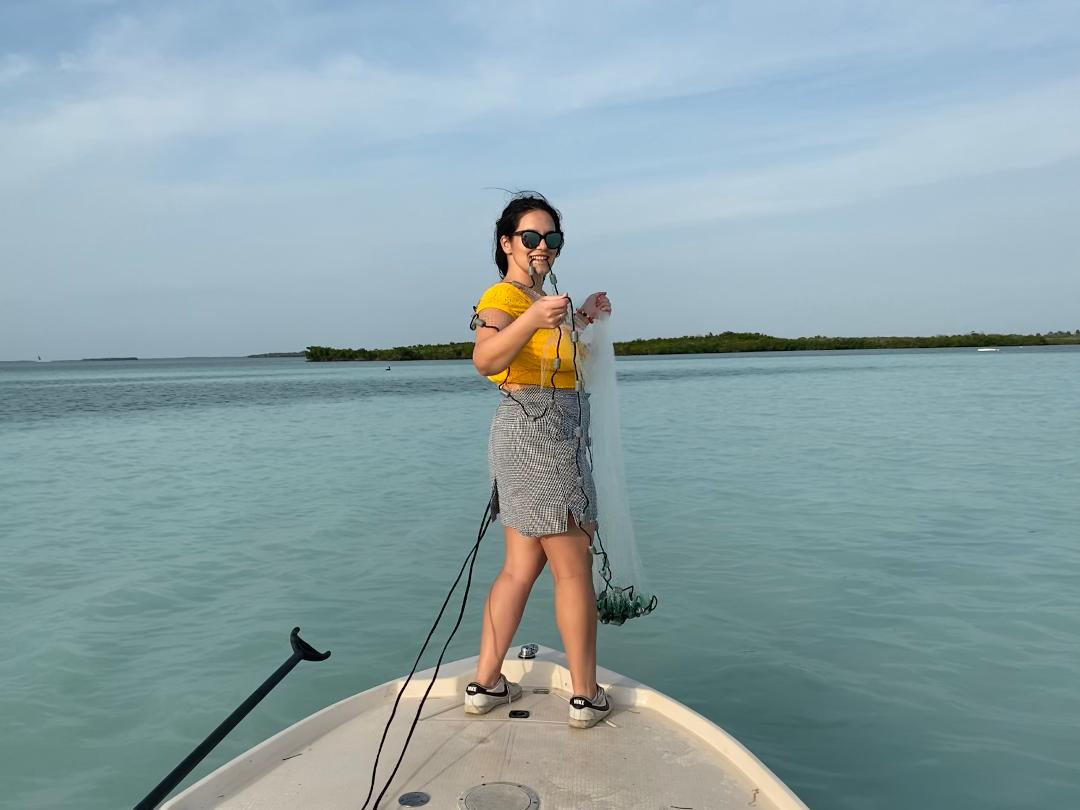
Jordan Mannix-Lachner is the executive director of Keys’ Last Stand. -COURTESY PHOTO
That means she takes on issues of land use, water quality and development, but she also faces challenges confronting the character, the temperament, and the hope and wonder inspired in Key West residents and their numerous visitors by the planet’s inexplicable beauty.
An outsized sea snail, the magnificent marine gastropod is the icon of the “Conch Republic,” the playful sobriquet Key West adopted almost 45 years ago in 1982, when it “seceded where others have failed.”
Without a civil war, apparently.
“I was born and raised on Key West. If you’re born here, you’re called a (saltwater) Conch — it’s a cultural identity,” she explains.
It’s also a real and literal thing.
As long as a football and weighing as much as a cast-iron skillet, about 5 pounds fully matured, the queen conch has provided so much substantial food to the people and culture of the Keys — conch fritters and conch chowder are de rigueur for most tourists — it’s been harvested from Florida waters into near non-existence, a creature now protected for four decades by the current no-harvest rule.
Its beauty may sometimes prove an ironic danger, too, enticing shell collectors to revere it as a prized prize. The spreading cleft of the shell’s smooth opening is so alluring it takes on the pink blush of delicate warm flesh lacquered in a timeless sheen, or the most captivating salmon-hued sunset. But the shell itself is as hard as concrete.
As a child and teenager, Mannix-Lachner was often either in boats or out of them, snorkeling and diving. Naturally, she saw queen conchs all the time, but always as special discoveries — a magic of sorts, she recalls.
“It was always so amazing to find one, because we’re so connected with that word. We’re Conchs. So, you’re seeing a symbol of your environment.”
Since before she was born — since the mid- 1980s when Florida established a zero-harvest rule for queen conchs — they had some protection from overfishing in the Sunshine State. But the population continued to suffer a decline.
And now seeing them is rare, she acknowledges.
“Now, as an adult, when we find a conch out on the boat, anybody on any boat, everybody stops and turns into a child again. Everybody gathers around.”
That’s not a moment that brings undiluted happiness and pleasure, for her or many others. It also carries anxiety and a faint dread, perhaps.
“You see them less and less, but you see everything less and less, now,” she says.
“It’s symbolic here in the Keys. Kind of like, if the queen conch is going extinct, it’s starting to become a symbol of our fate. If we can’t protect the species that has defined us, what does that say about us?”
The lay of the land — and sea
José Leal, Ph.D., is curator of the highly regarded Bailey-Matthews National Shell Museum on Sanibel Island. He’s also an optimist, he says, adding an “if” — he remains optimistic that the queen conch can be lifted out of its extinction vortex if agencies and private citizens together do their jobs and fulfill their responsibilities.
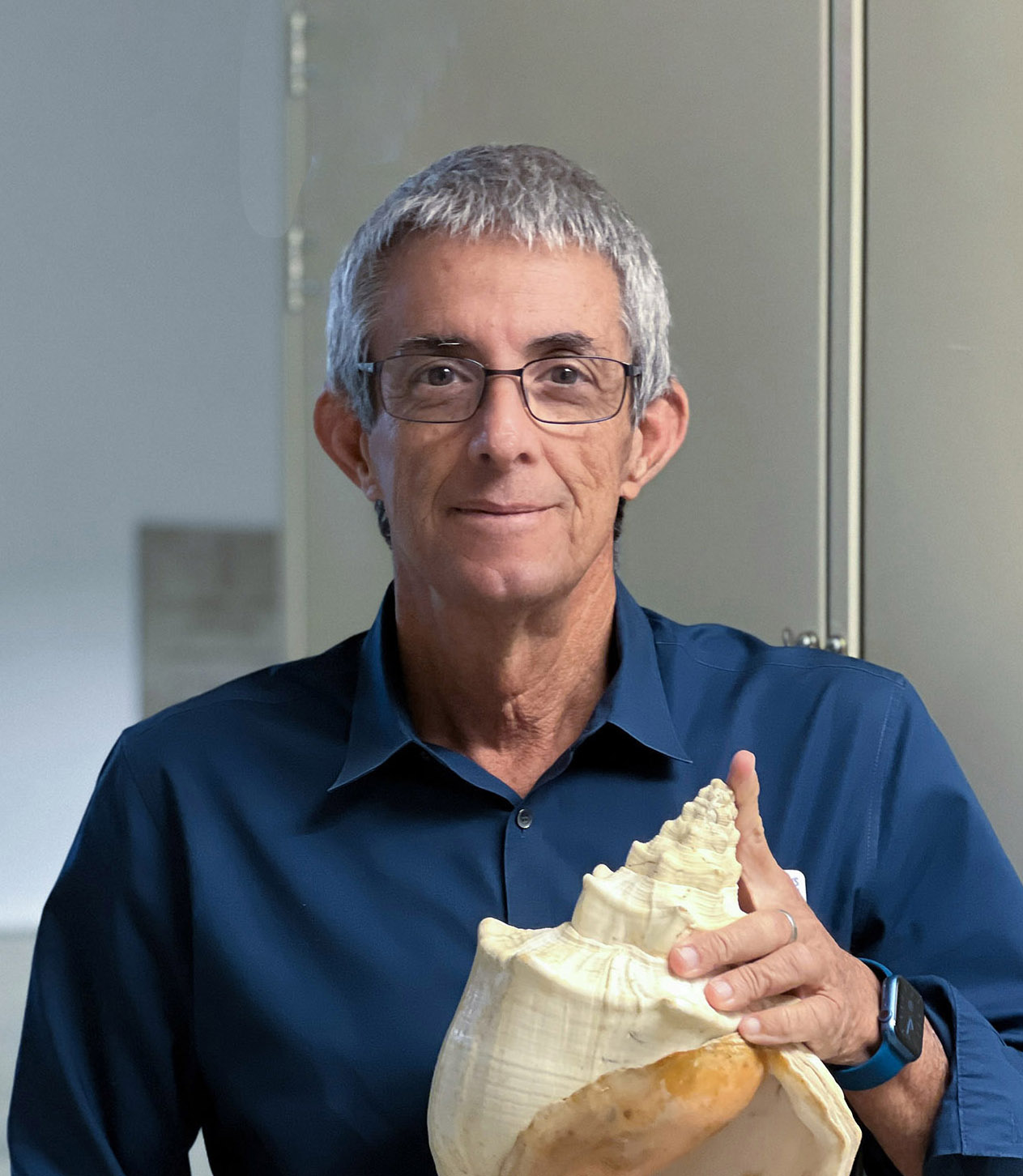
José H. Leal, PH.D., is the curator and director of the Bailey-Matthews National Shell Museum. -COURTESY PHOTO
“The queen conch is a majestic species that deserves protection locally and in other areas of its distribution,” he says. “It started to recover in some parts of South Florida after decades of targeted protection. So, it’d be a shame to see the species extirpated by dredging and sediment pollution.
“I think it can be restored — if more areas devote efforts to protect the species locally. In Florida, you have a pretty large area…it cannot be just one small area. But in the Port Everglades situation, they have to stop the dredging they’re planning.”
Protection and restoration won’t be easy because the challenges are not single or simple.
“The main threat is they were overharvested for decades,” says Muir. “They also face pollution, ocean acidification, climate change (with near-shore waters too hot for them to effortlessly reproduce through much of the Keys), hurricanes and now the impact of sediment pollution from dredging and offshore construction.”
The harvesting continues with some spotty protections in the Caribbean, but it was devastating to the population in the Keys some 60 years ago.
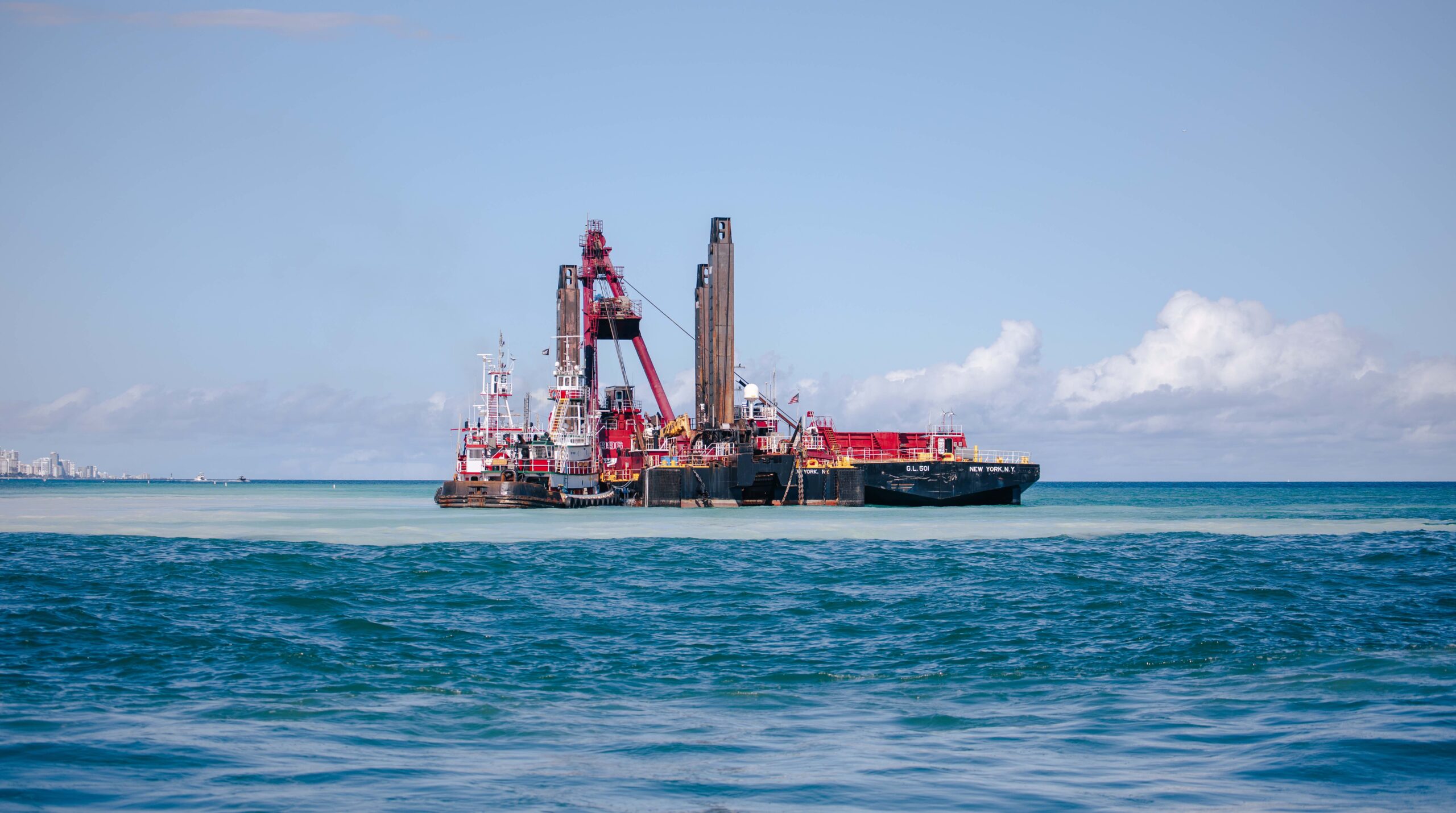
Dredging equipment at Port Everglades creates sprawling clouds of sediment that could kill coral and conch. -COURTESY PHOTO
In the 1960s in Key West alone, the National Wildlife Federation (NWF) says, the harvest amounted to about 250,000 conchs each year. The Florida moratorium on conch harvests, with a total ban beginning in 1985, only created greater demands from a hungry market elsewhere in the Caribbean, including Honduras, Belize and Jamaica.
That hasn’t abated. Between January and April of 2024 alone, 2,250,000 pounds of queen conch meat were sold in the United States, according to an NWF report that used U.S. Census data.
As much as that is, it was also 13.5% less than in the previous year because populations are diminishing across the Caribbean, too, as NOAA fisheries suggests.
For James Douglass, Ph.D., marine ecologist and professor in The Water School at Florida Gulf Coast University, that’s the major problem — human appetite.
“The biggest threat I’m aware of is overharvesting,” he says. “They’re easy to pick up off the bottom for anybody with mask and snorkel.”
Or they used to be.
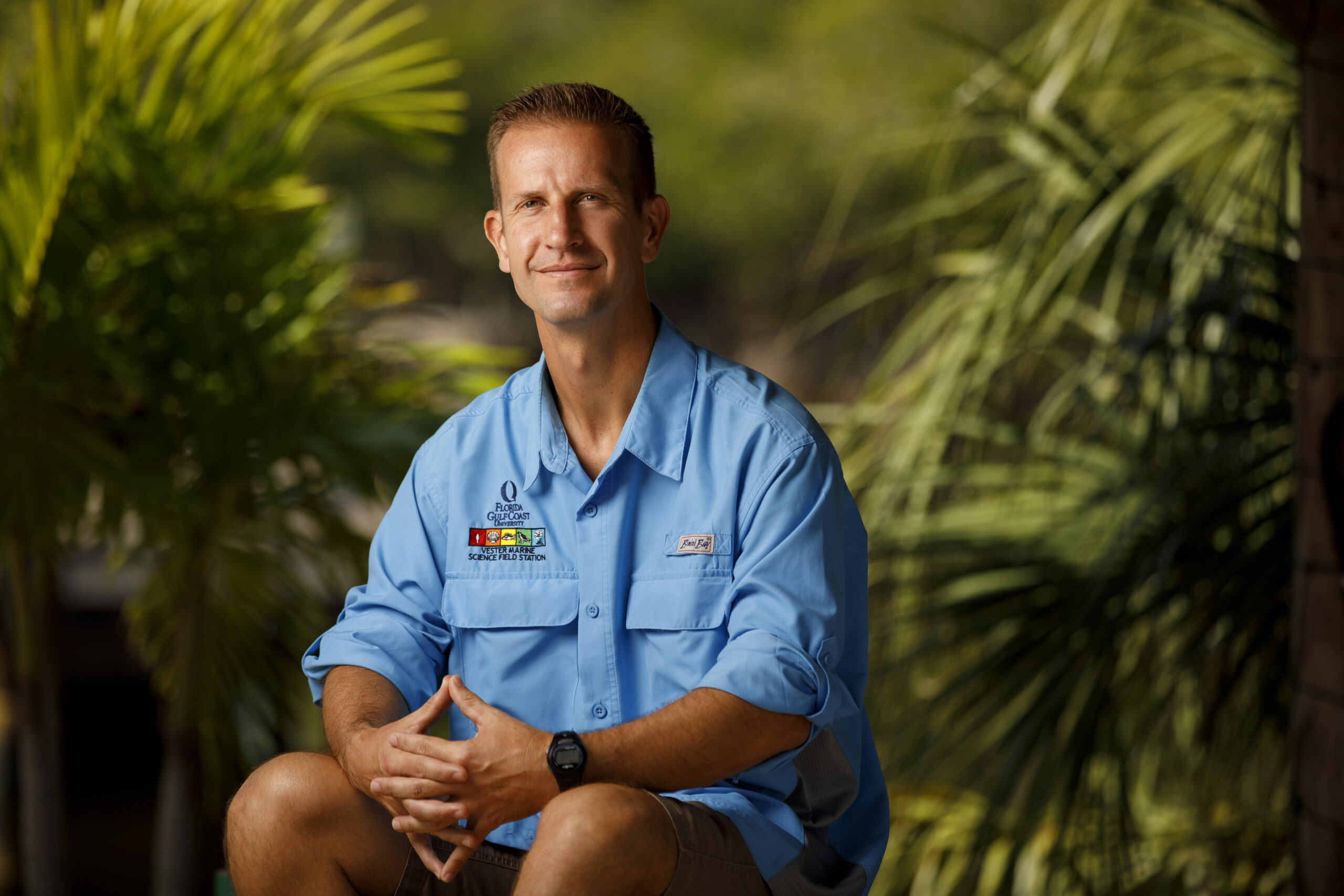
James Douglass. -BRIAN TIETZ / COURTESY PHOTO
“The only reason there’s any at all left here is the no-harvest rule,” Douglass says.
“But you go down to the Keys, and you get conch fritters or conch chowder — and they’re not coming from Florida anymore, they’re coming from our neighbors around the Caribbean. So, we’re nostalgic. We’re protecting our own, but our appetites are still depleting our neighbors’ populations.”
So now the market puts great pressure on Caribbean sources because the chowder and the fritters keep coming at prices residents and travelers alike seem willing to pay.
In Key West, restaurants offer fritters in the $9 and up range. The price can increase significantly depending on how far north you travel.
At one restaurant on Long Island, New York, a dozen conch fritters went for $25.
What to know about queen conchs
As this gastropod has probably been around since it first began appearing in the fossil record some 40 million years ago, queen conchs are strict vegetarians who rely on a lot of sex.
“After mating in aggregate,” explains the National Wildlife Federation, “females lay hundreds of thousands of eggs up to nine times a year on the seafloor, where they mature and hatch on their own.”
If that sounds like a little much, it isn’t for this species.
“Facing predators from small fish to octopuses, loggerhead sea turtles and spiny lobsters as they grow, the conch’s mortality rate is exceedingly high.” But under healthy conditions, not as high as their production.
One scientist pointed out that the ratio between larvae produced in the water and adult conchs is 4,000 to 1. If it escapes the larval stage, it can live as long as 30 years.
A problem NOAA scientists may face when trying to designate habitat to protect, as they’re required to do, is that larvae drift with the currents. That process starts, explains José Leal, “when the male penetrates the female, and after a brief period she releases eggs into the water. It takes 20 to 40 days for them to settle to the bottom, and during that time they can move this way or that way, depending on the currents.”
As a result, larvae produced in a healthy population near Port Everglades or the St. Lucie inlet — about as far north in Florida as they go — or near an island in the Caribbean, may end up as functioning adults in a distant setting.
“That’s why queen conch management is so problematic,” Leal explains. By solving that problem, however, by protecting both the creature and the habitat, “you’re protecting an entire ecosystem.”
Another problem may simply be that in the first 18 months of the second Trump administration in Washington, as many as 1,900 or about 16% of 12,000 NOAA employees were laid off, government observers estimate. Those included scientists who might have produced the data that allowed NOAA Fisheries to pin down a geographic range for habitat protection.
In any of its habitats, the queen conch is the maestro of cleanup, it seems, operating with two eyeballs, each mounted at the end of an eyestalk, and a mouth on a tube that it moves around like a vacuum. It primarily eats algae and the clinging plants, the epiphytes, on seagrass.
So, conchs clean the coral reefs, Douglass explains, thriving in clear shallow water 5 to 30 feet in depth, and in temperatures ranging from 77 degrees Fahrenheit to 88F.
Thus, the heated waters of the shallows through the Keys in 2023, the hottest in recorded history, did them no favors. Unfortunately, this year is said to be on track for waters at least as hot.
What all this means for the future still remains to be seen.
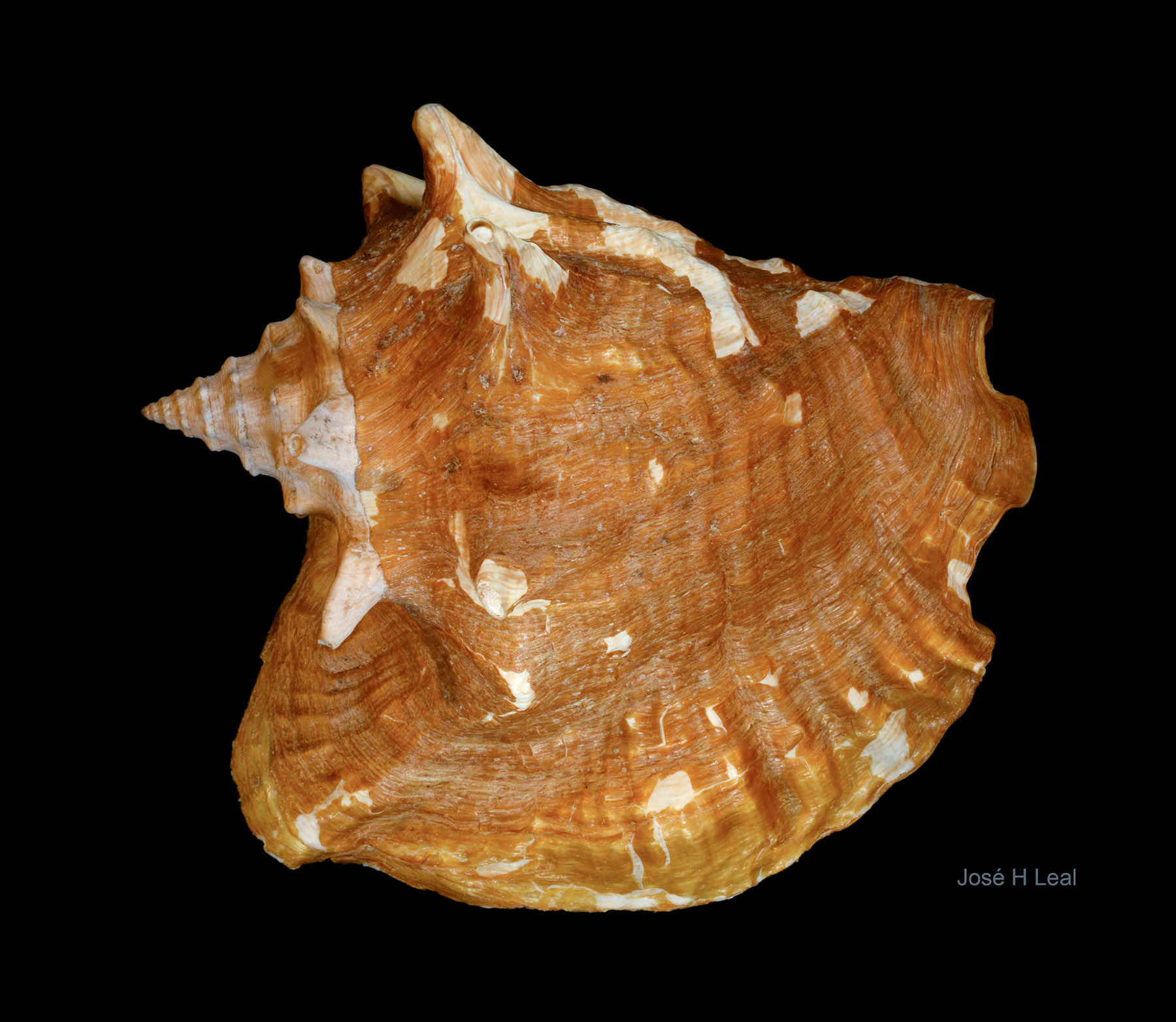
NOAA Fisheries listed the queen conch as a threatened species under the Endangered Species Act. -JOSÉ H. LEAL, PH.D. / COURTESY PHOTO
A queen conch assigned the extinction tag is uncomfortably like a canary in a coal mine that can’t breathe, or a bald eagle that no longer soars over river or mountain.
“If bald eagles disappeared, they would still be there as a symbol of the United States, but the meaning would change,” Mannix-Lachner says. “They’d be a symbol of a tragedy.”
Sometimes, she concludes, “it almost feels like we’re living in the epilogue (of our story), but we don’t realize it. Nature has realized the trend in our fate, but we haven’t.”
She introduces an “if” too, like Leal the optimist. But hers arrives in a sobering understatement.
There likely wouldn’t be words for her grief, so she puts it this way.
“If we lost the queen conch, psychologically it would be really impactful for everybody.”
IN THE KNOW:
INFO: Keys Last Stand
www.keyslaststand.org.
INFO: Center for Biological Diversitywww.biologicaldiversity.org
INFO: Bailey-Matthews National Shell Museum
www.shellmuseum.org, 239-395-2233
INFO: Port Everglades dredging story: www.floridaweekly.com/articles/fort-myers-arts-and-entertainment-news/fort-myers/bonita-springs/reef-at-risk-2/).