
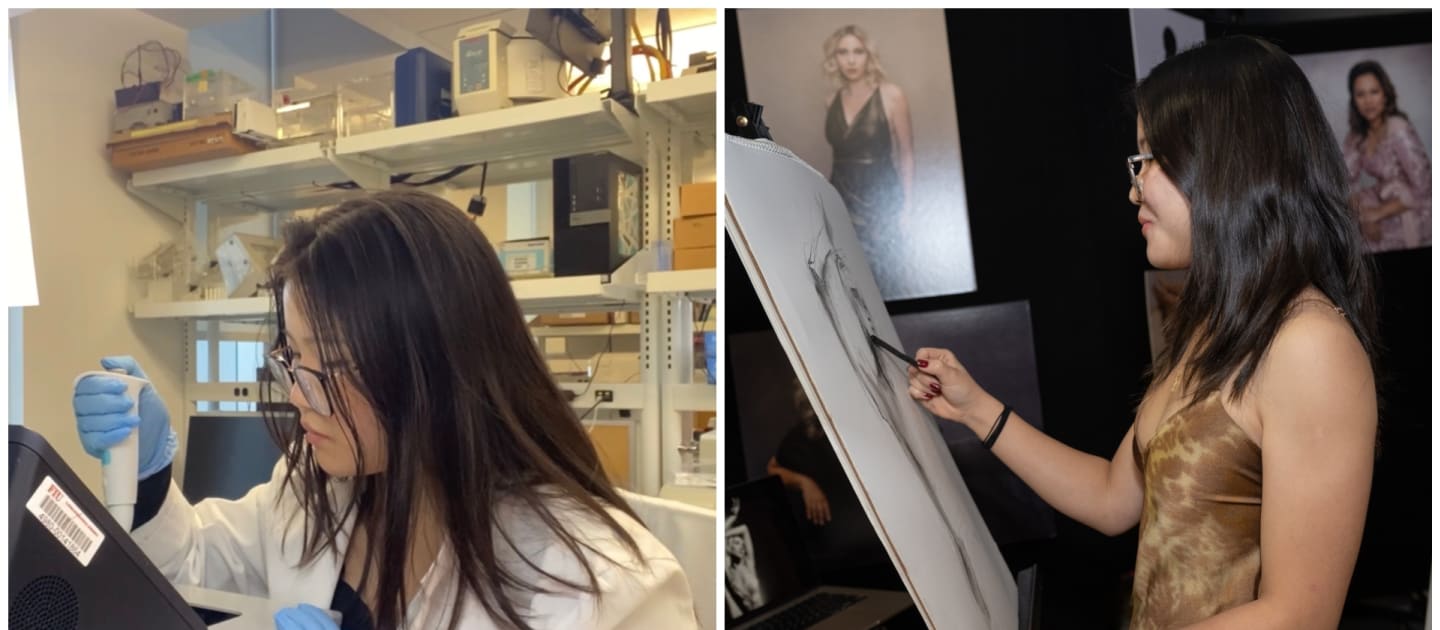
Lulu Perez ‘26 is a behavioral neurosciences alumna. She is a researcher in an FIU lab that investigates how complex sugars can regulate immune and cancer cell function and slow cancer progression.
She is also an artist.
Perez attended an arts-focused school, where she learned to paint in traditional mediums like acrylic, oil and watercolors, as well as digital mediums. She has created fine art, which her mom proudly displays in their home.
Her work has also been displayed in larger venues: the Lowe Art Museum and the Baker Art Museum. She also received the National Society for Arts and Letters scholarship and the Arts for Life! Scholarship, an annual Florida program that recognizes artistic excellence.
Perez wasn’t sure that producing art would be part of her college journey, though. Her goal is to be a doctor, and her diligence at FIU took her to the lab of Charles Dimitroff, a professor in the Herbert Wertheim College of Medicine and a recognized leader in glycobiology. Perez has been working as a research assistant in the lab since she was an undergraduate student.
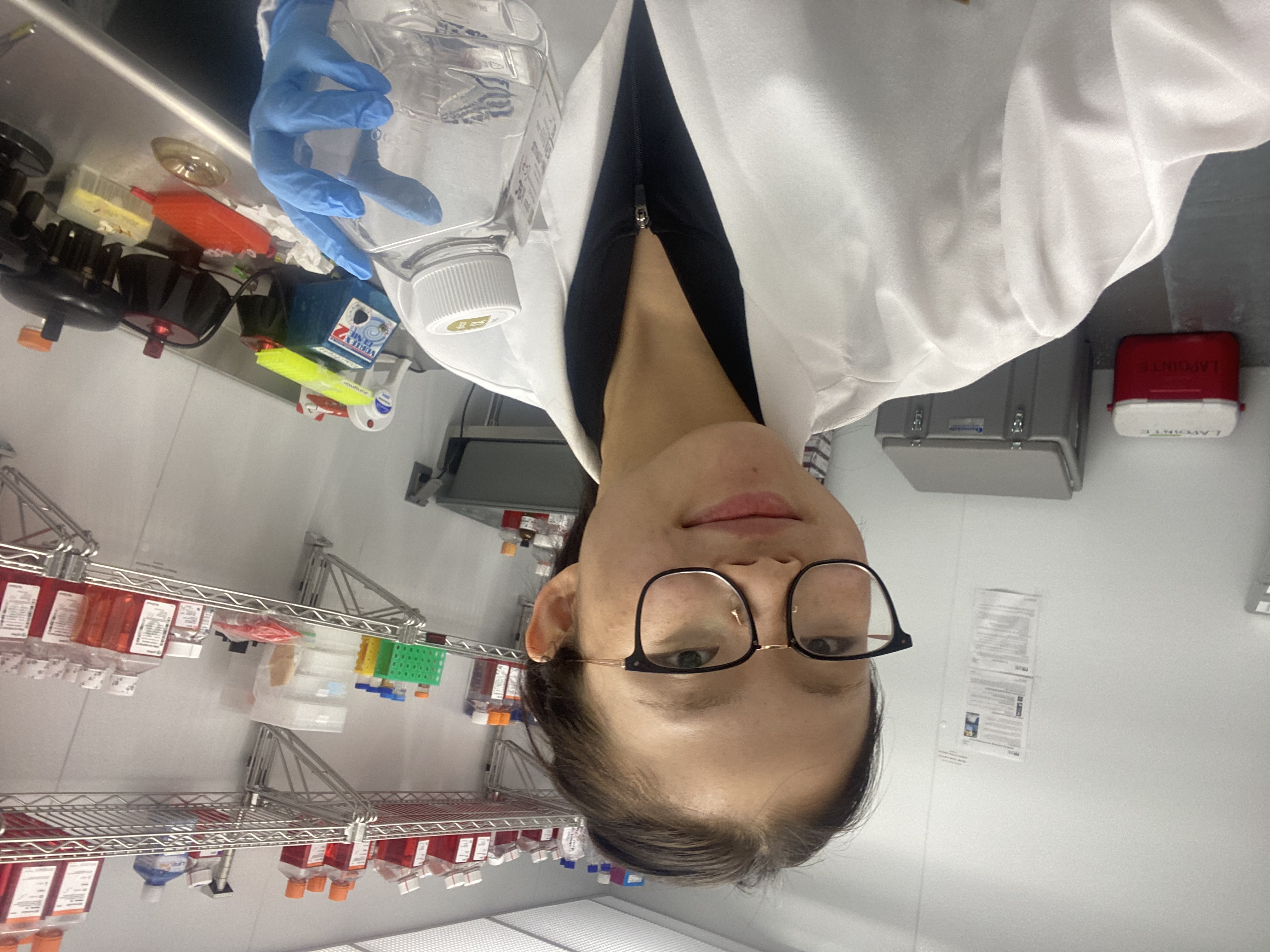 Lulu Perez conducting research at Dimitroff’s lab
When the opportunity recently arose to publicize some of the lab’s key research findings, Dimitroff asked Perez to take on an additional project: to create a scientific illustration that would allow folks outside of science to easily understand the research.
The result? Perez created a digital illustration (see “Visualizing Research” section below) that readers and lab members alike praise for its detail. The illustration was originally published in an article Dimitroff and fellow FIU researcher Lee Seng Lau wrote for The Conversation, a leading digital publication. This article was re-published on FIU News.
The experience encouraged Perez to combine her passion for science and art and ignited her desire to infuse medical illustration into her career.
“Art is a universal language,” Perez says. “You don’t really have to understand a culture’s language to understand its art. I think art is a really good solution to one of the most difficult aspects of research, which is communicating with the general public. Basic research is very technical. It’s all done under a microscope. You have to picture the atoms and molecules, and how they all interact. I think art is going to be the best way to communicate all of this.”
She also completed another scientific illustration as part of a poster presentation on the lab’s research.
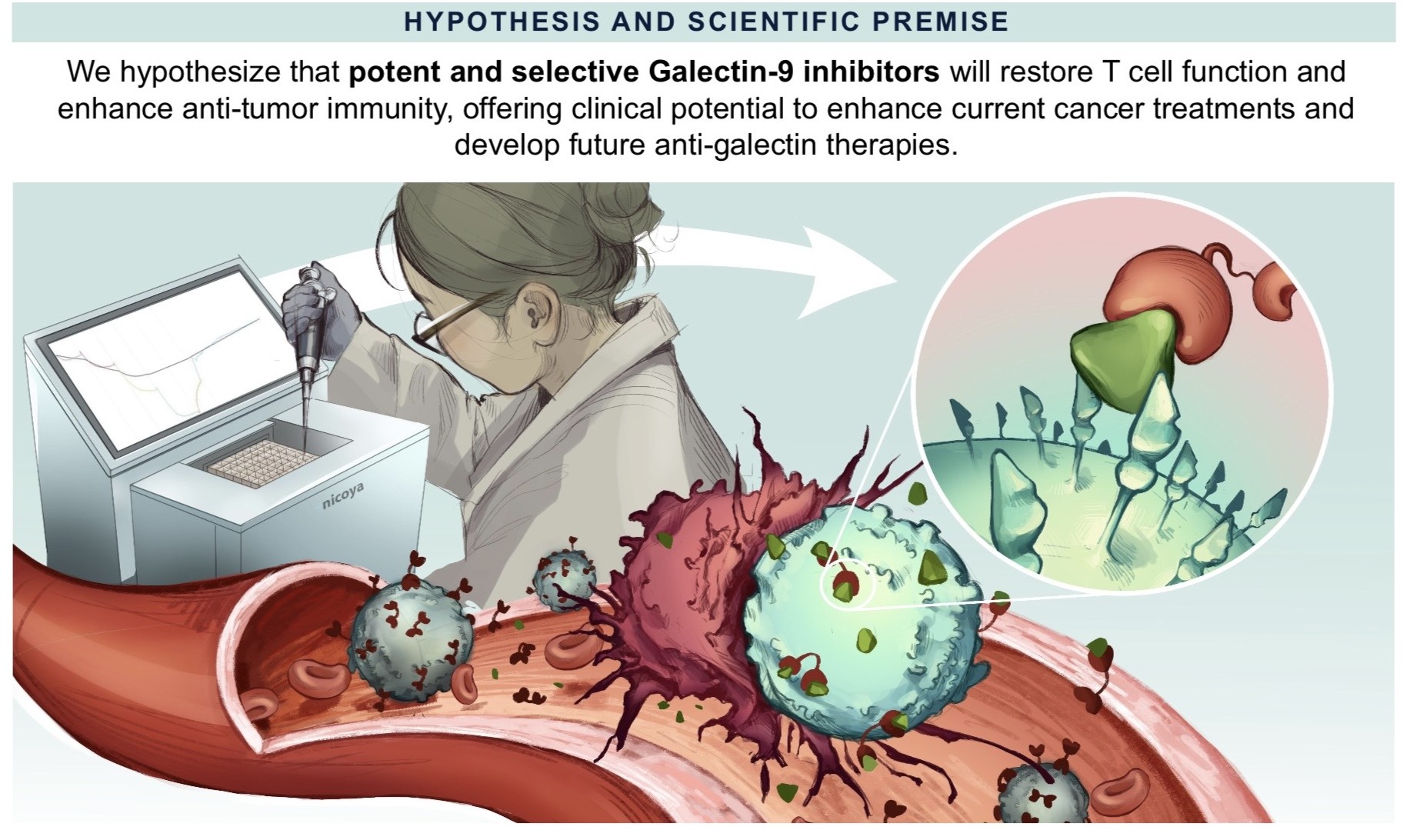 One of Lulu Perez’s scientific illustrations, which depicts one of the research projects she’s working on in Dimitroff’s lab. Fun fact: This illustration features Perez herself conducting research.
Her dream is to become a surgeon (possibly a neurosurgeon) who practices and produces research in scientific publications. For her research publications, she plans to tap into her artistic skills to create illustrations that will help readers within and outside of the scientific community quickly understand what the research is about.
She adds that art has the potential to bring science to even the youngest of audiences. “With an illustration, something as revolutionary as molecular cancer biology can potentially be understood by a middle schooler just by looking at a drawing,” Perez says. “That’s how you can inspire kids to get into research.”
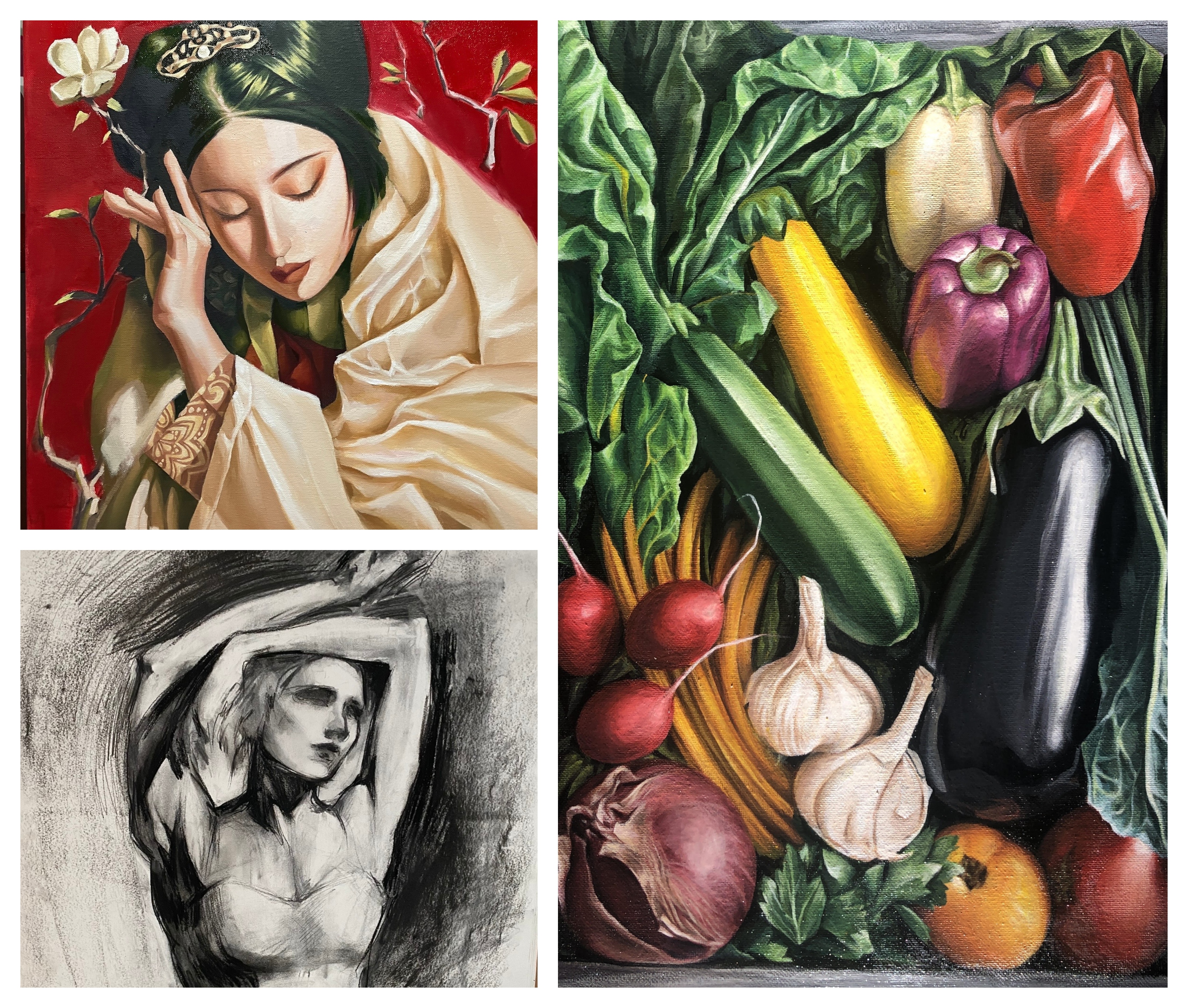 Three samples of Lulu Perez’s fine art
Dimitroff says Perez’s future is bright.
“Lulu is a superstar,” Dimitroff says. “She continues to thrive in the lab to the point that I count on her to help train other people. She also has an ability to visualize the pathways that cause cancer [the lab’s work] and to illustrate that in a way that is really unique. I feel like I have two people working with me through Lulu. One is a research assistant in the lab on target to go to medical school and the other is a medical illustrator, which is a talent all on its own. The way she communicates visually is powerful in terms of delivering a message. It helps us as a lab to communicate with the world.”