
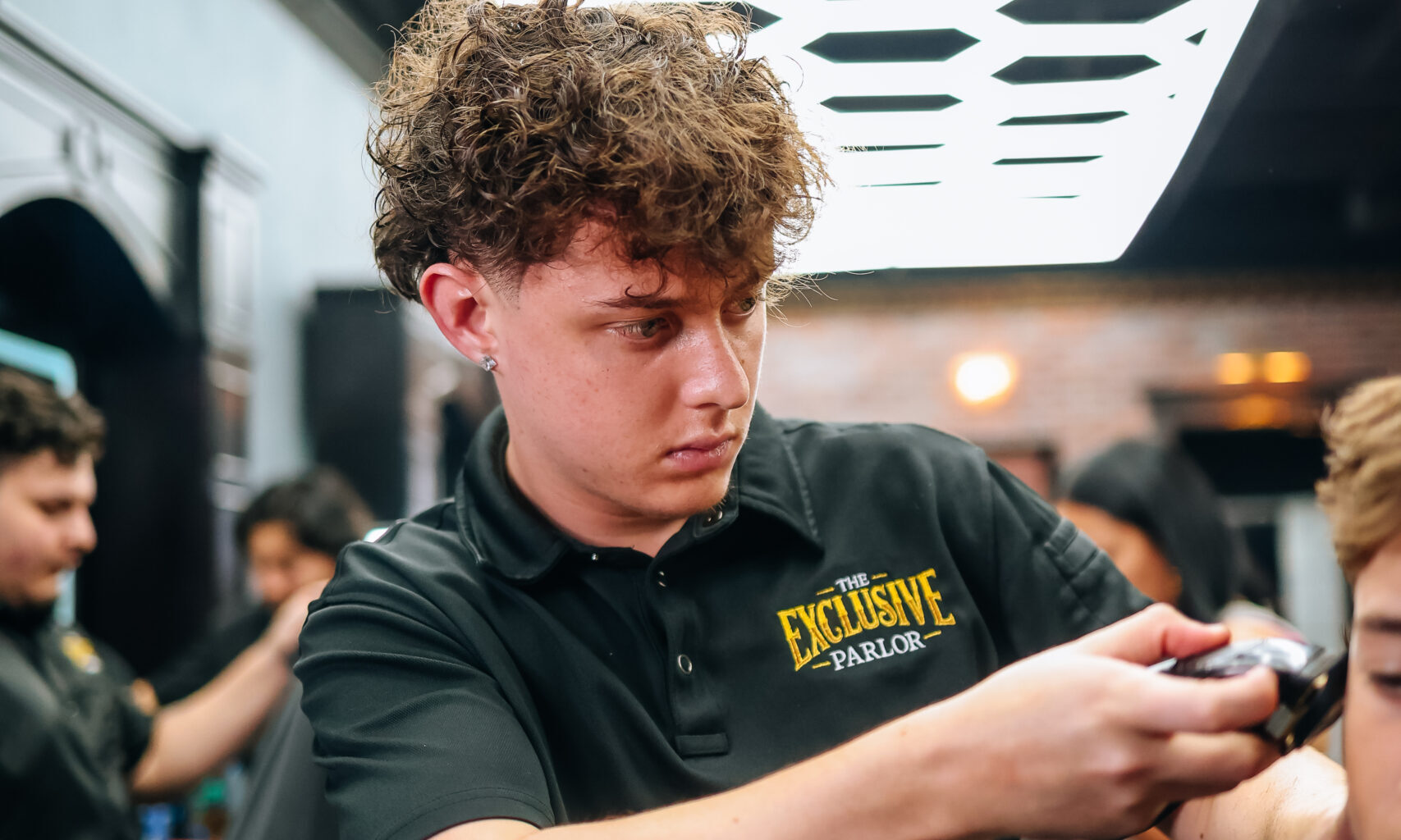
Nicholas Odar, barber at the Exclusive Parlor in Fort Myers, left college to pursue his passion of cutting hair and serving others. -COURTESY PHOTO
Nicholas Odar, 19, was doing what generations of young adults had been told was the next step: going to college.
As a freshman at Florida Gulf Coast University, Odar was also pursuing another kind of education — barber school. One path led toward a college degree. The other put a pair of clippers in his hands and offered a more immediate career route. Odar chose the clippers.
“I asked God to open more doors and opportunities, and He did. I also concluded not returning to college when I realized I’m chasing the paper of completion rather than what I wanted to really do,” Odar said.
Odar has since built a career as a barber at The Exclusive Parlor in Fort Myers. He plans to eventually open his own shop, and recently launched “Backpack Full of Faith,” an event created to give back to children and encourage them as they head into the new school year.
Along the way, he said that some of his most valuable lessons have come from experience rather than from a traditional classroom.
“College can teach you a lot, but the real world is constantly changing. “You have to be willing to adapt to new environments and be willing to learn new things,” he said.

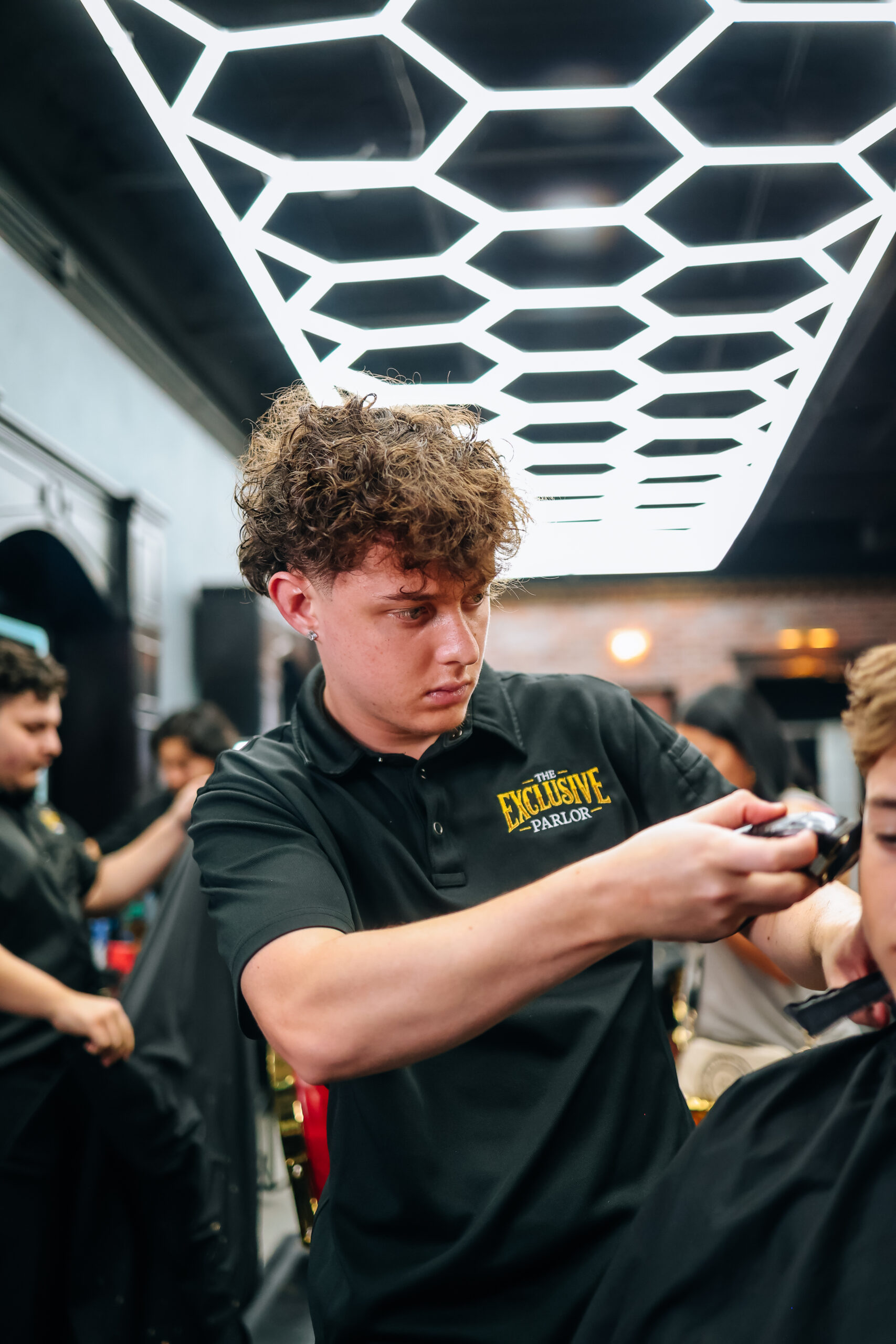
Nicholas Odar plans to eventually open his own shop. -COURTESY PHOTO
Bang for your buck
Americans held nearly $1.66 trillion in student loan balances during the first quarter of 2026, according to the Federal Reserve Bank of New York.
Among 2024 bachelor’s degree recipients who borrowed to attend college, the average debt was nearly $30,000, according to data reported to U.S. News & World Report by 992 colleges.
According to the Lumina Foundation, more than 80% of Gen Z still say college is important, but they increasingly want proof that it will lead to a good career.
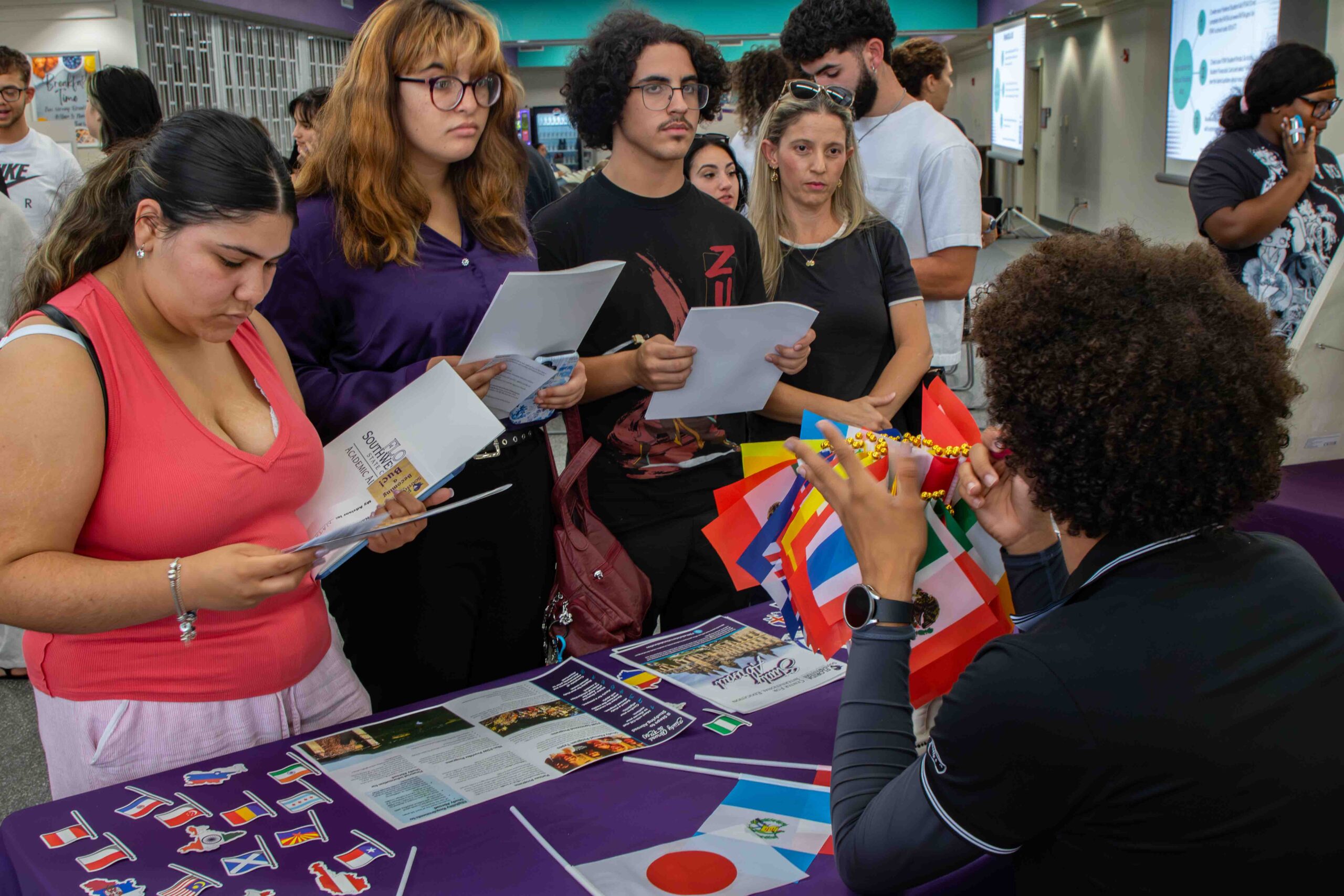
Prospective students explore academic programs and opportunities during FSW Become a Buc event. -COURTESY PHOTO
At the same time, young adults are entering a workforce that looks considerably different from the one previous. Traditional careers now coexist with gig work, entrepreneurship, and an expanding creator economy on social media.
Going viral is hardly a reliable career plan. Still, the possibility itself represents something relatively new: college is no longer the only highly visible route young people see to professional success.
The question, then, may be less about whether education after high school matters and more about which pathway offers enough value to justify the cost.
Florida Southwestern State College President Dr. Jeffery Allbritten, Ph.D., admits the question of whether college is worth it does not have a universal answer.
The calculation depends on what students want from higher education, the career they intend to pursue and how much they spend getting there. Success itself can take different forms, Allbritten said, and choosing another route should not be treated as failure.
“There is this assumption that if you don’t go to college, you’re a failure, which is nonsense. That’s total nonsense,” Allbritten said.
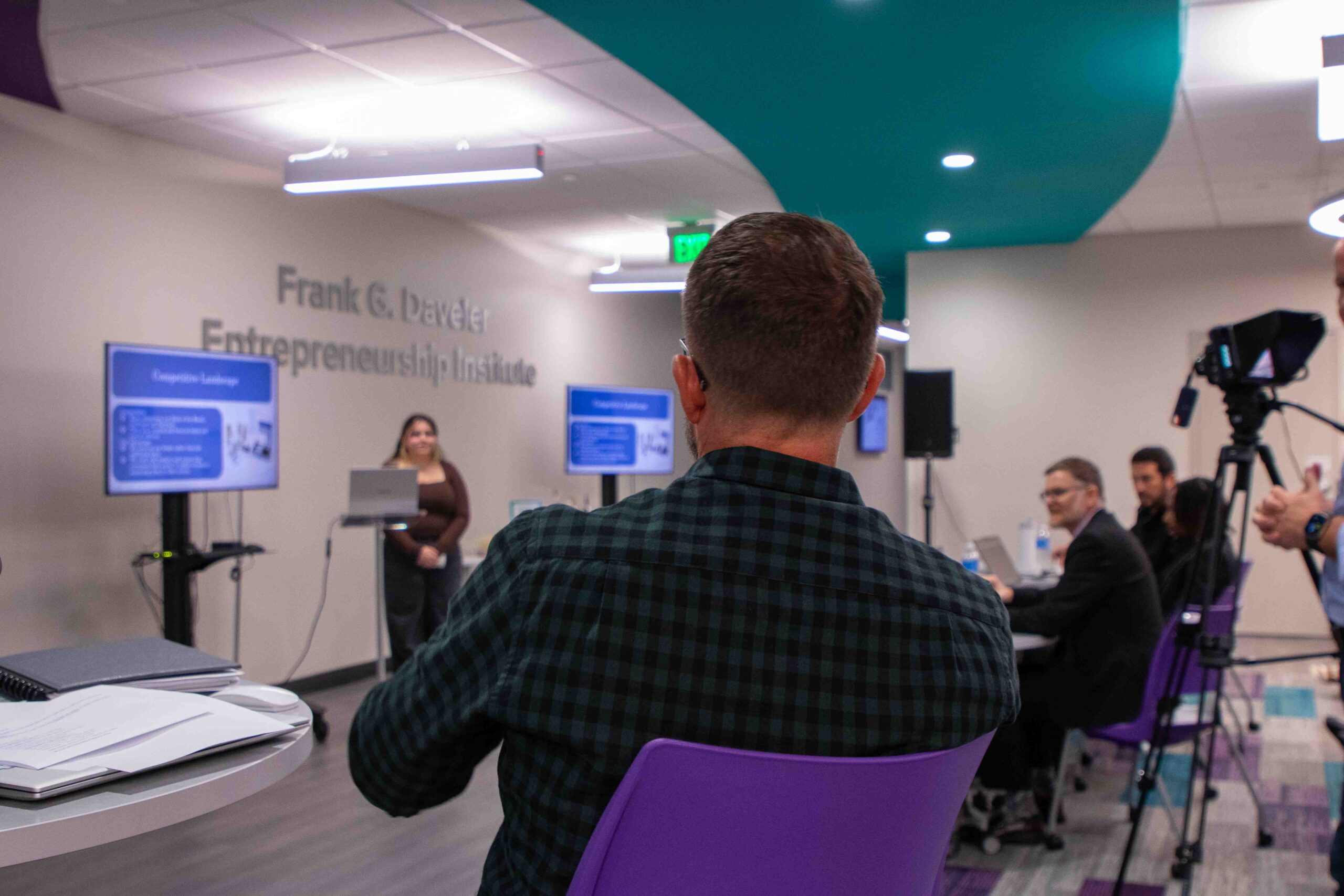
An entrepreneurship student presents during a pitch event at FSW’s Frank G. Daveler Entrepreneurship Institute on the Lee campus. -COURTESY PHOTO
Affordability is central to FSW’s value proposition. According to Allbritten, tuition has remained flat for 13 years, with the institution among the lowest costs in the area. Still, about 78% of students who graduate from FSW with an associate or bachelor’s degree do so without debt.
“What we try to do is make sure they come in and get a chance to experiment and find out what their niches are, but doing so not while the meter’s running at a high-cost structure,” Allbritten said.
For some students, a state college can also serve as the first stop on the way to a university. Florida’s common course numbering and articulation structure allows students to complete courses at institutions such as FSW before transferring within the state system, providing another route toward a four-year degree.
Career paths
Cost is only one part of the value equation. Colleges are also confronting another question: How do they prepare students for careers being reshaped while they are still in school?
Palm Beach State College President Ava L. Parker, J.D., argues that career readiness increasingly requires something she calls an “IT IQ.”
Parker describes it as the digital confidence, technological awareness and problem-solving ability needed to adapt as technology changes. Whether students enter health care, business, education, construction, manufacturing or the skilled trades, she said, technology is becoming embedded in nearly every profession.

Florida Atlantic University students study and work independently in a collaborative campus space designed to support learning outside the classroom. -COURTESY PHOTO
That approach is increasingly focused on artificial intelligence. Palm Beach State College is expanding opportunities in AI, cybersecurity, engineering technology and other emerging fields while also planning a Quantum Innovation Center in downtown West Palm Beach.
“Our responsibility is to prepare students to work with AI, not compete against it,” Parker said.
PBSC’s more than 500 industry partnerships provide another connection to those changing expectations, with employers helping to shape the curriculum while providing internships, hands-on experiences, and potential job opportunities.
“Palm Beach State’s mission has always been about opportunity. What has evolved is how we deliver that opportunity – through innovation, industry partnerships and an education that prepares students not just for the jobs of today, but for the possibilities of tomorrow,” Parker said.
The value of that approach is ultimately measured by what students can do with those opportunities after they leave the classroom.
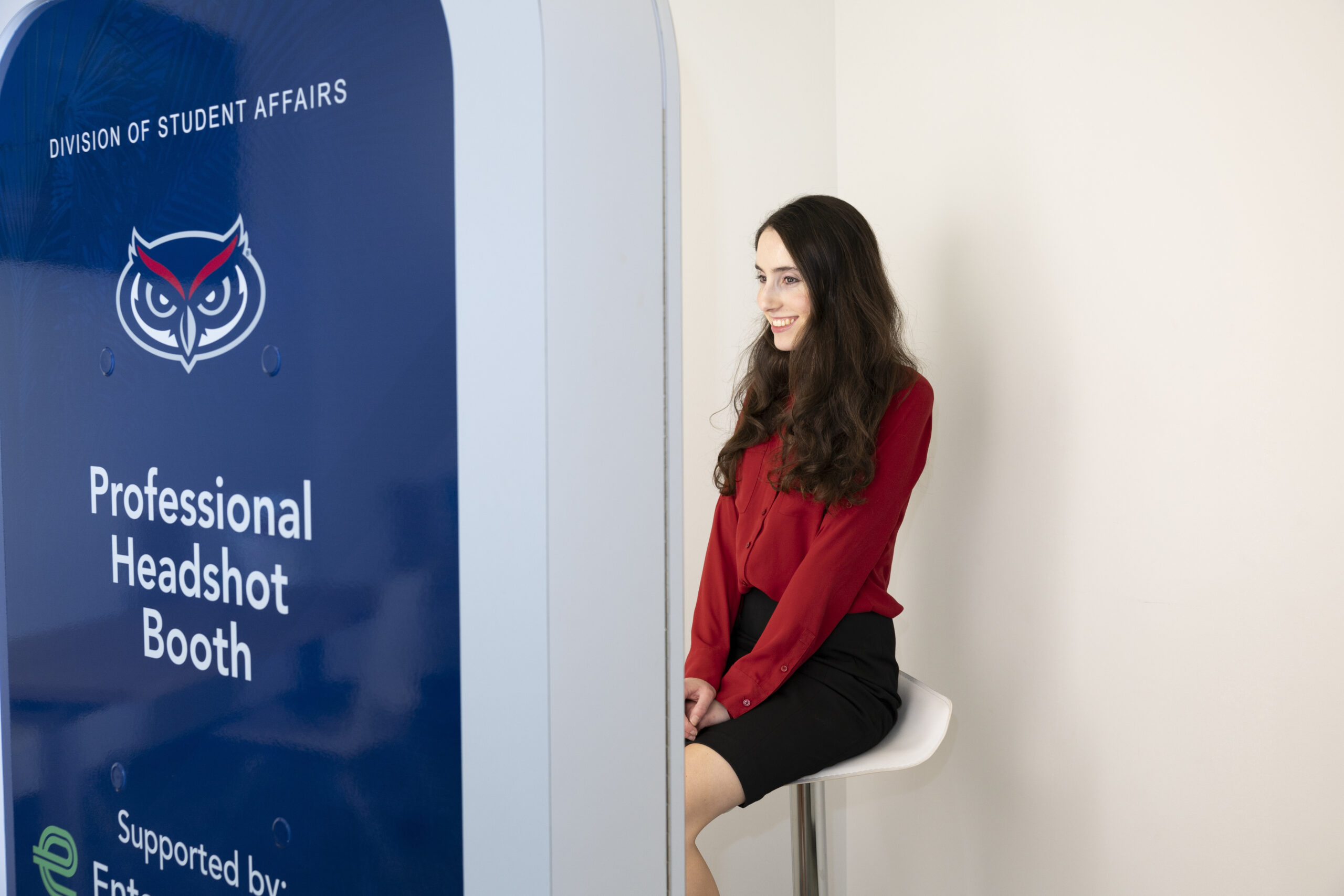
An FAU student uses a professional headshot booth, a resource designed to help students prepare for career opportunities. -COURTESY PHOTO
“Whether it’s a student earning a certificate, landing a job, transferring to complete a degree, advancing professionally, or returning to PBSC to build new skills, each milestone represents a life transformed through education. Those are the outcomes that matter most because they demonstrate that education is opening doors and expanding opportunities to career success,” Parker added.
College-or-trade debate
For Carlos Artime, executive director of career & technical education at Collier County Public Schools, the central question is not simply whether college is worth it. It is whether students understand the opportunities available to them in order to make an informed decision.
The Lumina Foundation reports that by 2031, roughly 72% of jobs will require education beyond high school. But that education may come through a certificate, credential, associate degree or bachelor’s degree — not necessarily a traditional four-year college path.

Students work on an aircraft engine as part of hands-on aviation maintenance training at LWTC. -COURTESY PHOTO
Collier County Public Schools prepares students for life after graduation by helping them determine which pathway best fits their desired career.
“There’s this paradigm shift where it’s no longer college versus a technical college — it really isn’t. It depends on the need of the student and the best pathway for them to choose,” Artime said.
Instead of waiting until senior year to introduce those choices, CCPS begins career exploration in middle school.
Artime said Lorenzo Walker Technical College, which has been operating for nearly 50 years, is experiencing the highest adult enrollment in its history. Immokalee Technical College, or iTECH, has also reached record adult enrollment, while career dual enrollment across the district’s technical colleges is at an all-time high.
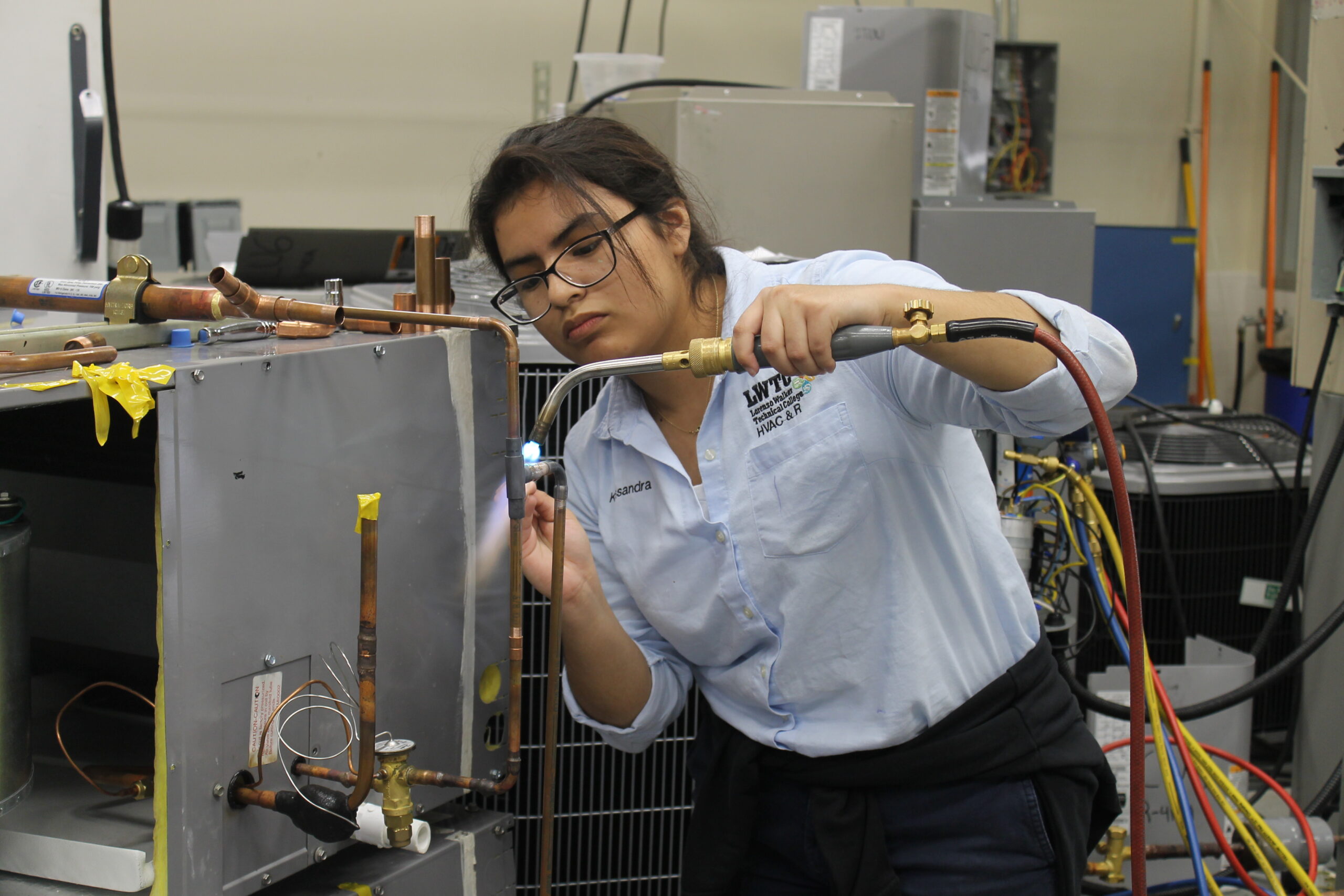
A Lorenzo Walker Technical College student practices working with HVAC equipment as part of the school’s career and technical training. -COURTESY PHOTO
The potential earnings also complicate an old assumption that a bachelor’s degree automatically provides the most financially rewarding route. Artime said some students completing technical programs are entering careers earning $75,000 to $80,000 annually.
“I get just as excited if somebody tells me that they want to go to a four-year institution and become a teacher as I do if they tell me that they want to become a welder — it doesn’t matter,” Artime said. “Do something, have a plan, be happy, we’ll make sure that we get you ready.”
Measuring the return
Even as technical education attracts more students, the demand for the traditional bachelor’s degree has not disappeared.
Florida Atlantic University has seen a rise in interest. According to James Capp, Ph.D., senior associate vice president for strategic planning & student success, FAU received more than 59,800 applications for its fall 2026 freshman class, up from more than 37,800 in 2021.
Total enrollment also grew from about 30,000 students in 2021 to more than 32,000 in fall 2025. Capp said the growth suggests students are increasingly weighing the economic return of completing a degree.
At the same time, FAU has worked to lower the cost of earning one.
The average cost to a Florida resident completing a 120-credit degree dropped from $6,110 in 2020-21 to $3,180 in 2024-25, according to Capp. Median wages for bachelor’s graduates working full-time within a year of graduation rose from $41,500 for the 2019-20 class to $52,000 for 2023-24 graduates.
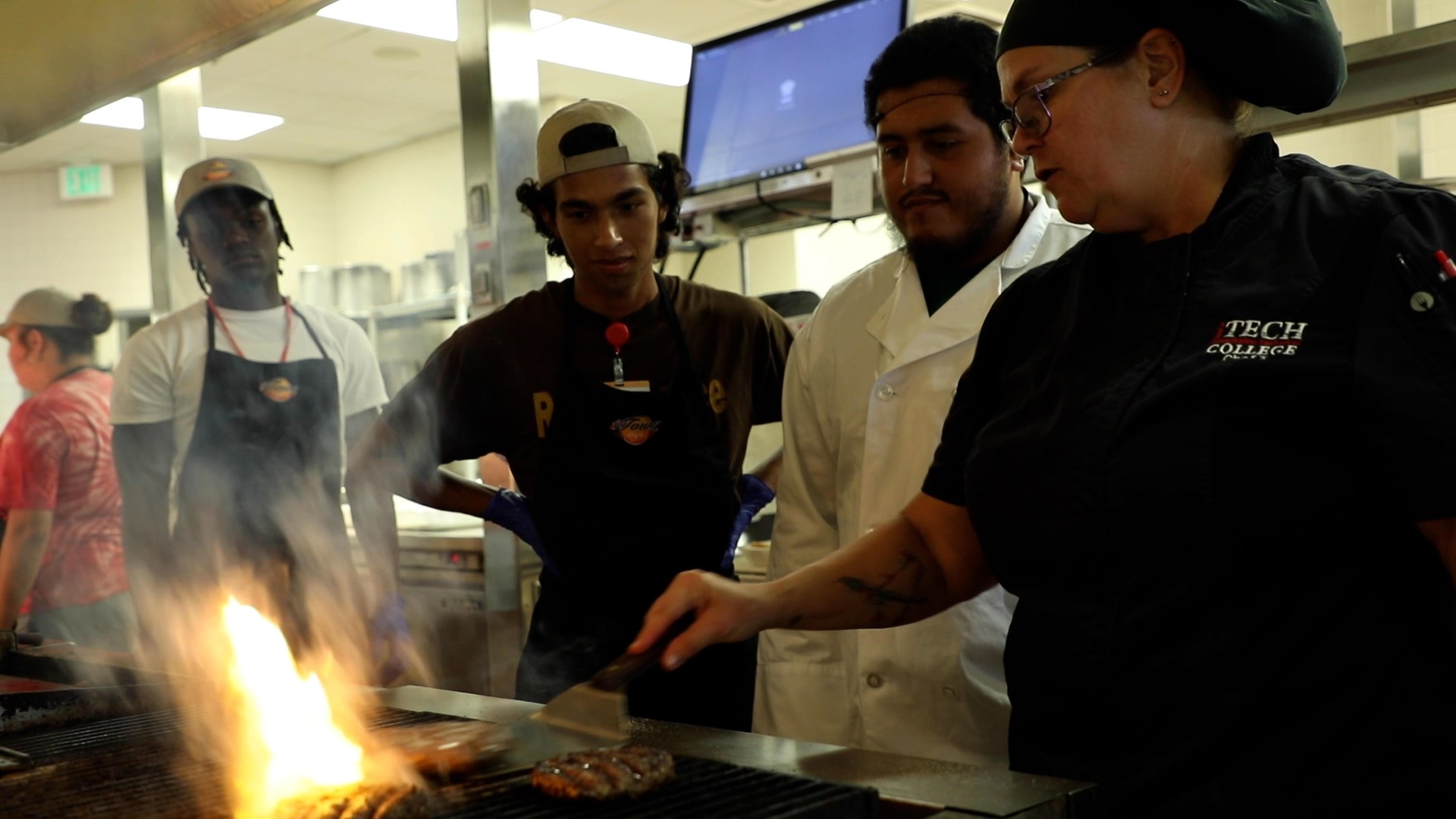
iTECH culinary students receive hands-on instruction in a commercial kitchen. -COURTESY PHOTO
The traditional college experience is evolving, too. Florida Atlantic University has doubled its number of online programs over the past two years as more students balance jobs and family responsibilities along with their studies.
First-year students follow a structured four-year career plan, while transfer students entering as juniors use an accelerated two-year model. Career exploration, labor market information, experiential learning and employer engagement are incorporated throughout the student experience, including efforts to bring industry professionals directly into courses.
“As a result, FAU graduates leave with more than a degree,” Capp said. “They leave with a clear career direction, relevant experience and a strong foundation for long-term success.”
Perhaps, the question isn’t simply whether college is worth it. It is whether students understand what they want college, and what higher education can do for them.