
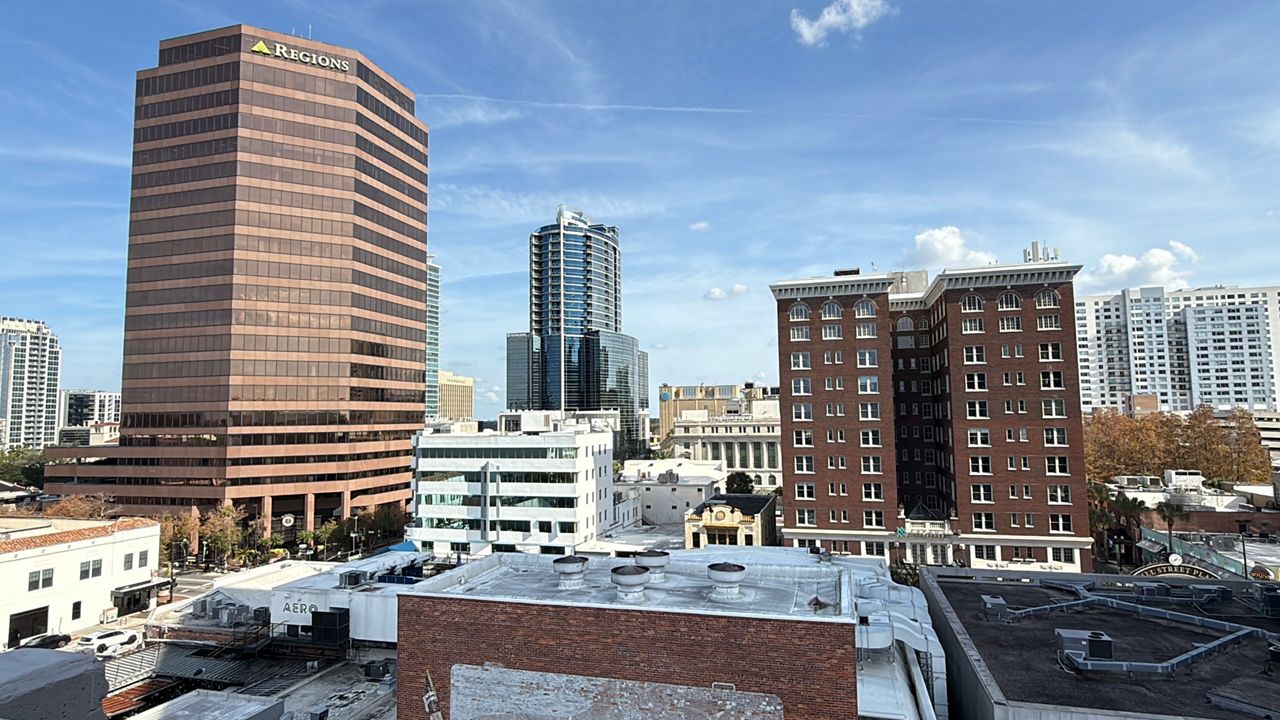
ORLANDO, Fla. — In the latest effort to move redevelopment forward in Orlando’s downtown historic district, city leaders approved an incentive program that would work in partnership with a recent moratorium.
The moratorium allows redevelopment proposals to bypass the Historic preservation board’s review.
While it was approved in June, its effective date was postponed out of caution after the state Division of Historic Preservation claimed it needed a 30-day notice or the city could lose certain funding. Nonetheless, the moratorium officially went into effect on Aug. 10, followed by the approval of the incentive program later that day.
In a 6-1 vote, Orlando city commissioners approved a new Downtown Historic Redevelopment incentive program. District 4 Commissioner Patty Sheehan stood as the opposing vote.
Sheehan also voted no on the moratorium.
According to David Barillo, the executive director of the Downtown Development Board, those who invest in contributing or landmark structures within the Downtown Historic District would be eligible for a significant tax credit. However, he said during the Aug. 10 meeting that some form of review would still be required.
“As they reactivate that, they do have to make sure they keep those historic elements of the building and have them reviewed appropriately,” Barillo said.
In order to qualify for the incentives, projects must have a minimum $5 million investment, an amount that Sheehan argued doesn’t align with the idea of making the investments available for everyone.
“There have been significant redevelopments in our downtown that are much less than $5 million,” Sheehan said. “I feel if they really wanted to encourage saving the historic buildings, they would not have put that high amount on it. My concern is someone will say, ‘Well, you know, I don’t want to spend up to $5 million, I’ll tear the building down and build something else.’”
Timothy Green, a developer mainly based in the Parramore community, said he believes downtown Orlando is on the upswing, though he also agrees that its history should be preserved. He said he’s for the incentive program and believes that it will draw new life and more people to the area.
“For the last decade these places have stayed empty, and no matter what you do, your hands are tied for what you can really do,” said Green, who is the lead developer and founder of Green District Master Plan and Holdings. “It doesn’t really bring people, so you can’t produce the type of construction that would activate the streets because you’re tied into what’s already there.”
Green said that despite a lack of recent development, he believes the latest efforts taken by the city will help restore Church Street as an epicenter of downtown Orlando — something similar to what he said he’s trying to do in Parramore.
“As a developer, we’re all about the numbers. Does this make sense?” Green said. “So, an incentive can definitely help a project that would typically not pencil.”
During the vote to approve the incentive program, Commissioner Bakari Burns — who voted against the moratorium — voted in favor of it. In a statement, he said incentivising downtown development and historic preservation don’t have to be separate things.
“I support continued investment and development in downtown Orlando, and I also believe we can grow without losing the character that makes our downtown special,” Burns said in the statement. “I think this is a conversation and process that should continue between city staff, the Historic Preservation Board, developers, and the community as we look at the future of downtown.
“To my knowledge, there haven’t been projects that couldn’t move forward under the previous requirements, so I am interested in seeing how this new process and incentive program encourage investment.
“We all want to see a thriving downtown. The goal should be finding the right balance between welcoming new developments and maintaining the character of the area.”