
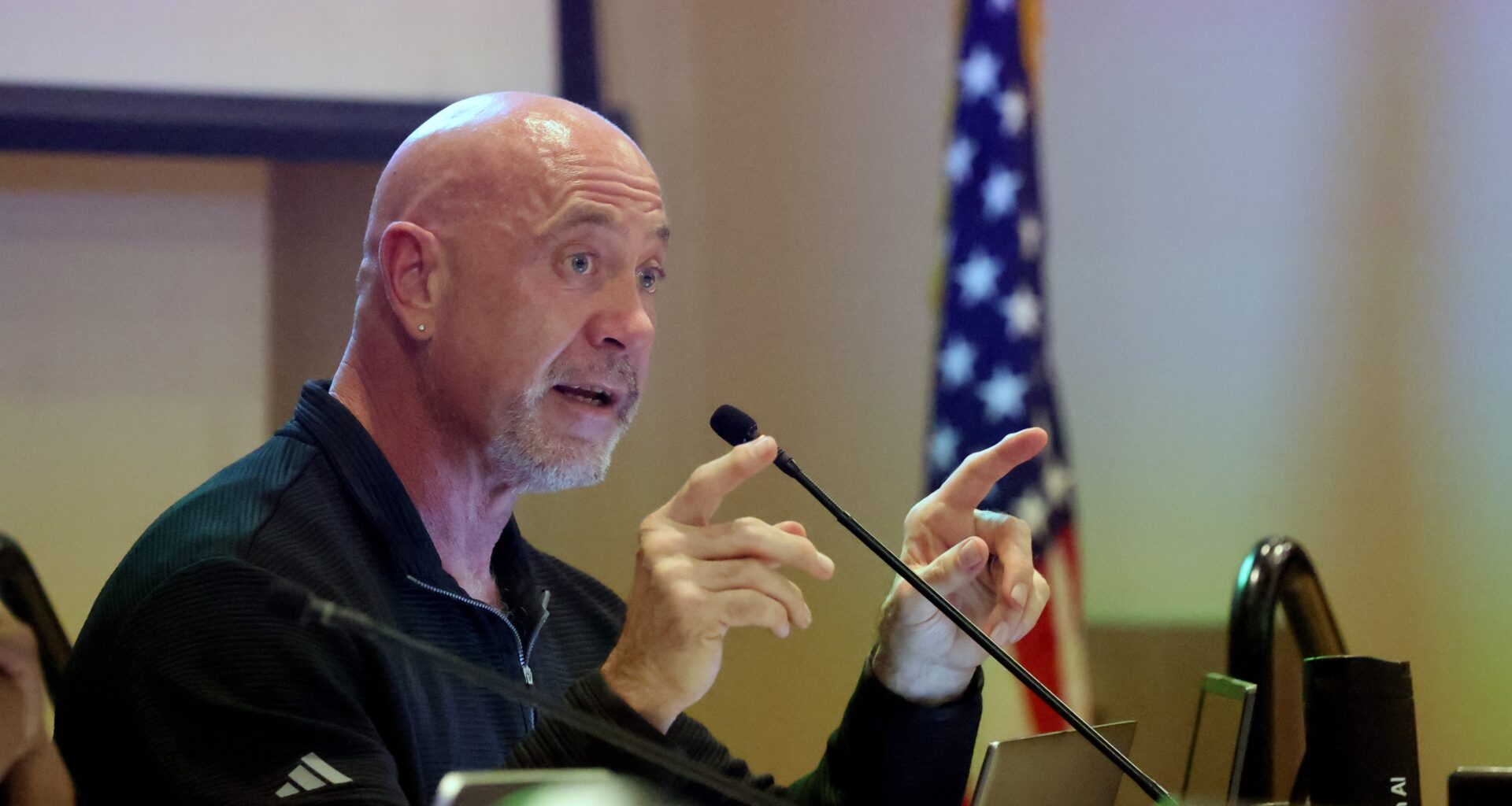
Fort Lauderdale Commissioner John Herbst has a message for elected officials in his own city and around the state predicting doom and gloom if voters say yes to a property tax break in November: Buck up and get more efficient.
“Never once have I heard anybody ever mention, we’re going to be more efficient,” said Herbst, a self-described fiscal conservative and the lone Republican serving on the Fort Lauderdale commission. “All I’ve heard is we’re going to raise fees. We’re going to raise taxes. We’re going to cut services.”
Herbst’s remarks came Tuesday during a meeting between the commission and the city’s budget advisory board. The discussion centered on the millions Fort Lauderdale will lose in the event the statewide referendum known as Amendment 3 passes.
“In the private sector … when our revenue drops, the first thing we do is look at ways we can do things more efficiently,” Herbst told his colleagues. “We look at ways we can do more with less. I don’t look for ways to keep my staff employed while revenue plummets. The answer has got to be, we’re going to do more with less. And that never seems to be the answer in government. Government has this unique monopoly where we say, ‘Great, we’re going to charge you more.’”
Herbst’s comments align with those of top Florida Republican leaders and their calls to rein in local government spending — including Gov. Ron DeSantis and Chief Financial Officer Blaise Ingoglia.
State GOP leaders have championed the Amendment 3 ballot measure, saying it would force local governments to cut spending while giving homesteaded property owners a much-needed tax break.
The prospect of losing millions in property tax revenues has triggered a fervent outcry from Democrats and left-leaning local officials who argue local governments would be forced to resort to layoffs and cut core public services.
Florida’s Amendment 3 would increase the non-school homestead exemption from $50,000 to $150,000 in 2027 and to $250,000 in 2028. To pass, it will need 60% voter approval on Nov. 3.
Amendment 3 would cut property tax revenue in Fort Lauderdale by $17 million in the fiscal year that begins on Oct. 1, 2027. The following fiscal year beginning on Oct. 1, 2028, would take a bigger hit, with property tax revenues dropping by $27.3 million.
In previous meetings, Herbst has said he backs Amendment 3 and plans to vote for it.
On Tuesday, Herbst said his comments were directed at elected officials locally and throughout the state.
“We always have to remember that government is not an employment agency,” Herbst said. “We don’t exist to employ people. We exist to provide services to our residents at the lowest cost possible. I never hear people say that that’s our role. I always hear people say, ‘We can’t lay off staff, we can’t cut staff.’”
But Fort Lauderdale might have to do just that, Herbst said.
“Over time, our workforce is going to decline naturally through attrition,” he said. “And also, it’s going to have to be through strategic layoffs, where we’re just going to simply find that we don’t need as many people to do the job that we’re doing today.”
Moments earlier, a stark warning came from the chair of Fort Lauderdale’s budget advisory board about the ramifications of Amendment 3.
“The big elephant in the room is property tax reform,” Bill Brown, the board’s chair, told the commission. “We won’t know until November how that’s going to play out. But we do have concerns.”
The gross taxable value of properties in Fort Lauderdale has reached a staggering $67.5 billion, bringing the city’s total tax revenue to $278.2 million. That tax revenue funds about half of the city’s operating budget.
But if residents across the state vote for a tax break in November, Fort Lauderdale could be forced to make strategic cuts and/or increase the municipal tax rate and fees, Brown told the commission.
Mayor Dean Trantalis had his own words of warning.
Government efficiency might not be as great as it sounds, Trantalis said.
“When it comes down to the nitty-gritty, what are we talking about?” he said. “When someone says efficiencies, that means telling people to work longer hours … or we’re laying off people. Those are the realities. We can dance around those topics, but those are the realities. People don’t want to say it or hear it.”
But increasing fees will only add to the burden already being shouldered by residents, said Olivier Cale, who serves with Brown on the budget advisory board.
“The other side of the equation is how do we save money,” Cale told the commission.
Cale questioned the wisdom of moving forward with the construction of a new City Hall priced at $217 million.
“This is the worst time to commit to a new City Hall,” Cale said. “We can’t create miracles. I think we have to cut some budgets. Maybe some service levels will change. (Building a new) City Hall seems to be the wrong decision at the wrong time.”
Commissioner Steve Glassman posed several questions to Cale: “You mention we need to go deeper. Where do you see the bloat? Where do you see the need to cut positions? Where have you dug in to say, ‘This department is overstaffed?’”
Cale pointed to the city manager’s office and Fort Lauderdale’s strategic communications division. Both departments grew under Rickelle Williams, the former city manager who resigned on July 2, more than a year after stepping into the role.
Cale urged the commission to take a deeper look at what can be cut.
“If you don’t swallow the pill now you might have to have surgery later,” he said. “We need to go on a serious diet.”
Brown, chair of the budget advisory board, chimed in.
Before she left, the former city manager did take a look at the possibility of trimming each city department by 5%, Brown said.
“We can’t direct staff (to consider that),” Brown said. “We can ask. But I think it would behoove us all to take a look at that.”
The mayor responded with alarm: “Five % off of police, 5% off of fire? Let’s not go there.”
Herbst spoke up.
“I’d love to actually see whatever was put together,” he said. “If staff has already done that exercise, please share that with me.”
Said Brown: “That would help the foundation for moving forward next year.”
Susannah Bryan can be reached at sbryan@sunsentinel.com. Follow me on X @Susannah_Bryan