
Editor’s note: The story below contains disturbing images.
Jeff Rusnak couldn’t get the picture out of his mind.
The image, stuck in his brain, was horrific: a lynched Black man named Rubin Stacy, hanging from a tree on July 19, 1935, near what is now Davie Boulevard in Fort Lauderdale.
It appeared on the front page of the South Florida Sun Sentinel in 2020, the year of the George Floyd protests, with an article about local leaders attempting to memorialize Stacy 85 years after his murder.
Strewn around the photo, casually observing the killing, are white families, including children.
Children are central to a play Rusnak has written — “The Resurrection of Rubin Stacy” — which will get a theatrical stage reading at the African American Research Library & Cultural Center in Fort Lauderdale on Sept. 10.
Not only the children at the edge of the photo, which was archived in the Library of Congress, but also Stacy’s own children.
“I saw [an] article and … there was a mention by Roberto Fernandez, Broward educator, that Rubin Stacy was the father of two children,” recalls Rusnak, a Broward County native. “As a father, it just clicked in my brain how your children would grow up knowing what had happened to their father. And that just sort of really triggered this idea of humanizing someone who had been really this disposable person, just another vagrant Black man who was killed and nobody’s going to miss him anyway. It really personalized it for me as a story to tell.”
Directed by Carrie Brianna Hart, “The Resurrection of Rubin Stacy” is set in 1948 with a fictional dialogue between Stacy and Ruby, a character based on one of the children present at his lynching who has since grown into a young woman. Ruby is a representation of the last face Stacy saw before he was killed, and she goes on to try and break the cycle of violence in her family.
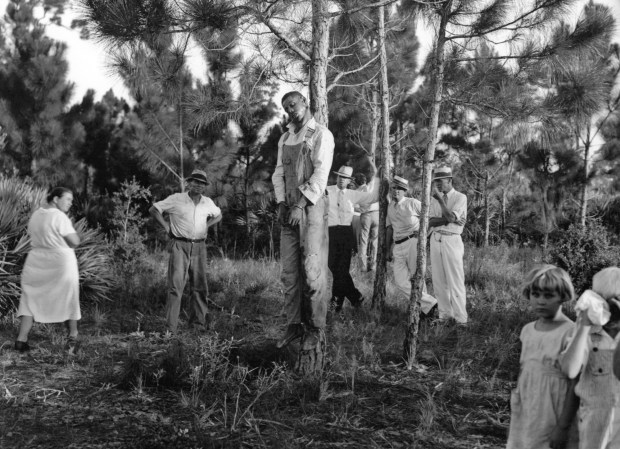 A group of people stand around the dead body of 37-year-old Rubin Stacy hanging from a pine tree in Fort Lauderdale on July 19, 1935. The photo, archived in the Library of Congress, has been published previously by the NAACP, Life magazine and National Geographic. (AP Photo/Str)
“We don’t have a record of Rubin Stacy,” Rusnak continues. “The photo of his lynching is the only photo we know of. And it really became a story for me of, if he could, what would he say to that girl in the photo?
“So, bridging that space between the abstract of this media piece and the personalities that were involved in it, that really became the mission for me in writing this … to try to humanize Rubin Stacy and give him a voice in his own story.”
Now a grant writer for The Bass Museum of Art in Miami Beach, Rusnak formerly worked at the Hollywood Art and Culture Center and as a Sun Sentinel sports writer. He started developing and writing the script in October 2020 and completed the first draft early in 2021.
Below, find more about “The Resurrection of Rubin Stacy” in a Q&A session with Rusnak from his home in Plantation.
Q: Was it a play from the very start?
A: I’ve written screenplays and they’re virtually impossible to get made into movies, because it’s expensive and you need a zillion pieces to come together. So the play was something that was readily available. It also fit … the story best because I’d written the first act — it was basically the two-person act — and then I brought in the family part to it. But I knew it was a small space and it was happening in one room basically or in a home. I knew it didn’t need to be bigger than that, so it was suited for the theater. And then it’s dialogue-driven. I think theater is dialogue-driven. And that part, the voices that I heard, were voices I grew up with as a native of Broward County … in the ’60s and ’70s. So it naturally was, I think, a theater piece.
Q: What made you come up with the title?
A: The term “resurrection” for me in the title refers … to him coming back, but it refers really to the resilience of Black America. And Rubin has a line, ‘You keep killing us and we keep coming back.’ And the [narrative] is set in 1948, which right at that time, Jackie Robinson was playing for the Brooklyn Dodgers and it was the year that Harry Truman desegregated the armed forces in the United States. So the play really is a parallel also of how I think the civil rights movement got its start through access to baseball, THE sport at the time, and the military, which was the measure of … male participation. So Rubin is given a life, but he’s, I think, representative of the lynching victims in a totality, [and he’s] also speaking for how Black people continue to excel in spite of the rigged game, the conditions that have been set against them.
Mike Stocker/South Florida Sun Sentinel
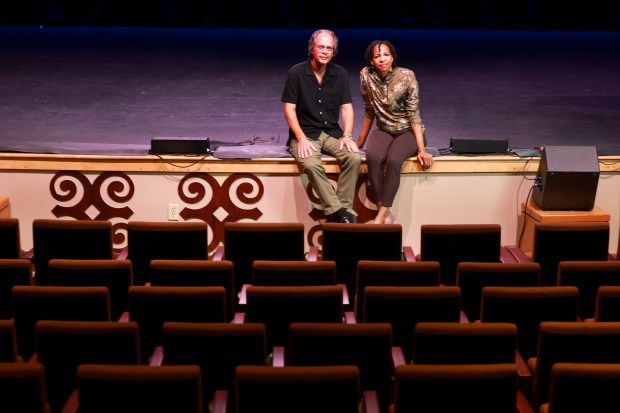
Playwright Jeff Rusnak, left, and director Carrie Brianna Hart in the auditorium of the African American Research Library and Cultural Center in Fort Lauderdale on Saturday, Aug. 15, 2026. (Mike Stocker/South Florida Sun Sentinel)
Q: Did you have any awareness of Rubin Stacy before you saw that Sun Sentinel article?
A: In 2018, we watched “60 Minutes” and Oprah did a piece on the Equal Justice Initiative in Montgomery, Alabama, and the [National] Memorial for Peace and Justice that was created there by Bryan Stevenson. It effectively serves as kind of an equivalency of a Holocaust museum-type of a space for lynching victims throughout the South. As it turned out at that time, a movement was beginning [in South Florida] to create a secondary naming of Davie Boulevard for Rubin Stacy, which is now Rubin Stacy Memorial Boulevard. So that sort of got me into a head space where I was really tuned in to what was going on.

Eli Flynn Photography
Logan Green will portray Rubin Stacy in the play “The Resurrection of Rubin Stacy.” (Eli Flynn Photography/Courtesy)
Q: What do you think will resonate with audiences today?
A: I think what resonates particularly now is that we are in … a revival … of white supremacy in this country … What happened in Fort Lauderdale in 1935 was they created an example in Rubin Stacy … We had the law enforcement … that basically functions as a mob, kill a Black man and nobody paid a price for it. So the parallel for me really now is that it’s the white supremacist movement using the power of the government violently to control a group of citizens who are disempowered, marginalized. The question now … versus then is our capacity to respond to it and not let it sit there and become normalized.
Ne’Chelle Straughter
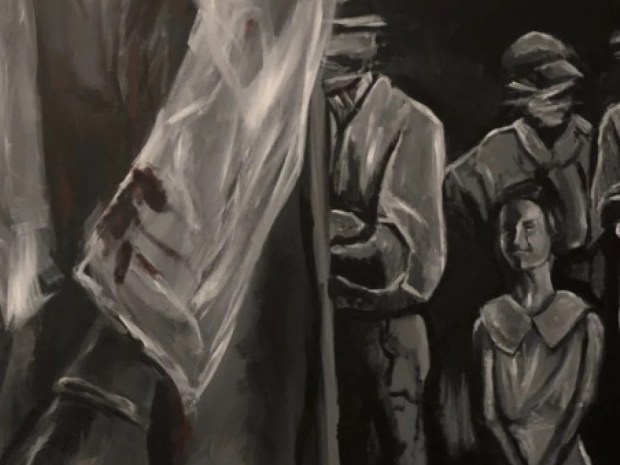
Ne’Chelle Straughter’s painting, “Uncle Reuben,” is being used to promote the play “The Resurrection of Rubin Stacy.” Stacy’s first name was given as Reuben in some early reports of the 1935 lynching. (Ne’Chelle Straughter/Courtesy)
Q: This is such a brutal incident and painful topic. How did you get through it?
A: It’s an uncomfortable subject, and it’s an uncomfortable event. But it’s a necessary kind of art experience in the sense that I think it raises questions that we need to discuss honestly. Secondly, I think what I feel like the piece does is, is it shows a pathway for how people navigate out of the socially accepted space where injustice is normalized into another way of understanding people … artists, journalists, academics, those are the people that always raise their hand and ask the uncomfortable question. I think this asks uncomfortable questions. How do we change? And why should we be changed? At the end, it’s always the same: Love, love is the engine that moves us toward a better place.
The theatrical reading of “The Resurrection of Rubin Stacy” will be from 7-9 p.m. Thursday, Sept. 10, at the African American Research Library & Cultural Center, 2650 Sistrunk Blvd., Fort Lauderdale. The reception area will open at 6:30 p.m., and an artist talk with the director, playwright and cast will follow the reading. Admission is free, but you must reserve a seat at eventbrite.com. Visit artscalendar.com or 954-357-6282.
Mike Stocker/South Florida Sun Sentinel
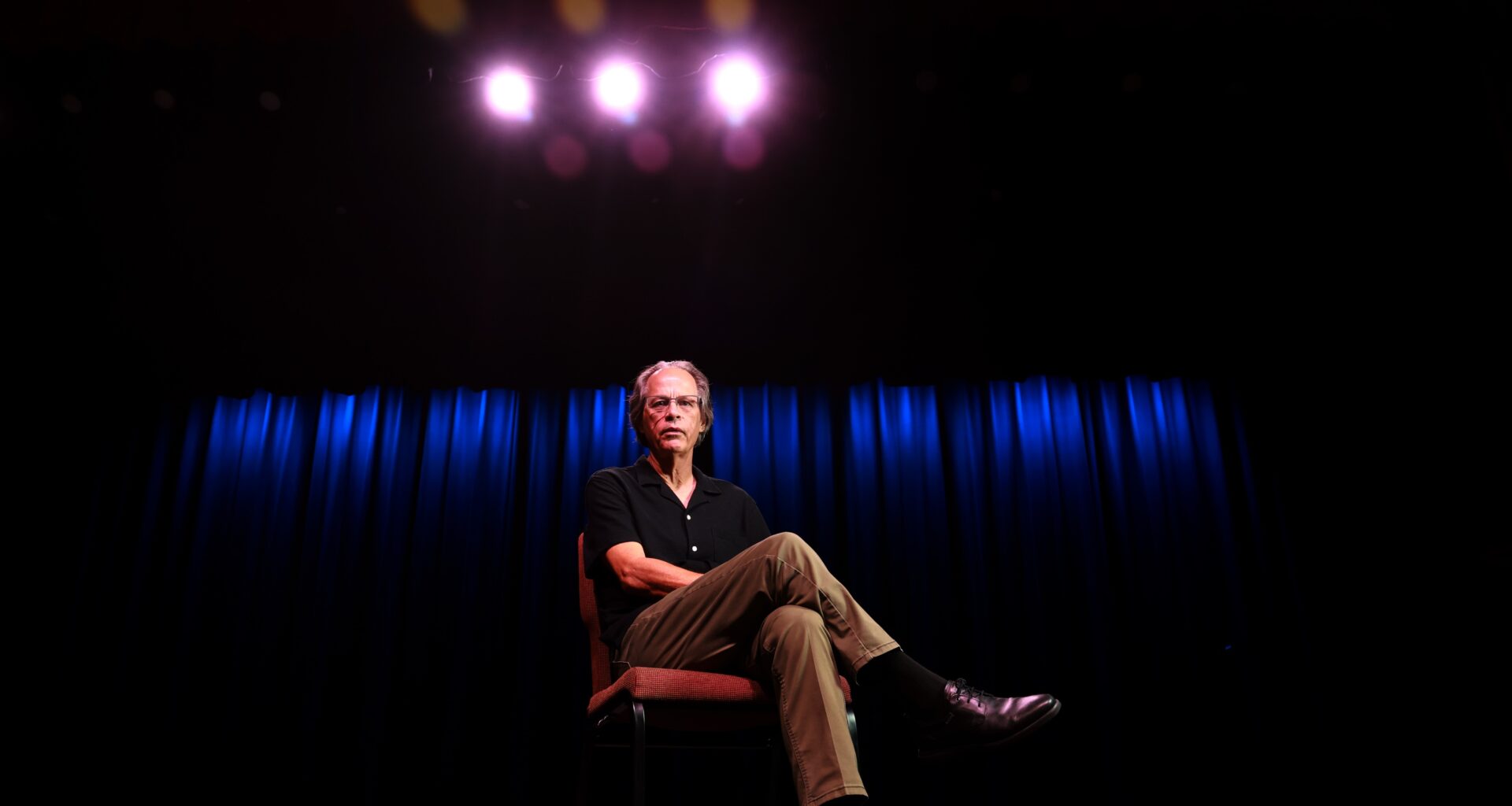
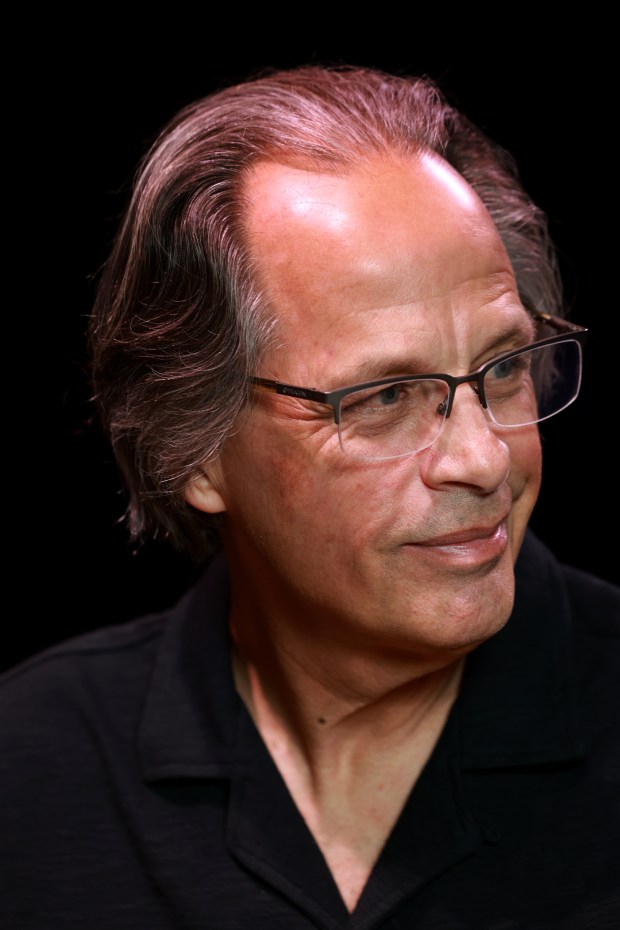
Playwright Jeff Rusnak started developing and writing the script in October 2020. (Mike Stocker/South Florida Sun Sentinel)
Mike Stocker/South Florida Sun Sentinel
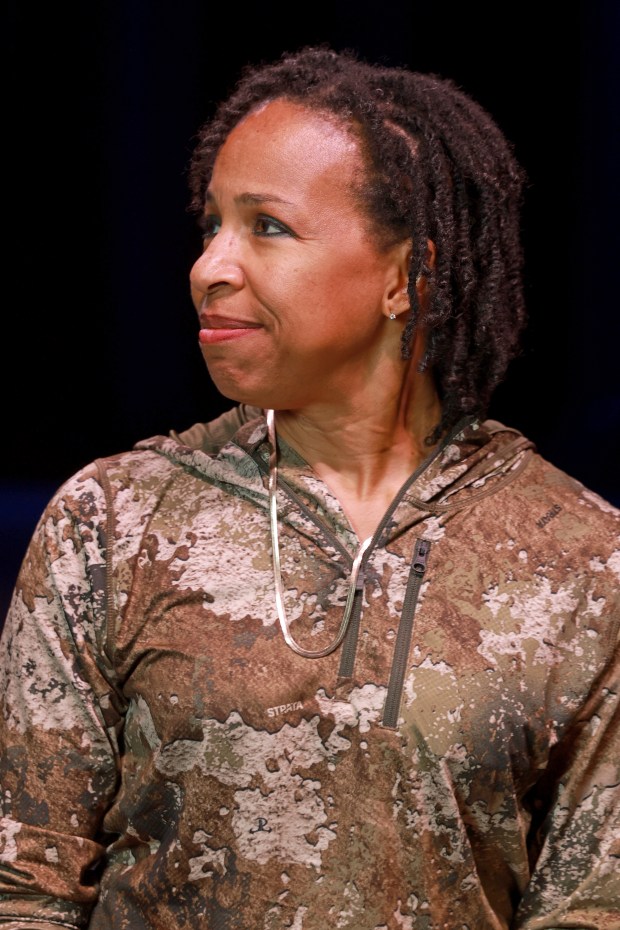
Carrie Brianna Hart is directing the play about the 1935 lynching of Rubin Stacy in Fort Lauderdale. (Mike Stocker/South Florida Sun Sentinel)
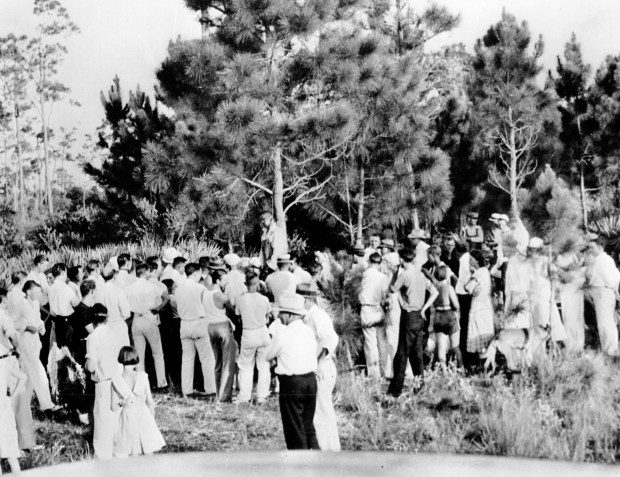 This image shows the crowd gathered around the body of Rubin Stacy on July 19, 1935. Photos from that day were published in newspapers across the nation, capturing the festival-like atmosphere. (AP Photo)