
Tampa developers who want to put a 40-unit townhome complex on ecologically sensitive, forested land along the Hillsborough River returned before the city council Thursday to pitch a revised plan.
In a unanimous vote, city leaders killed the project for a second time.
Last year, council members had denied the owners’ rezoning request following lengthy public comment from more than a dozen neighbors concerned with what the loss of trees and wetlands could mean for their corner of the urban river. Many returned Thursday to block the latest proposal in a contentious public meeting that included cross-examination by the landowners’ attorneys and dragged late into the evening.
Attorneys for the developers told the council they had taken neighbors’ concerns to heart over the past year through dozens of hours and iterations of re-designs. No mature, code-protected trees would be chopped. Fewer homes would be built. More parks and stormwater infrastructure would be added.
It wasn’t enough to convince council members, who said the project did little to protect the health of the river and the neighborhood, where its people and infrastructure aren’t ready for the density being proposed.
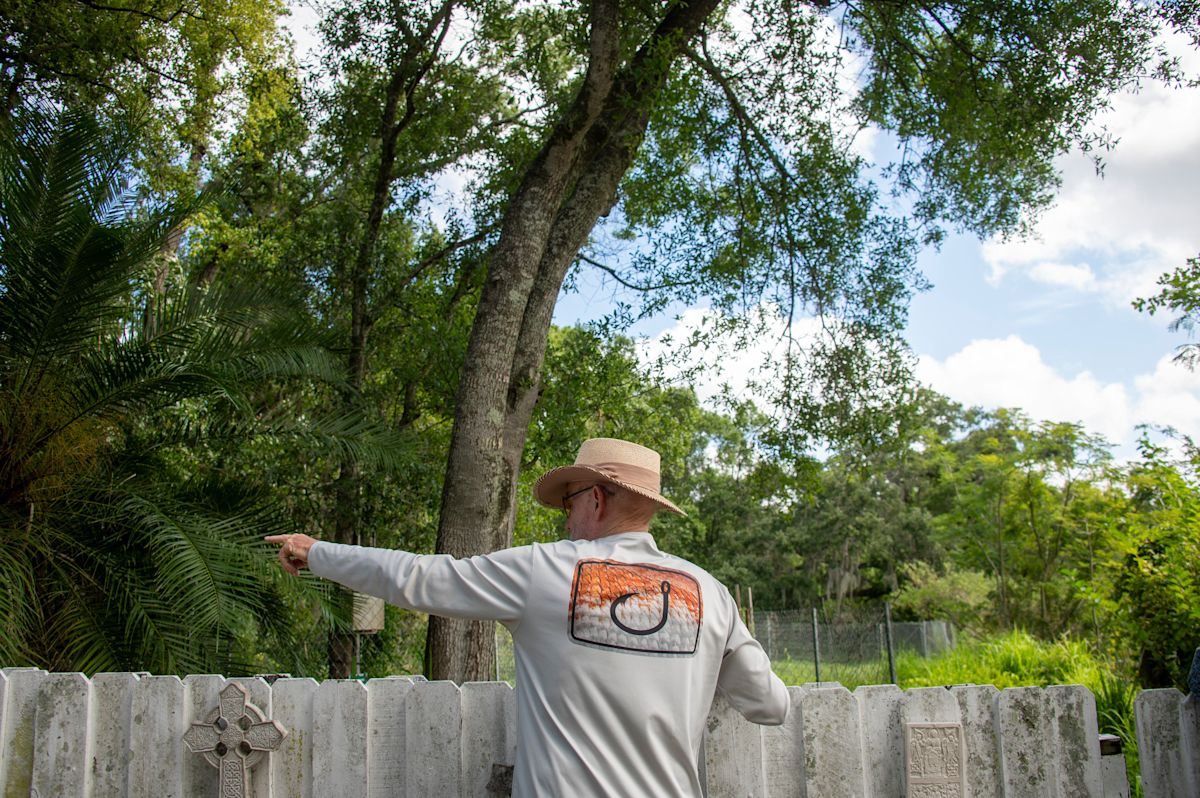
Hank Cramer, Riverbend’s neighborhood association president, has waged a scrappy fight against the developers and their lawyers for years. He shares a fence with the property at 6111 N Rome Ave.
“It tries to do too much with too little space,” Cramer told the council.
Developers originally intended to build 42 townhomes and three single-family homes on the 4.6-acre property. Neighbors, angered by plans to fill in the sensitive wetlands along the river and cut down mature, code-protected “grand trees,” quickly organized against developers.
The developers had planned to cut nearly 90% of the property’s 260 trees, including eight grand trees, the Tampa Bay Times previously reported. That number fell to three grand trees, which require special circumstances for removal, when it came to a city council vote last year.

Hank Cramer, president of the Riverbend Civic Association, reacts and speaks to residents, after council members vote during a city council meeting in Tampa last year.
The property had been the longtime home of the German-American Club of Tampa, and appeared overgrown and neglected when local developers Mize and Sefair bought the land in 2023 for more than $3 million, their lawyer told the council last year.
The council’s prior decision was at odds with recommendations from city staff, who said the project was consistent with Tampa’s master planning document. Staff again endorsed developers’ revised plan ahead of the vote Thursday.
City staff noted the new site plans would retain 40% of the property’s green space, about 18,000 square feet more than what city code requires. Parks, wetland buffers and other shared spaces make up more than 35,000 square feet, staff wrote.
“This makes it more likely that the green space shall remain intact post development,” they wrote in a report.

A revised plan for proposed townhomes at 6111 N Rome Ave. includes a dog park, wetland buffers and half of the site’s trees. Neighbors have raised flood concerns with developers who plan to destroy wetlands there.
The revised plan meets the city’s 50% tree retention rule and forgoes a previous request to cut down any of the grand trees, which bolster the city’s hard-earned canopy.
City staff say the development “incorporates enhanced stormwater controls.”
Neighbors weren’t so sure.
In addition to conservation concerns, stormwater and flooding have been central issues for those against the development. That took center stage Thursday evening.
Neighbors argued more fill dirt, concrete and stucco would lead to floodwaters washing out homes, including the proposed townhomes.
Neighbors pointed to a Tampa sewage lift station adjacent to the Rome property that flooded during Hurricane Milton, though floodwaters did not cause the facility to fail.
They presented photos and videos of frequent manhole backups on the property spewing sewage into the river. In one photo, Cramer’s fence appeared lined with matted clumps of toilet paper.
Phil Compton, chairperson of nonprofit Friends of the Hillsborough River, told the council that years of hard work has changed the health and perception of the river for the better. Once greatly impaired, the Hillsborough has rebounded, according to a recent study.
“But also, some things have changed for the worse. The risk of flooding is greater than it used to be, thanks to the risk of storms rising,” Compton said. “You all know why: climate change.”
Carroll Ann Bennett, who helps lead the Tampa Tree Advocacy Group, said fill dirt and added density would worsen the neighborhood’s flooding. In addition, she expressed concern that more fill could hurt the city’s chances at increasing its national flood insurance discount through the Federal Emergency Management Agency.
“The only reason this project needs fill is because they want to build townhomes, and the only reason they want to build townhomes is to increase profit,” she said.
Elise Batsel, a land use attorney representing the developers, maintained the project would not harm the river or flood neighbors.
“Now that I’ve heard this testimony and seen these pictures and thought about it from their perspective, I understand,” she said. “There is a lot of flooding in their neighborhood right now, and I would be upset, and I would be concerned.”
“We really did work in good faith to make this the best development possible,” she added. “To address the concerns.”
During cross-examination, Batsel questioned the qualifications of neighbors, asking one whether he was a “professional engineer.” He said he wasn’t.
Council member Charlie Miranda interrupted to ask what was going on.
“In my 32 years of public service, I have never seen a cross-examination between (petitioners and public commenters). That’s settled in court, not here,” he said. “I never got elected to be a judge.”
The council’s attorney, Martin Shelby, assured Miranda that though rare, petitioners have the right to cross-examine anyone who speaks at a meeting.
Council member Lynn Hurtak swiftly made a motion to deny the rezone.
“I understand that there’s a lot of conversation about water tonight, but that’s not what this was about to me. This is a density issue,” she said. “This neighborhood is not ready for this much density. All you have to do is look around it.”
Council member Bill Carlson said that the developers could appeal the council’s decision, or even sue in court. He warned that the state’s Live Local Act, which preempts local governments and overrides local density limits, could leave neighbors with a worse project than what was pitched. The council voted 6-0 to kill the project, with Luis Viera absent.
When a Tampa Bay Times reporter asked Batsel, the landowners’ counsel, whether developers would take their fight to county court, she deferred to her clients.

The edge of a wetland, as it meets the Hillsborough River, is shown in this 2024 photo in Tampa. This particular wetland is planned to be developed over, an action that has faced opposition from a local neighborhood association, citing environmental concerns.
The wetlands there, already approved for destruction by the county environmental agency, so far have been untouched, said Cramer, the neighborhood president. So have most of the trees that cover the property.
In September, developers bought two more properties to the south and west of Cramer’s home, surrounding him on all sides. They now own 7 ½ acres of the neighborhood. It’s cost them nearly $7 million.
Mize and Sefair have submitted plans to build more multi-family housing on the property south of Cramer. It’s already zoned for apartments and only needs to clear standard permitting hurdles before construction begins.
Given how much cash they have sunk into his block, Cramer says he has no reason to believe the developers will give up.
“Certainly, they’ll come back,” Cramer said.
• • •
The Tampa Bay Times launched the Environment Hub in 2025 to focus on some of Florida’s most urgent and enduring challenges. You can contribute through our journalism fund by clicking here.