
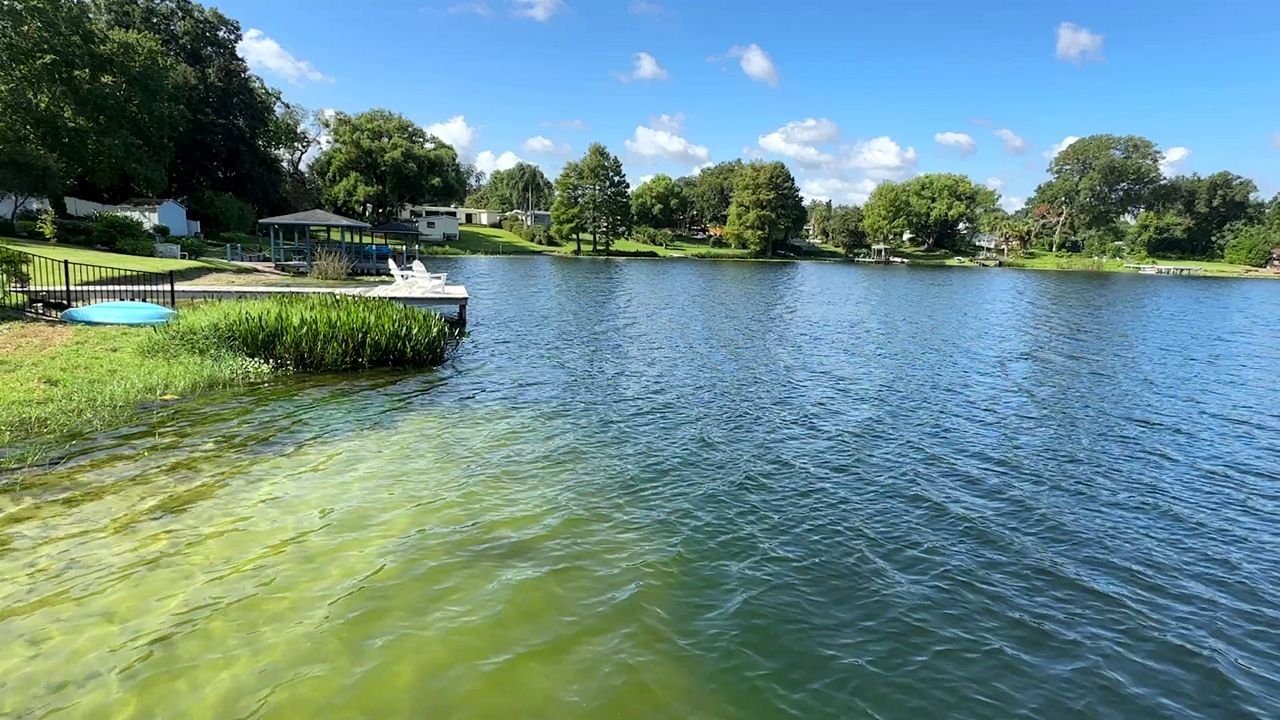
ORLANDO, Fla. — A Central Florida lake has a pollution problem, and Orlando is trying something new to address it.
The city is preparing to tear up portions of Strathmore Drive and Dover Street near Lake Arnold and replace them with pervious concrete pavement designed to allow stormwater to pass through the roadway.
The $1.3 million pilot project is expected to begin this fall, with several different styles of pavement installed to determine which works best.
“Pervious pavement is a technology that allows the stormwater, and runoff to flow through the pavement into the subsurface,” said Corey Knight, Orlando’s Public Works director.
Knight says the project is designed to capture pollutants including nitrogen, phosphorus and bacteria from stormwater before they reach Lake Arnold.
“It’s a super important project for us as we go forward to try to see if this is a technology that we want to put in other places,” Knight said.
Lake Arnold is officially listed by the Florida Department of Environmental Protection as impaired for nutrients including nitrogen, phosphorus and chlorophyll-a, which is not highly unusual for an urban Florida lake.
The city hopes the new pavement can help reduce some of the pollutants carried by stormwater runoff into the lake.
For homeowners living along the two streets, the project will mean construction outside their homes, but some say they support the idea.
“I had no idea about this product. I’m kind of excited about it. If it helps the lake in any way, I’m all for it,” said Erin Geise, a Lake Arnold-area homeowner.
Geise says he also takes steps at home to help protect the lake.
“We don’t use chemical fertilizers. We don’t use pesticides. No herbicides or anything like that,” he said.
Orlando is not the only Central Florida city experimenting with pervious pavement.
Titusville launched its program in 2021, offering incentives to businesses and developers that use low-impact stormwater materials.
The city says it has seen a 40% adoption rate among new developers using those materials.
“Pervious pavement can come in different forms. They might not all look the same, but they do serve the same purpose of allowing water to infiltrate into the surface,” said Lily Galleo, Sustainability Program coordinator for Titusville.
Pervious pavement typically costs more than traditional pavement and comes in a variety of styles and designs.
The Orlando pilot project is estimated to cost $1.3 million and includes an $800,000 grant from the Florida Department of Environmental Protection.
After the different pavement systems are installed, the city plans to monitor water quality in Lake Arnold to determine whether the project is reducing pollutants and whether the technology could eventually be used on other Orlando streets.