
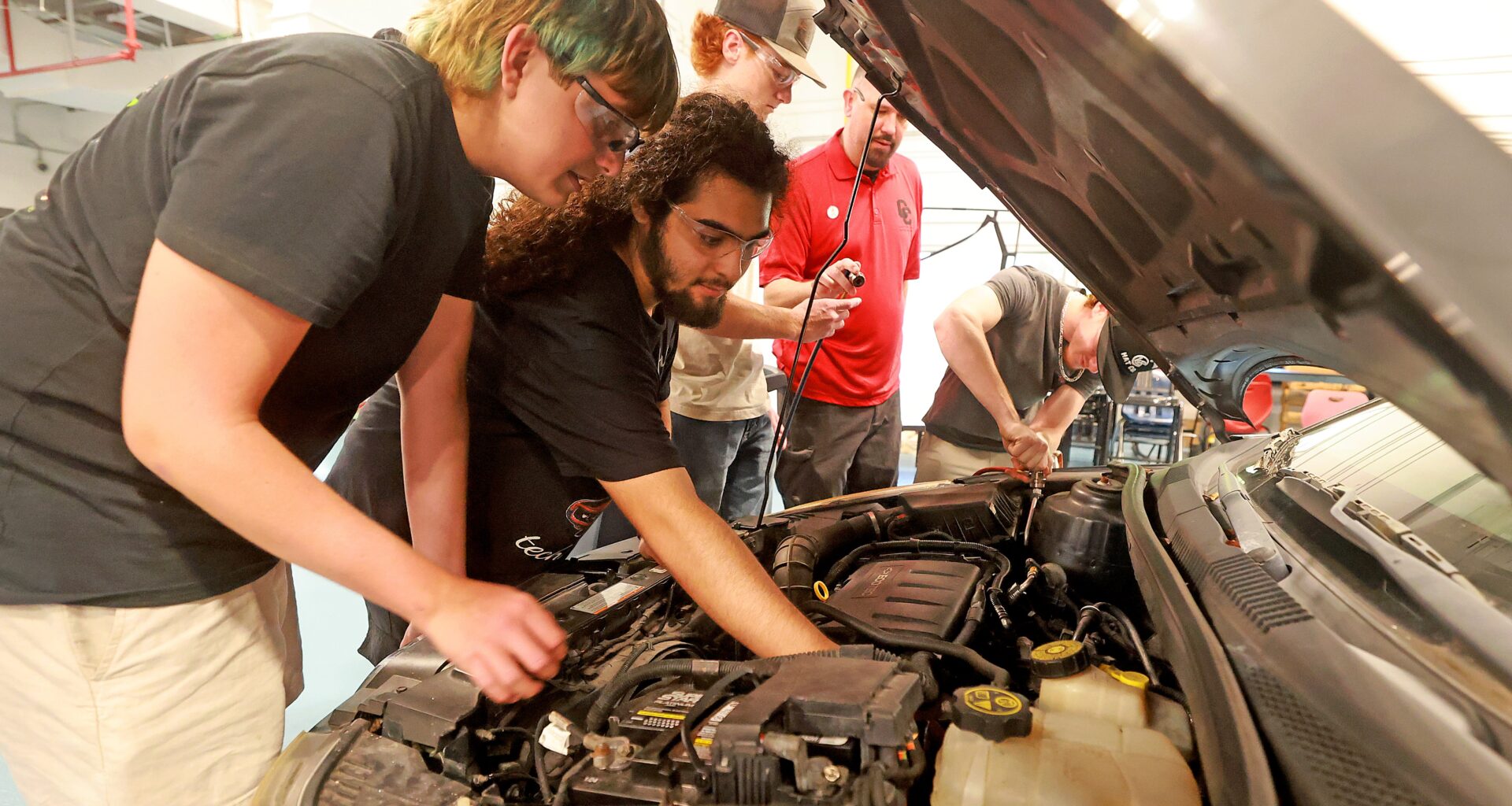
Another day, another “excessive heat” warning in South Florida.
We know to stay indoors as much as possible in our 90 degree-plus weather. But what about our cars?
Not all of us have garages to park in. And South Florida’s parking lots and driveways usually offer little shade.
The key to keeping your car in good shape and comfortable, according to Eligio Marquez, an associate dean of trade and industry at Palm Beach State College, is to stay on top of potential problems.
“In this kind of heat, a little routine maintenance can save drivers a lot of trouble,” he said.
To get you started, here are a few tips so you know what to keep an eye on during our sweltering summer. You may need to buy gauges or other devices to perform some of these maintenance checks. If not, head over to the garage of a trusted mechanic, who will undoubtedly be familiar with South Florida’s chronically overheated vehicles.
Battery
AAA-The Auto Club Group recommends testing your car battery at regular intervals, especially if it’s more than three years old, as heat shortens the lifespan.
“A weak one can leave you stranded with very little warning,” Marquez said. “While you’re at it, make sure the oil and other fluids are at the right levels.”
Tires
Tires are affected not only by the heat but by cold weather, too. Check the pressure every month or two, said Cameron Garceau, owner of Jim’s Auto Repair in Pompano Beach. He also recommended monitoring the tires for cracks and uneven tread.
“Do it when the tires are cool and use the pressure listed inside the driver’s door or in the owner’s manual,” Marquez added. “Hot pavement and underinflated tires are a bad combination, especially during the summer.”
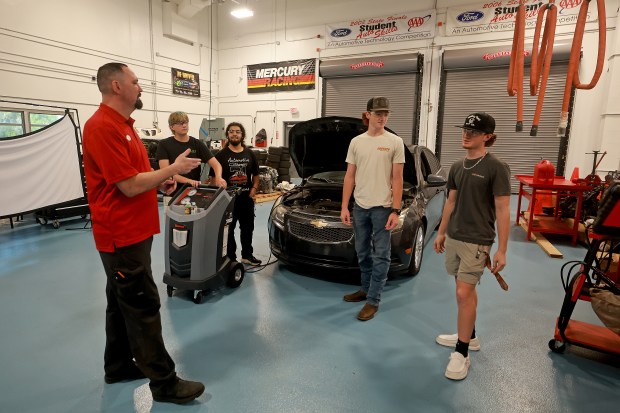 Teacher Carl Jones goes over the air-conditioning components of a car during the Automotive Maintenance & Light Repair program at Cooper City High School on Thursday, Aug. 20, 2026. (Mike Stocker/South Florida Sun Sentinel)
Air conditioning
AAA says 10 minutes is all it takes for the temperature inside an un-air-conditioned car to rise by 20 degrees. Carl Jones, automotive teacher at Cooper City High School, recommends rolling down your windows immediately upon entry to release trapped heat. He also encourages the blasting of the AC as soon as the driver turns on the ignition.
“You’re not using more fuel when you do this, that’s a misconception,” he said. “You can run it for two minutes or as long as you want. It’s designed not to freeze up. The most important thing is to get the heat out of the car.”
Marquez says to check the level of coolant, which keeps the car from getting too hot in the summer, only when the engine is cold. If the temperature gauge has been running high or the car has overheated before, have a technician look for leaks or worn hoses.
Windshield
Auto experts recommend sunshades to reduce interior heat buildup. Tinted windows are another possibility and will help keep the car cooler, but Florida limits how much darkening is allowed. Garceau said some of his customers have gotten state exemptions from the law because they have light-sensitive medical conditions that allow them to tint to a darker shade. However, he said these limit visibility at night, so there’s a tradeoff.
Specialty car advice
Electric cars are “happiest” when it’s about 70 degrees outside, according to Car and Driver magazine: “Operating in continuously higher temperatures — well above that 70-degree-F level — can lead to more battery degradation than in more temperate or colder climates.” Still, the website points out that warranties cover typical degradation and “only a minuscule number of EV batteries ever fail.”
Marquez said electric cars have different issues from gas-powered vehicles.
“Owners should pre-cool the vehicle while it is plugged in; follow the manufacturer’s charging guidance; and inspect tires regularly,” he said. “The key is to use the vehicle’s built-in thermal-management features without unnecessarily draining the battery while it is parked.”
Antique car owners also have to work to make sure their cars remain stable in hot weather. These vehicles often develop a heat-related condition known as “vapor lock,” according to Steve Neumeyer, webmaster for the Fort Lauderdale region of the Antique Automobile Club of America. He said this condition affects about 80% of pre-1980 vehicles during the summer. It occurs when gas heats up and turns into vapor before reaching the engine, creating air bubbles that interrupt fuel flow.
“Here’s a typical scenario: You drive to the ice cream stand on a hot day, park for 10 minutes, and when you try to leave, the car won’t start. Once it cools down, it fires right up again,” he said. If it’s fine after cooling, it’s likely vapor lock. If not, the problem could be fuel pump failure, Neumeyer said.
Keep emergency heat stuff in the car
Cold water refilled daily, a phone charger, jumper cables, a flashlight and a basic first-aid kit: All of these should be in every vehicle, Marquez said.
“A breakdown is frustrating any time, but sitting on the side of the road in this heat can quickly become a safety concern,” he added.
Also, never leave a child or a pet in a parked car, even briefly. According to Marquez: “If you see someone in distress inside a hot vehicle, call 911 right away.”
And it goes without saying …
Get these heat-related warning signs checked out immediately.
• Temperature gauge creeping up
• Steam coming through the hood
• Smell of coolant
• A leak
• Air conditioning blowing warm air