
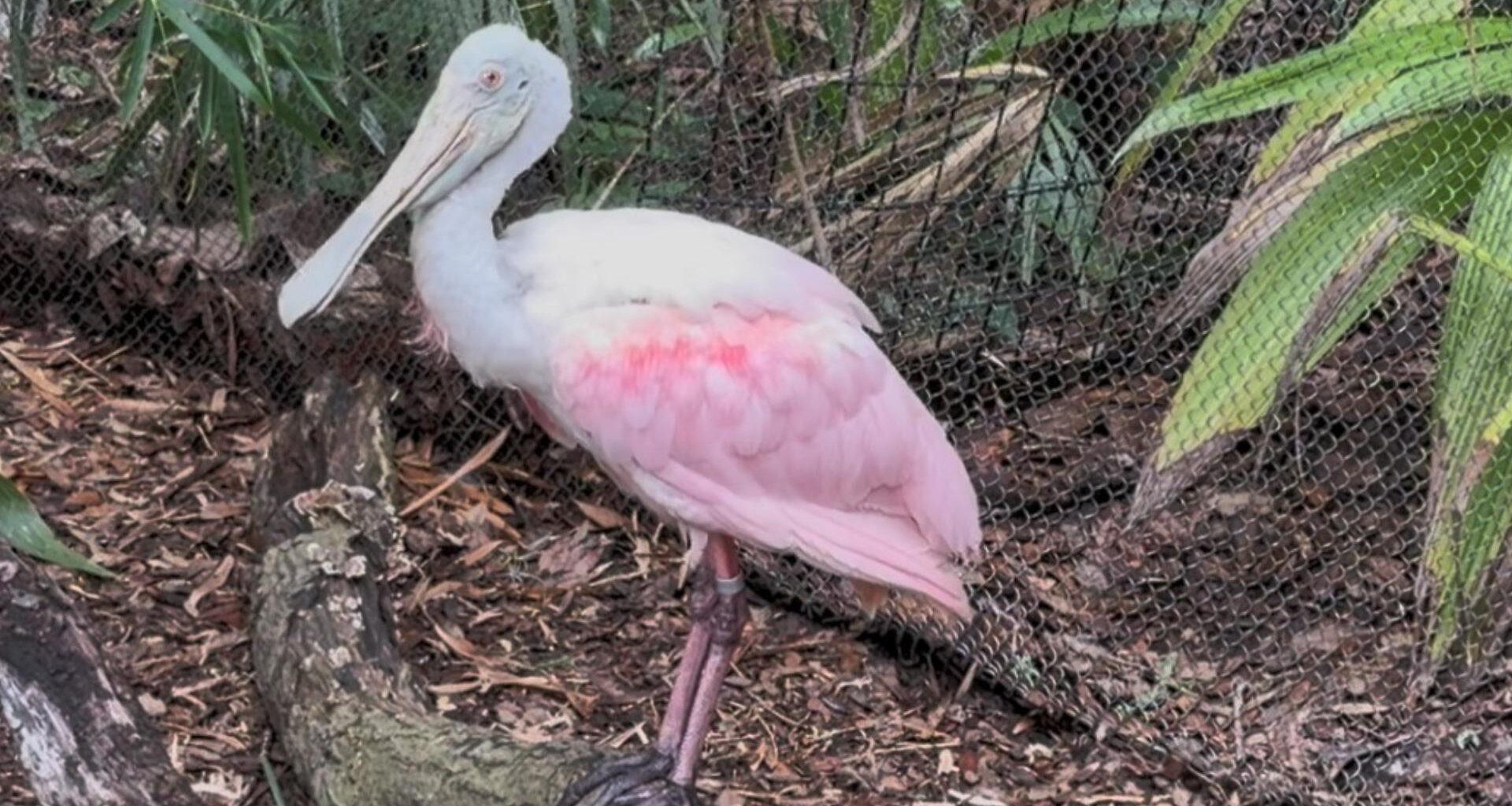
The flashes of pink you see in the First Coast marshes are not flamingos.
JACKSONVILLE, Fla. — The lovely pink birds seen year-round in marshes and wetlands in northeast Florida and Southeast Georgia are not flamingos. While it is not impossible for flocks of flamingos to find their way to the First Coast in the future, we do not currently have flamingos that are permanent residents. It is time for everyone to meet our beautiful, local, pink bird – the roseate spoonbill.

This story continues below.
More in Science
Learn about Jacksonville’s local pink bird – the roseate spoonbill
These birds get their name from their unique color and the shape of their bill.
“It looks like a long spatula or spoon, and they actually spoon in the water for their prey,” said Mike Taylor, Curator of Herps, Birds & Others at the Jacksonville Zoo and Botanical Gardens.
And their prey are crustaceans like shrimp, which is where they get their pink color from.
Outside of being pink, spoonbills are quite different than flamingos. They’re only about 2 to 3 feet tall, while flamingos can get close to 5 feet tall with their longer legs and necks.
“Spoonbills and flamingos eat differently,” explained Taylor. “Flamingos filter from the top of the water, whereas the spoonbills go a little deeper and they feel for their prey with their beak before they can snatch it up. “
Spoonbills are native to Florida and Georgia. Flamingos are found in the Caribbean, South America and Central America. Historically, they lived in Florida, and recently returned to the state, too.
“In 2023, Hurricane Idalia pushed a bunch of them north when they were on their way to Cuba, and now we’ve got, they estimate, about 100 still in Florida, mostly in South Florida,” said Taylor. “So, it’s possible to see a flamingo up here on occasion – one or two, maybe.”
They just haven’t made a permanent home this far north in Florida yet.
Let’s talk about some roseate spoonbill fun facts.
Sometimes, baby spoonbills are nicknamed teaspoons. They reach adult size and can fly by around 3 months.
Teaspoons bald as they grow.
They can lose their pink color if they don’t eat enough shrimp and get enough of the pink pigment.
While their bills are good for scooping shrimp, they are not sharp. When the zoo staff has to handle the birds, they sometimes get “spooned.”
“When you catch your birds, sometimes they will bite you, and when you get bit by a spoonbill, you say you’ve been spooned,” laughed Taylor. “It doesn’t hurt because they just don’t have the power and it’s not sharp. We get spooned all the time.”
It is a goof thing to see roseate spoonbills in our marshes and wetlands. They bring bird watchers to Florida, which helps the economy. But they are also a sign of a healthy environment.
“Spoonbills, their numbers were going down,” said Taylor. “I think they’re stable or hopefully recovering a little bit. They’re a good indicator of how the health of the environment is. The more spoonbills you have around, then more than likely it’s a good, healthy habitat.”
So still get excited when you see flashes of pink in our marshes, but put some respect on the name of our local pink bird – the roseate spoonbill.