
As inflation reshapes the value of the dollar, tangible assets like gold, silver and rare coins continue to offer a timeless perspective on wealth
Throughout history, people have turned to tangible assets during times of economic uncertainty. While paper currencies have risen and fallen in purchasing power, gold and silver have remained recognized stores of value across generations. As inflation continues to influence household budgets and long-term financial planning, many families are taking a fresh look at what they own. Diving into family collections and passed-down valuables may hold more value than they realized.
For Bill Hatchett, owner of A-Coin & Stamp Gallery, those conversations have become increasingly common. Some visitors arrive with inherited collections tucked away for decades. Others simply wonder whether old coins, jewelry or precious metals have gained value over time. What begins as curiosity often becomes an education in the difference between intrinsic value and collector value.
“People often come in thinking they’re selling gold,” Hatchett said. “Sometimes they’re actually bringing in a rare collectible that’s worth considerably more than its melt value.”
That distinction is one many people overlook. The value of bullion is tied primarily to the precious metal it contains, while numismatic coins may command substantial premiums based on rarity, condition, historical significance and collector demand. In some cases, two gold coins containing the same amount of precious metal can differ dramatically in value because of their history and scarcity.
“The biggest mistake people make is assuming every old coin is worth only its weight in metal,” Hatchett said. “Sometimes the history is worth far more.”
Gold has served as a trusted store of wealth for thousands of years. Long before modern banking systems and paper currencies, civilizations relied on precious metals because they were durable, portable and universally recognized. Even today, many investors and collectors appreciate gold and silver not simply for their market price, but for the confidence that comes with owning a tangible asset.
History also has a way of changing value. Items once overlooked or tucked into desk drawers can become highly sought after as time passes. Hatchett has seen countless examples of collections that were preserved by accident, only to become desirable decades later because of rarity and demand.
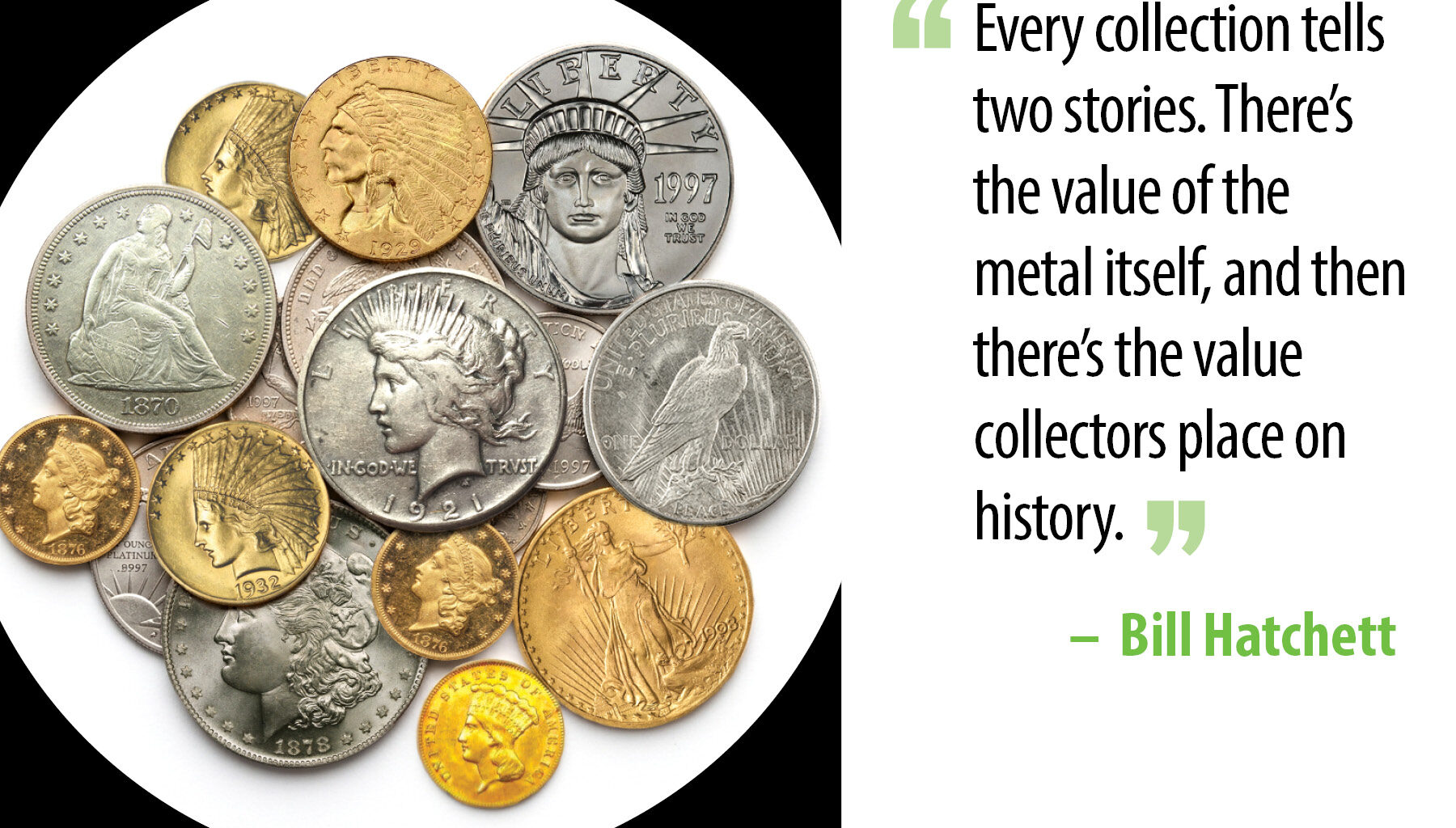
“Every collection tells two stories,” Hatchett said. “There’s the value of the metal itself, and then there’s the value collectors place on history. Understanding the difference is where experience really matters.”
Whether it’s a handful of silver coins, a family inheritance, vintage currency or a lifetime collection, understanding today’s marketplace begins with knowledgeable evaluation. For many families, that first conversation provides clarity about what they own and helps them make informed decisions about preserving, selling or expanding a collection.
As economic conditions continue to evolve, one truth has remained remarkably consistent: tangible assets have endured through changing markets, shifting currencies and generations of history. Gold and silver can be held in your hand, but their greatest value is often found in the stories they carry and the legacy they preserve. For those ready to learn more, A-Coin & Stamp Gallery continues to help collectors and families discover both.
A-Coin & Stamp Gallery offers complimentary, no-obligation evaluations of coins, currency and precious metals.
A-Coin & Stamp Gallery
6217 St. Augustine Rd. | Jacksonville | (904) 733-1204 | [email protected]
Hours: Monday–Friday 10:30am–5:30pm | Closed Saturday & Sunday
*A-Coin is not affiliated with Rolex USA.