

BAY COUNTY, Fla. (CBS12) — Florida has recorded its third death from Vibrio Vulnificus this year, with the latest death reported in Bay County as cases of the potentially deadly bacteria continue to rise.
The Florida Department of Health’s latest data show 17 confirmed Vibrio vulnificus infections statewide in 2026, including three deaths.
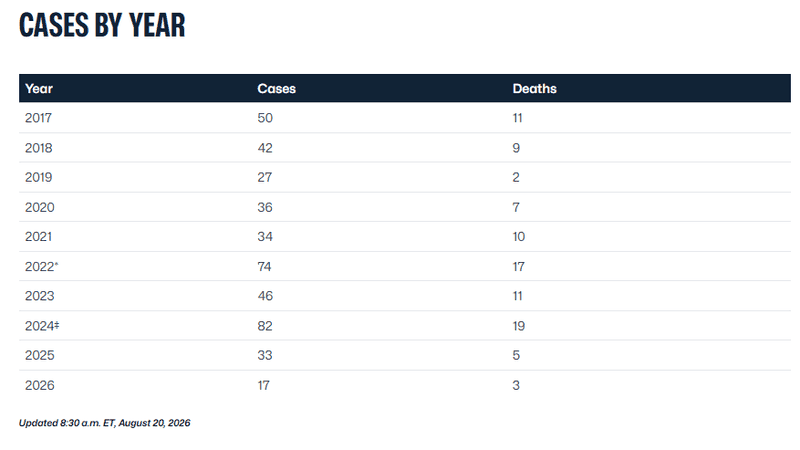
* In 2022 Collier and Lee counties experiences unusual increase due to the impacts of Hurricane Ian.
‡ In 2024 Citrus, Hernando, Hillsborough, Lee, Pasco, Pinellas, and Sarasota counties experiences unusual increase due to the impacts of Hurricane Helene. (Florida Department of Health)
Two people in Bay County have been diagnosed with vibriosis, according to state data. One patient was between the ages of 35 and 39, while the other was between 55 and 59. The data does not specify which patient died.
The first death of the year was reported in Palm Beach County on July 23, according to previous reports.
See also: Alfalfa sprouts linked to E. coli, Salmonella outbreak sickening 55 across 15 states
A second death was later reported in Marion County in early August, according to state health data.
Vibrio vulnificus occurs naturally in warm saltwater and brackish water and can cause serious infections when it enters an open wound or is consumed through raw or undercooked shellfish, particularly oysters.
The bacteria are sometimes referred to as “flesh-eating” because wound infections can lead to necrotizing fasciitis, a serious condition in which tissue around the wound dies.
According to the CDC, about one in five people with a Vibrio vulnificus infection dies, sometimes within just a day or two of becoming sick. The risk of severe illness is higher for people with weakened immune systems, liver disease, cancer, diabetes and other underlying conditions.
Symptoms can include diarrhea, stomach cramps, nausea, vomiting, fever and chills. Wound infections may cause redness, swelling, pain, warmth, discoloration or fluid leaking from the affected area.
Health officials recommend avoiding raw or undercooked shellfish and keeping open wounds away from warm coastal or brackish water. Anyone who develops symptoms after exposure should seek medical care immediately.
Florida reported 33 Vibrio vulnificus cases and five deaths in 2025. In 2024, the state recorded 82 cases and 19 deaths.