
I’ve never set foot in Minneapolis or St. Paul, but even from 1,300 miles away, it’s obvious which twin is the big brother. I have been to Dallas and Fort Worth. No mystery there either.
That’s how it usually goes with twin cities. One is the economic core. The other is where the core’s employees sleep.
For most of the last century, that was Tampa and St. Petersburg. Tampa was the muscle. St. Pete was God’s waiting room, where Hollywood came to film “Cocoon.” The Chamber painted “America’s Next Great City” on signs around town, Tampa Stadium included, and Tampa spent decades on the cusp of earning the slogan.
But the relationship is more sophisticated, and anyone who lives here, save the most ardent Tampa boosters, knows it flipped in the late 1990s. Tampa is still the economic heavyweight. St. Pete just got cooler. It had the baseball team. It had Old Northeast and Kenwood. It had the Dalí, the Chihuly and a gallery scene that spread block by block. It had a waterfront park system, which is the crown jewel of any city lucky enough to own one.
St. Pete went through a renaissance and then another. Tampa plodded along in the meantime. It didn’t fall behind, but it spent a lot of those years wrestling with potholes and pipes.

By 2014, The New York Times had put St. Petersburg on its 52 Places to Go list, a city “once mocked for its thousands of green benches dotted with senior citizens” now “anything but stationary.” The world had decided which twin was the more attractive partner. Tampa got its swagger back under Bob Buckhorn, and Water Street has turned into a real destination. But today neither city is dominant, nor is that the perception. What’s left is a healthy rivalry.
As we enter the second half of 2026, the next few weeks are shaping up as the most pivotal stretch in the history of that rivalry. Each city is about to make a decision that will shape it for decades. And one of those decisions is really the same decision, because it lands on both.
In Tampa, the City Council votes Thursday on a public financing package for a $2.36 billion Rays ballpark, with Hillsborough County to follow. The deal moves the team across the bay, but that’s the smaller part of it. The Rays envision 120 acres around Hillsborough College’s Dale Mabry campus and up to 8 million square feet of development, something like The Battery in Atlanta at twice the size. If it works, it rebalances the geography of a city that has poured its energy downtown for 20 years.
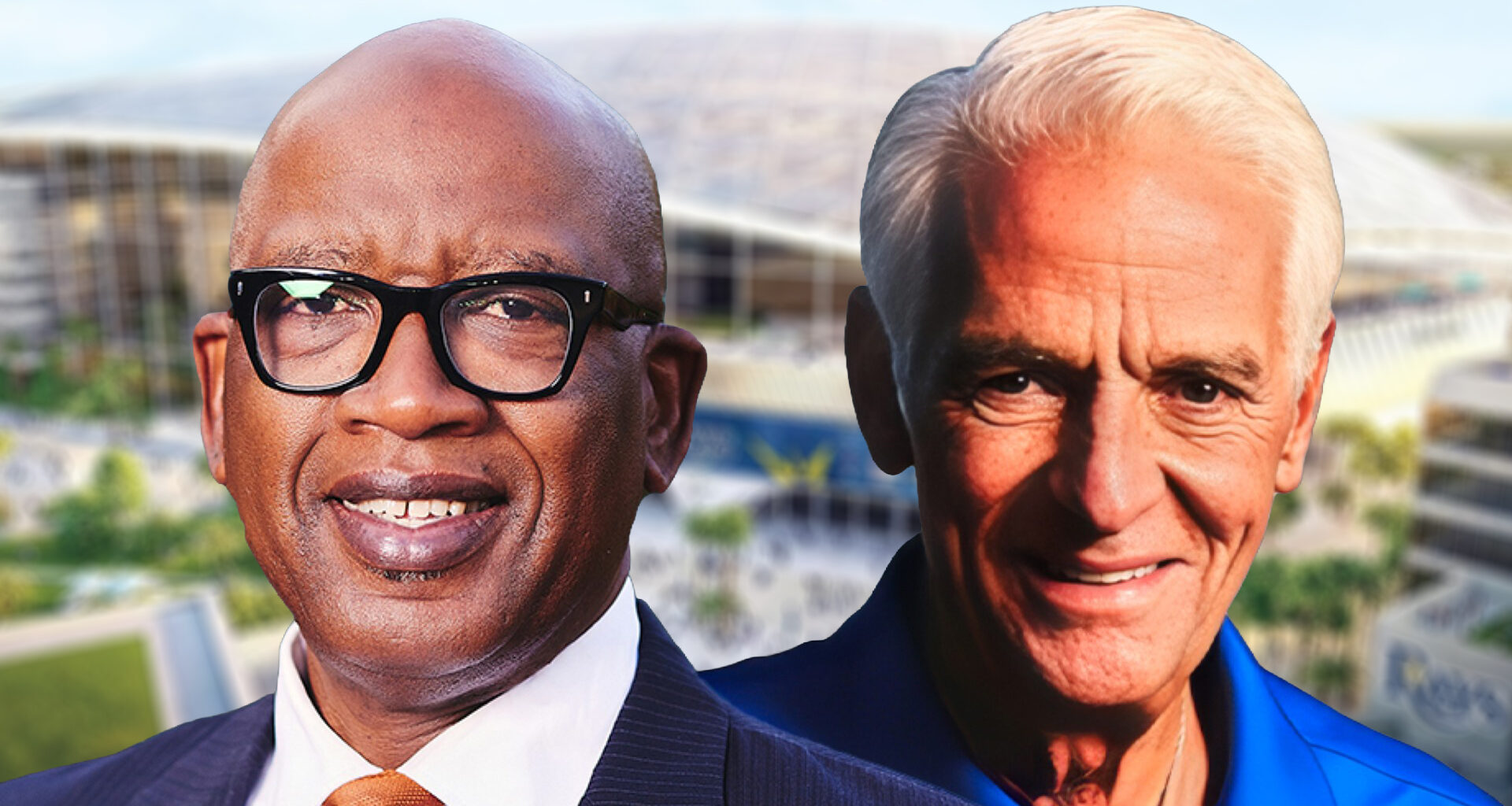
Across the bay, St. Petersburg is holding its first mayoral election on a Midterm cycle, which means more people will likely vote for Mayor than ever before. The November ballot pairs two former friends, both of them former Republicans. Observers call every election historic. That’s trite. This time it’s accurate.
At the crux of that race are the Rays and the 86 acres under Tropicana Field, which Ken Welch rebranded the Historic Gas Plant District. In a perfect world, Tampa approves the financing, the Rays leave on schedule, and the $8.1 billion redevelopment Welch awarded in July to Blake Investment Partners moves as fast as it can.

This is a case where two plus two equals more than four. You’re talking about more than 200 acres in the heart of two downtowns and north of $10 billion in construction, all happening at essentially the same time. I can’t think of an American metro that has tried anything like it.
If you run the Tampa Bay Builders Association, or you’re my friend Steve Cona at Associated Builders and Contractors, you’re looking at full employment for five years, provided the votes break right over the next 75 days.
And yet there is no guarantee a single shovel breaks ground. Tampa and St. Petersburg have both been cursed by false starts and good intentions gone sideways. Blake is the third developer picked for the Gas Plant site in six years. The last deal was approved and celebrated, including with a round of ill-fated employee bonuses, but then dead within months.
So if you love Tampa, if you love St. Petersburg, if you love the larger idea of Tampa Bay, you almost have to pray the needles get threaded, that cooler heads keep prevailing, and that people like Alan Clendenin and Bill Carlson keep finding a path when a deal starts sliding off the table.
And you have to hope St. Pete voters pick a leader who can take the city off pause without surrendering its interests. Specifically, that means Charlie Crist over Welch.
Welch isn’t a big enough thinker to fit these pieces together. The next Mayor may have to negotiate an extra year for the Rays at the Trop while Tampa builds. That takes a dealmaker. It does not take a Mayor who cut the Trop’s insurance from $100 million to $25 million to save $275,000 a year, then watched a once-a-century storm peel the roof off and hand the city a $57 million tab.
I’ve written before that St. Petersburg succeeds in spite of its elected officials. More than one of them messaged to say it was the best thing I’d ever written. I’d like to retire the line. This once, I want the officials, and the voters who hire them, to find their better angels.
The next 75 days will set the course for the next 30 years. The twins have never had this much riding on the same roll of the dice.
___
Ed. note: Michelle Todd Schorsch is the Chair of St. Pete Shines, a political committee backing Crist for St. Petersburg Mayor. Todd Schorsch is married to Peter Schorsch, the publisher of Florida Politics.