
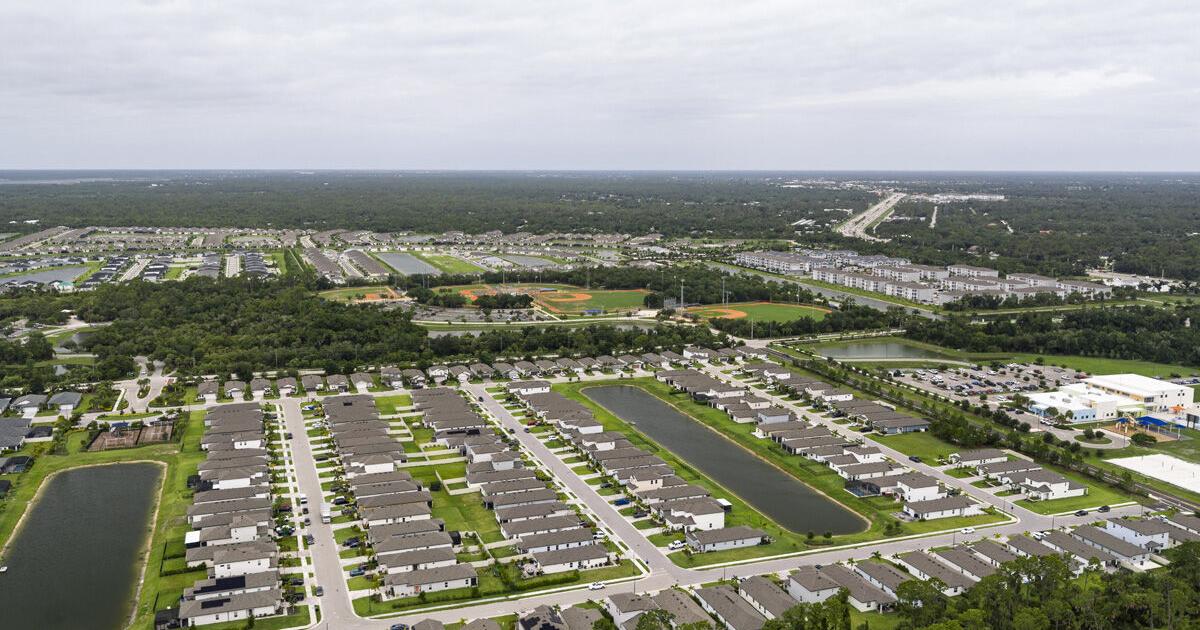

The West Port community in Port Charlotte is among the large residential developments driving Charlotte County’s population growth as officials plan new infrastructure, public services and economic development to meet future demand.
Brian Tietz
Owning a home in Florida could become “even more affordable” if voters approve Amendment 3 in the Nov. 3 election, said Carla Nix of The Nix Team at Coldwell Banker Sunstar Realty.
In a recent weekly video message, Nix said now could be the time to buy because buyers who close before Jan. 1 could take advantage of the increased homestead exemption if the amendment receives the required 60% approval from voters.
Florida residents who establish a homestead on or after Jan. 1, 2027, would initially receive the existing homestead exemption and would become eligible for the increased exemption beginning in the fifth year of the exemption.
For homesteaded residents who have lived in Florida for at least five years, the exemption for nonschool property taxes would increase to $150,000 in 2027 and $250,000 in 2028. Beginning in 2029, the amount would be indexed to inflation.
Shelton Weeks, professor of real estate and director of the Lucas Institute for Real Estate and Finance at Florida Gulf Coast University, said he would be shocked if Amendment 3 does not pass.
He pointed to Florida’s large population of senior citizens, including in Charlotte County, many of whom live on fixed incomes.
In Charlotte County, residents 65 and older comprise 40.6% of the population, and the median age is 60.
Weeks said those on fixed incomes who are concerned about rising costs could find Florida homeownership more attractive because the amendment would lower property taxes on homesteaded properties.
But the potential benefits would not be distributed equally, Weeks said. Longtime Florida residents would receive a greater benefit than newcomers, particularly in the amendment’s early years.
The measure also could affect the housing market itself. If lower property taxes attract more buyers, increased competition could push home prices higher, benefiting sellers while making purchases more expensive for buyers.
Weeks said the effect could be the opposite of what Florida experienced as rising insurance costs contributed to residents leaving the state. Amendment 3, he said, could help attract buyers from outside Florida.
Nonhomesteaded properties and commercial properties also would receive some tax relief because Amendment 3 would cap annual increases in their assessed value at 5%, down from the current 10%.
Meanwhile, housing activity in Charlotte County remained sluggish in July and August, a period that is typically slower for the local market.

Shelton Weeks is a Lucas Professor of Real Estate and director of the Lucas Institute for Real Estate Development & Finance at Florida Gulf Coast University’s Lutgert College of Business.
Florida Gulf Coast University
Brian Helgemo of The Helgemo Team at Compass said in his August housing report that the market showed “notable declines in inventory and sales across Punta Gorda Isles, Burnt Store Isles and Charlotte County, with pending sales also falling sharply.”
In Punta Gorda Isles and Burnt Store Isles, collectively referred to as the Isles, 196 properties were for sale in August, down 8.8% from July. There were 65 sales, down 5.8%, while 53 properties were pending, an 11.7% decline.
Charlotte County overall had 2,041 properties for sale as of the third week of August, down 6% from July. There were 495 sales, down 0.6%, while pending sales fell 11.7% to 446.
In Deep Creek, 106 properties were for sale, down 1.9% from July. Sales declined 6.1% to 31, while pending sales increased 3.8% to 27.
Helgemo said the declines in the Isles and Charlotte County overall “suggest slower deal flow, though Deep Creek saw a modest rise.”
While the market remains active, “the combination of fewer listings and fewer sales points to a more selective environment for both buyers and sellers,” he said.
July data from Realtors of Punta Gorda-Port Charlotte-North Port-DeSoto Inc. also reflected a relatively flat market. There were 528 closings at a median price of $353,545. Properties took an average of 115 days to sell, up from 104 days in June.
Inventory stood at five months, while active listings totaled 2,422.