
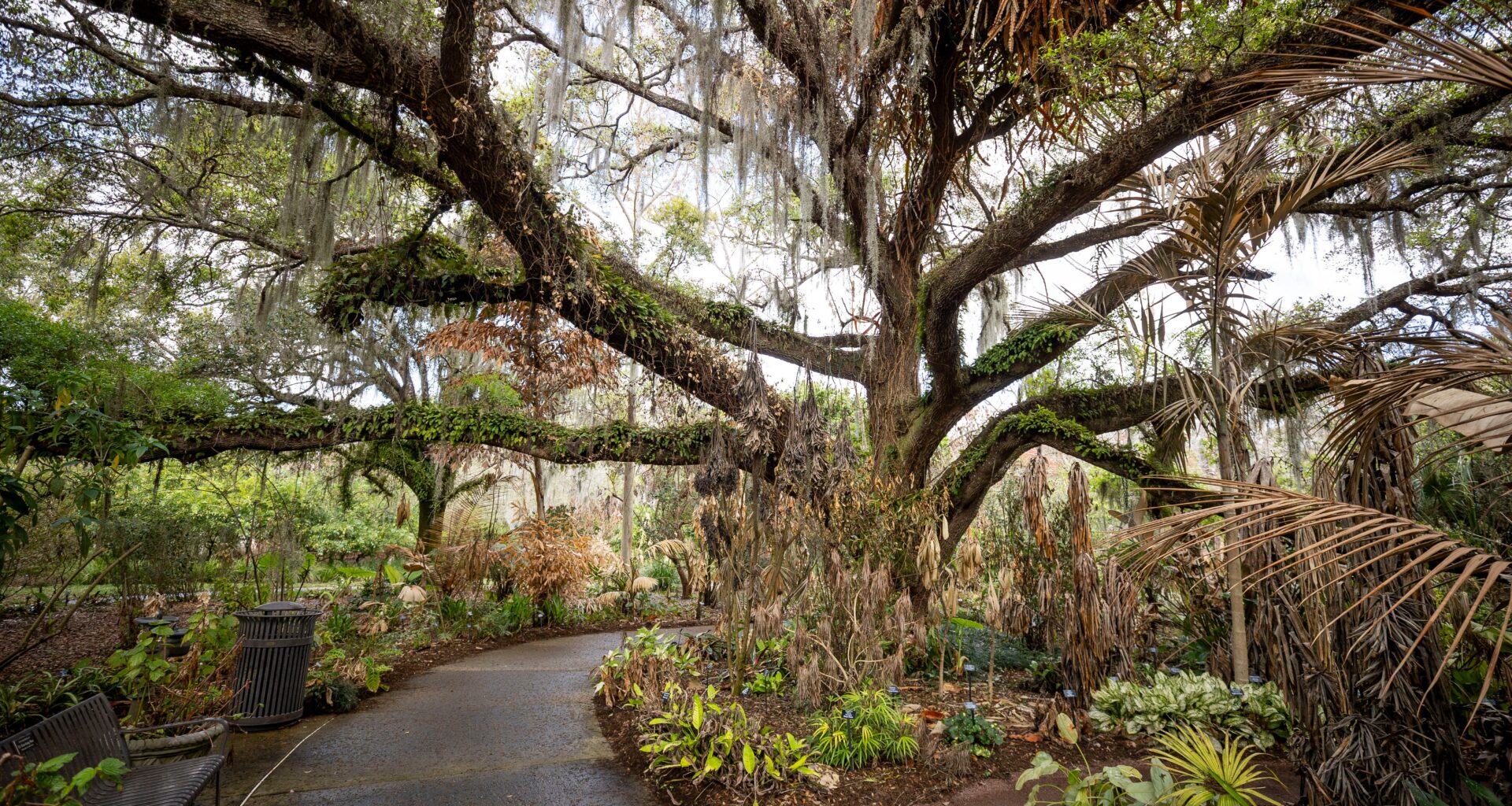
Orlando is shelving a controversial $100 million plan to modernize the city’s famed Leu Gardens after neighbors bashed the idea as one that would commercialize the park and add traffic to local streets.
An email from a city spokesperson on Monday cited the feedback it’s received from residents, as well as a potential loss of property tax revenue, as reasons the city was walking back the proposal. In November, Florida residents will vote on a proposal, Amendment 3, that would lower homeowners’ taxes but also slash cities and counties’ yearly revenue.
“After careful consideration of that feedback, the needs and priorities of the Gardens, and the uncertainty surrounding Amendment 3 and future property tax revenues, the City has decided not to move forward with the current conceptual plan and master planning process,” wrote spokesperson Andrea Otero.
The plan called for a modern lakefront visitor’s center with shops and a restaurant, as well as expanded parking, a boardwalk over Lake Rowena and a children’s garden. Neighbors were concerned that the additions would create more noise and traffic, while others feared it would stray from the park’s decades-long commitment to botanical gardens.
Prior to an April community meeting, a letter distributed among neighbors cautioned that “this proposal risks breaking that balance — turning a peaceful botanical garden into a high-traffic destination venue, with inadequate consideration for residents who live alongside it every day.”
City Commissioner Roger Chapin, who was critical of the idea, said he thought “it may have been an overly ambitious plan to begin with.”
The garden began looking at an overhaul and additions last January because visitation at Leu Gardens has doubled to 300,000 annually over the last 10 years. That has strained its infrastructure and visitors’ center — as well as its parking, where cars often overflow onto Corrine Drive and into surrounding neighborhoods during popular events like its annual plant sale and Dazzling Nights holiday celebration.
The plans were scaled back in April, with a proposal for a lakefront restaurant that would be open into the evening, for example, turned into a café, which would operate only during the gardens’ regular business hours. But many remained opposed.
Despite not moving forward with the conceptual master plan, the city email states the city intends to maintain care of the gardens, including “making necessary repairs, addressing aging infrastructure, maintaining existing buildings and grounds, and making improvements that are needed to safely and responsibly operate the Gardens.”
The 50-acre garden is on the west edge of Corrine Drive on the shore of Lake Rowena. It was donated to the city in 1961 to be preserved as a botanical garden and has grown to feature 15,500 botanical specimens and 3,551 species. Among them are 800 varieties of edible plants, 300 species of palm, 50 species of bamboo and one of the nation’s largest camellia collections.
In a statement, state Rep. Anna Eskamani, D-Orlando, who is running for city mayor in 2027, thanked “the hundreds of community members who showed up to public meetings, to our legislative office, and to their neighbors’ kitchen tables to make their voices heard about the future of Harry P. Leu Gardens.”
The garden ” is a treasure, and any vision for its future has to be shaped by the people who visit, volunteer, and live alongside it, and it has to put environmental conservation and the long-term health of the Gardens first,” she said. “Slowing down to get this right is not a setback. It’s stewardship. I look forward to continuing to work alongside residents, City leadership, and Gardens staff to ensure that whatever comes next honors both our community’s vision and the ecological integrity of this extraordinary place.”