
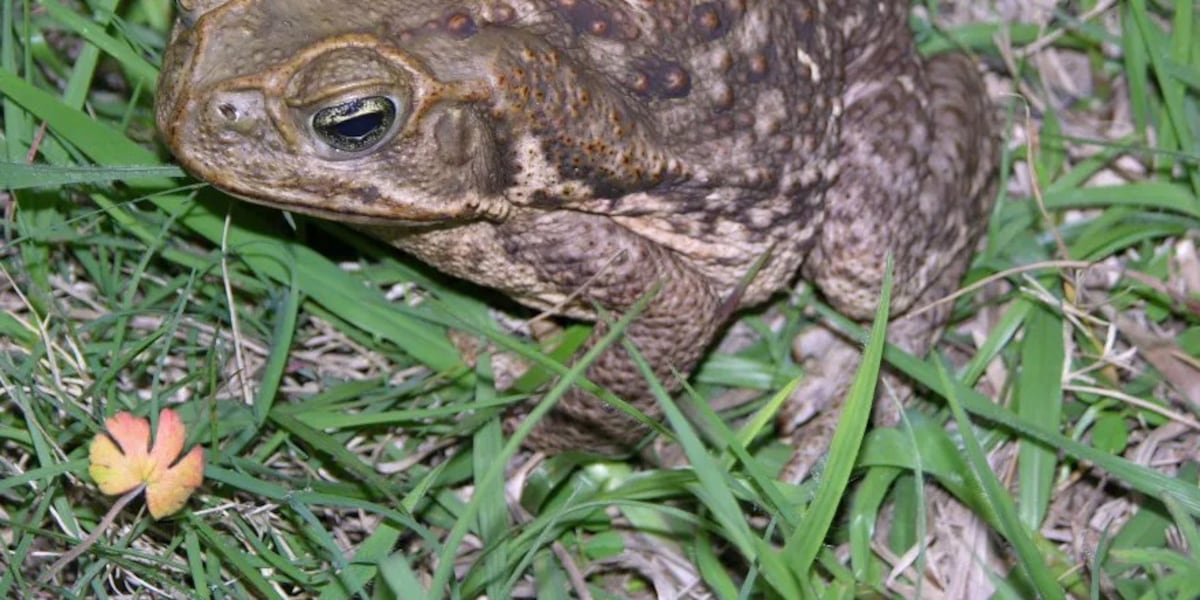
SARASOTA, Fla. (WWSB) – Florida’s rainy season can bring an unwanted visitor into backyards, and it can pose a serious danger to pets.
Cane toads, commonly known as Bufo toads, are a nonnative species found in parts of Florida. They are poisonous and can make dogs seriously ill if they bite or lick one.
Marsha Panuce, founder of Donte’s Den in Myakka City and host of Animal Outtakes, joined ABC7 to talk about the danger and what pet owners should watch for.
“They are poisonous, so they are very dangerous, especially during the rainy season,” Panuce said.
She warned that a pet doesn’t necessarily have to eat the toad to be exposed.
“All a dog or cat has to do is lick it, and when you see that, you have to move fast,” Panuce said.
How to recognize a cane toad
According to the University of Florida Institute of Food and Agricultural Sciences, adult cane toads typically measure between three and six inches long, although some can grow larger.
One of the most recognizable features is a pair of large, somewhat triangular poison glands located behind the eyes on the shoulders. Cane toads also have dry, warty skin and a ridge around the eyes and above the nose.
Not every toad you see is dangerous. Florida is also home to native toads that can look similar, so UF/IFAS recommends properly identifying a toad before taking action.
Signs your pet may have encountered a cane toad
Pet owners should watch for:
Drooling or foaming at the mouth Pawing at the mouth Bright red gums Disoriented or frantic behavior Whining Seizures What should you do?
If you believe your dog has bitten or licked a cane toad, act quickly.
Put on gloves and wipe the dog’s mouth, gums and tongue with a damp cloth. Carefully rinse the mouth, keeping the water flowing out of the mouth rather than down the throat.
Then contact your veterinarian or an emergency veterinary hospital immediately.
Keeping cane toads away from pets
Cane toads are often found in yards and other areas around people. They are primarily active at night and can be attracted to pet food left outdoors.
Pet owners can reduce the risk by keeping food and water bowls indoors at night, watching dogs closely when they are outside after dark and being especially cautious during rainy weather.
For more information about cane toads and how to identify them, pet owners can contact their local UF/IFAS Extension Office.
Copyright 2026 WWSB. All rights reserved.