
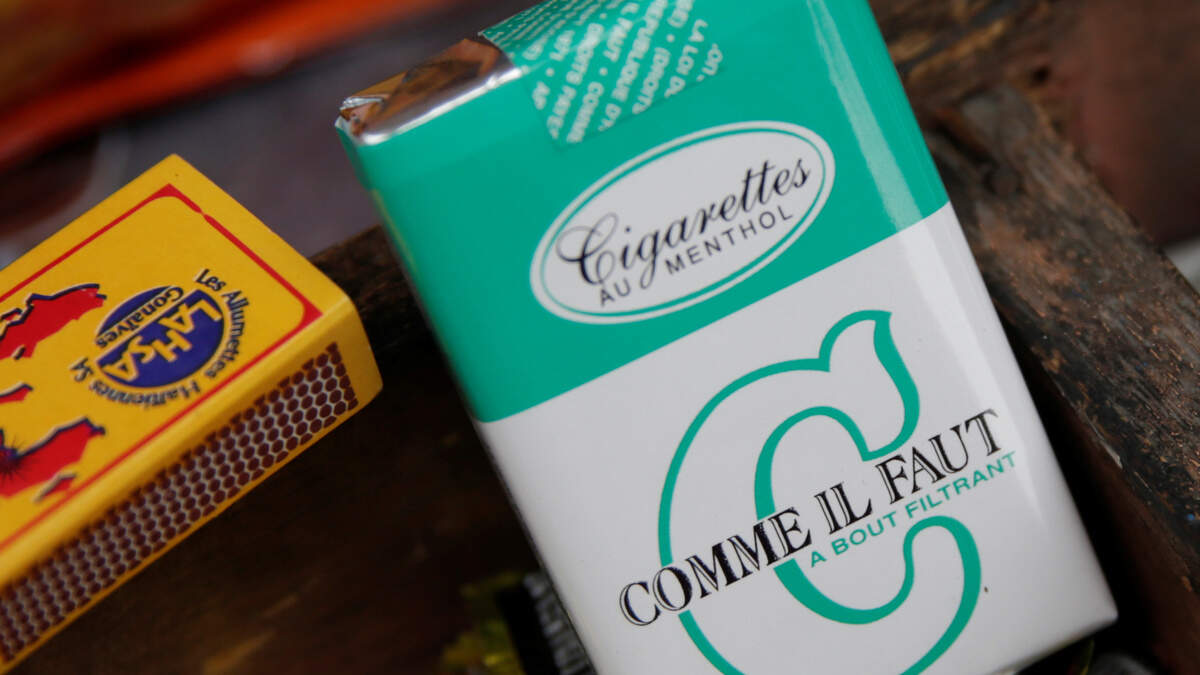
A package of Haitian “Comme il Faut” cigarettes is displayed for sale among candy at a street stand in Port-au-Prince, Haiti, May 29, 2019. The head of the company’s security operations, a U.S. citizen, was found stabbed to death on Wednesday, August 19, 2026.
ANDRES MARTINEZ CASARES
REUTERS
Haiti police have made an arrest in the killing of a U.S. citizen in Port-au-Prince, describing the murder as “a huge plot” involving several people.
“We have the presumed killer and the murder weapon, a knife,” a Haitian police source confirmed to the Miami Herald, asking for anonymity due to the ongoing investigation.
Michael Gallagher, the head of security for Compagnie des Tabacs Comme Il Faut S.A., was found stabbed to death inside his office at the cigarette company after hours on Wednesday.
Police initially took 13 employees into custody for questioning. They remain in police custody on Monday as investigators worked to determine the depth of the plot.
The accused killer worked with Gallagher, the police said, and had stolen 9 million Haitian gourdes, about $68,800. Declining to provide additional details, the police source said the investigation continues.
Gallagher’s killing has shaken his family and those who knew him in Haiti. He is survived by his wife, who lives in the country, and his father and siblings in the United States.
“He was an honest man. He was a good man, and he didn’t deserve this,” his sister, Shaay Gallagher-Starr, told the Herald. “Nobody deserves this.”
Gallagher-Starr said her brother was neither naive nor someone who trusted people simply because they were around him.
“He was smart. He was savvy about people, and the fact that he was betrayed so completely, it’s just unbelievable to me, and it must have been unbelievable to him,” she said.
Gallagher spent his entire adult life working in jobs that allowed him to protect others, his family said. After the 2010 earthquake struck the country, killing over 300,000 Haitians while nearly destroying Port-au-Prince, he remained in the country just as he had years earlier when Hurricane Matthew hit, his sister said.
“He stayed right in Haiti and did everything he could to support relief efforts and rebuilding. He was there for his family, friends neighbors and coworkers,” said Gallagher-Starr. “He assured us that he was okay and kept right on what he needed to do.”
Gallagher, 63, was employed with Comme Il Faut S.A. for 14 years and headed its security operations. Prior to that he worked as a bodyguard with the Steele Foundation. The San Francisco-based security firm was hired under a State Department-approved security arrangement to protect Haitian President Jean-Bertrand Aristide and manage his presidential protection unit up until Aristide’s ouster on Feb. 29, 2004.
“That was his choice of careers, to protect others,” Gallagher-Starr said.
Family members said Gallagher had spent most his working out of the public view, only to have his violent death suddenly thrust him into the spotlight.
“He would never have participated in anything that undermined the people that he had sworn to protect, and he spent his entire adult life working in jobs that allowed him to protect other people,” his sister said.
Before his job with the Steele Foundation, Gallagher worked as a bouncer at a local bar. “He was my big brother, and I always knew that if anything really bad ever happened that I could call him, and he would be there,” Gallagher-Starr said, recalling how when her daughter they would discuss him coming to their rescue. “He would have come from anywhere in the world to help his family if we ever needed the skills that he had. And now the world feels like a less secure place without humanity.”
Gallagher didn’t just work in Haiti, he built a life there and loved the country, friends said. In a conversation with his father last year about the country’s worsening security situation, he sought to assure him that he was safe.
“He said, ‘I’m working in an office, in a building in a compound,” Gallagher-Starr recalled.
Learning that her brother’s death came inside a building in which he felt safe makes it even harder to accept, she said.
“To find out that this violence against him came from within that place he felt safe in is such a betrayal,” she said. “I am so angry for him and disappointed on his behalf.”
Miami Herald
Jacqueline Charles has reported on Haiti and the English-speaking Caribbean for the Miami Herald for over a decade. A Pulitzer Prize finalist for her coverage of the 2010 Haiti earthquake, she was awarded a 2018 Maria Moors Cabot Prize — the most prestigious award for coverage of the Americas.