
In fast growing South Tampa, waterfront property is as good as gold.
An influx of wealthy newcomers willing to pay a premium to live beside the bay has left builders scrambling to meet demand. In the past five years alone they’ve added a slew of new luxury developments including Aqua at Westshore Yacht Club, Marina Pointe, Broadstone Marina Bay and MAA Breakwater.
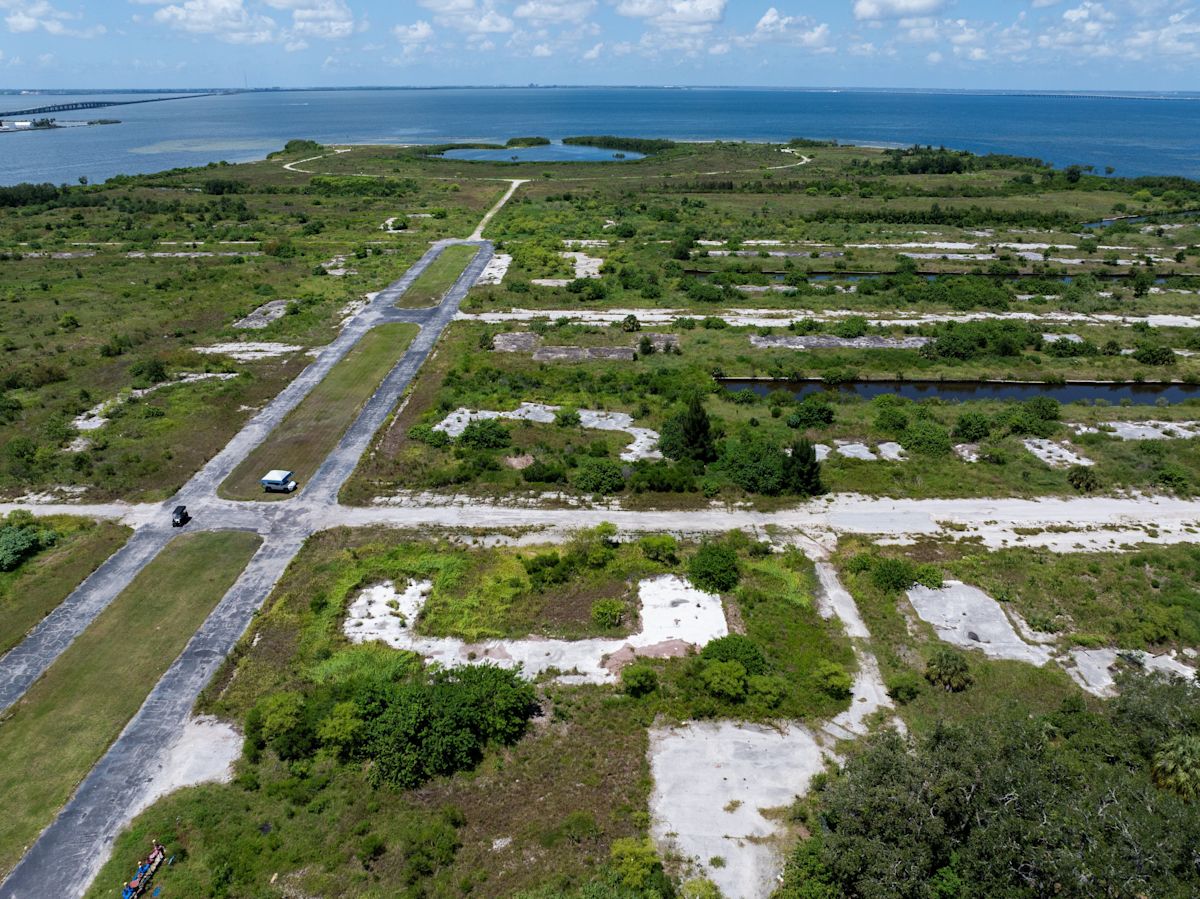
Still, one piece of prime real estate just north of the Gandy Bridge remains vacant. Plans to build a new neighborhood on the 162-acre peninsula off Westshore Boulevard have been underway for more than a decade, with little to show for it.
In 2020, Debartolo Development and Avanti Properties Group began clearing the land to make way for hundreds of homes – much to the dismay of local environmentalists.
The city issued a stop work order after it discovered the developers had not secured the proper permits. That order was later lifted, but the work still hasn’t been completed.
DeBartolo and Avanti did not respond to requests for comment.

The land is owned by DeBartolo Development and Avanti Properties Group.
A broker familiar with the property said the project is still underway but that the developers have been held up trying to meet stringent flood requirements.
The city said it still needs more engineering information from the developers before the project can move forward.
Long before it was eyed as a potential luxury housing development, the peninsula was part of a community called Rattlesnake.
The area was settled in the 1930s by George K. End, a Columbia School of Journalism graduate-turned snake oil salesman. He opened a Rattlesnake Cannery and Reptilarium there, selling rattlesnake venom, hides, rattles and meat.
After he died in 1944, the community dissolved.
In the early 1960s, Ralph Kaul, a public servant, developer and philanthropist, scooped up the barren land for $1 million. He dredged and filled the shoreline and built the Georgetown Apartments.

An aerial view of the Georgetown Apartments site from 2009. Ralph Kaul filled the shoreline to build the property in the 1960s.
His family sold the 625-unit complex to a Chicago buyer for $125 million in 2005. The plan was to tear it down and build houses, condos and townhomes. Then the housing market crashed.
The lender, Bank of America, took back the property in 2008. There was some talk of turning it into a public park, but that never materialized.
The following year, it sold for $30.5 million to DeBartolo Development – the firm led by former San Francisco 49ers owner and billionaire Edward J. DeBartolo Jr. – and Winter Park-based Avanti Properties Group.
DeBartolo moved his company to Tampa in 1999 after he was convicted in a federal gambling fraud case involving former Louisiana Gov. Edwin Edwards. His family has since donated millions to local philanthropic causes including Brooks-DeBartolo Collegiate High School.
During the Great Recession, DeBartolo Development was on the prowl for distressed assets that it could buy for cheap and flip, said Bill Eshenbaugh, a land broker who helped close the deal on the former Georgetown Apartments.
At first, Debartolo and Avanti tried to sell pieces of the land to builders who could develop it for them, but “there were a tremendous amount of physical attributes that were a challenge,” Eshenbaugh said.
Unable to land a development partner, the two firms set out to improve the land on their own.
By 2020, they unveiled plans for The Isles at Old Tampa Bay: a planned community with up to 350 residences including 130 luxury townhomes and 67 “estate lots,” where buyers could custom build their own homes. Lot prices ranged between $2.2 million to $6.9 million.
The end product would look similar to the exclusive Culbreath Isles neighborhood in South Tampa, said Toni Everett, a real estate broker hired to market the property. The concept drew plenty of interest from prospective buyers.
“This is pretty rare,” she said. “I don’t think there’s any more big parcels like this on the open bay.”
When the developers started clearing the land – without the proper permits from the city – it sent hoards of rattlesnakes slithering into the surrounding neighborhoods.
Environmentalists, like Chelsea Johnson of the Tampa advocacy group Tree Something Say Something, called the incident “a tragedy.”
“You and I won’t ever see those trees replenished, they were absolutely priceless,” she told The Tampa Bay Times in 2020.
The city temporarily halted the project after neighbors complained.

A photo from 2020, before developers cut all the trees down at the site of the former Georgetown Apartments on S Westshore Boulevard in Tampa.
DeBartolo issued a formal apology, promising to keep neighbors informed.
“We understand that we will need to earn back your trust in the months ahead,” wrote Edward M. Kobel, president and chief operating officer.
Pete Trela, president of the nearby Bayside West Neighborhood Association, said they haven’t heard from the developer in years.
“That communication isn’t occurring, and it’s very disappointing to the entire neighborhood,” he said.
The stop-work order has since been lifted. But the developers will have to do a lot more than just bulldoze some trees in order to make the land habitable.
The multi-phase project involves grading, canal and seawall improvements, infrastructure, landscaping and utilities, all of which require permits.
Before any of that can get done, the developer will need to secure a preliminary plat. This is essentially a roadmap that shows what will be built where. Tampa’s chief building official, J.C. Hudginson, said the developer applied for a new plat at the end of 2025 and has been going back and forth with city staff since then to complete all the requirements.
Hudginson said the city is waiting for the developer to provide an engineering analysis addressing proposed fill within the coastal high hazard area, clear identification of regulatory flood boundaries and elevations, and documentation demonstrating that the development will not adversely affect flood conditions on surrounding properties.
Neither Debartolo Development nor Avanti Properties responded to questions about the project nor explained why it’s been delayed.

A drone photo of the land north of the Gandy Bridge off Westshore Boulevard west of W Fair Oaks Avenue is seen on Aug. 13 in Tampa. Plans to build a massive new neighborhood there have been underway for over a decade but little progress has been made.
Everett said the developers have faced hurdles trying to navigate federal and local floodplain requirements.
The property had some issues to begin with, Eshenbaugh said. The old canals were filled with stagnant, “funky” water. They were designed for 1960s-era small boats typical for waterfront apartments, not modern luxury homes.
Despite this, he still believes it was a good investment. Though it’s difficult to give a precise value for the property without surveying it, Eshenbaugh said it could sell for as much as $100 million today.
“How do you beat waterfront property in Florida?” he said. “There’s not much of it. It’s more challenging every day that goes by to get it approved, to get the neighbors to leave you alone, to get it zoned.”
Trela, with the neighborhood association, said he couldn’t be more pleased that the lot has remained empty. The area has already become overbuilt, he said, leading to increased traffic.

This 2020 file photo shows traffic on Gandy Boulevard with the Selmon Expressway above looking southwest toward St. Petersburg in Tampa.
If the land must be developed, Trela said he’d like to see the owners work with the community to build something that benefits everyone, not just wealthy homebuyers. He suggested adding a community center or a public park.
“How can we make it to where they are not pinching every single inch of property to be able to maximize their profits, while still providing something that the city needs, which is additional housing?”