
TAMPA, Fla. — For some Tampa homeowners, a small structure in the backyard is becoming a way to bring in extra income, keep family members close and make better use of their property.
Accessory dwelling units, commonly known as ADUs, are gaining attention after Tampa expanded its rules in 2024, allowing the units in more parts of the city.
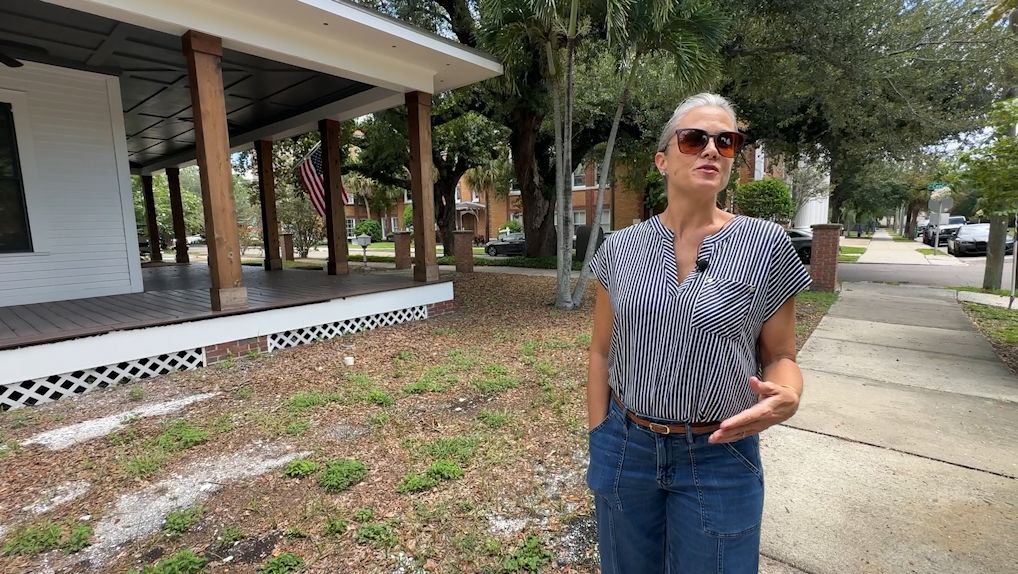
Renee King has had an ADU on her property since she bought her Tampa home in 2007.
She originally used the unit as a guest house. Today, she uses it as a short-term vacation rental.
“The ADUs in general are great for the neighborhood,” King said. “Several of my neighbors have them. We get to meet people from all over the world. A lot of our units are filled with families moving their kids into college.”
King said the rental income is helping her family pay for college expenses.
“It’s definitely helping us put a dent in tuition fees,” she said.
King also sees the ADU as a long-term investment for her family.
“If it’s ever needed, we’ll always have it there for them,” she said, referring to the possibility of her children using the unit after they graduate.
Taryn Sabia, a Tampa Heights Civic Association board member and professor at the University of South Florida’s College of Design, Art & Performance, said ADUs can provide a flexible housing option for people at different stages of life.
“I think it’s a great way to downsize,” Sabia said. “So when we think about retirees wanting to have to maybe care for less of a house or smaller property or things like that.”
Sabia said ADUs can also help families caring for multiple generations under one roof.
“We have a number of families now that are the sandwich generation,” she said. “They have young children at home and are also caring for aging parents.”
Sabia said the additional space can also make homeownership more financially feasible.
“It gives people an advantage of buying those properties because they do have a built-in income stream already coming into the property,” she said.
King sees that income potential as another reason ADUs can benefit homeowners.
“And I think it’s a great opportunity for homeowners to make some additional money or to house older family members, keep the family together,” King said. “It’s a great way for people that are on a fixed income to perhaps make some more money if they are able to.”
Tampa’s 2024 rule changes expanded the geographic area where ADUs can be built. Previously, they were limited to portions of Seminole Heights, East Tampa, Tampa Heights, and Armenia Gardens Estates.
The eligible areas in Tampa now extend north to Sulphur Springs and Temple Crest and west to Wellswood and parts of Riverside Heights.
The city also removed a previous requirement that property owners live in the main home. Owners can now live in either the primary residence or the ADU.
Since the changes took effect, 28 homeowners have initiated the process to allow an ADU on their property, and seven have completed construction, according to the city.
The city encourages homeowners interested in building an ADU to first determine whether their property is in an eligible area and review development and permitting requirements before beginning a project.