
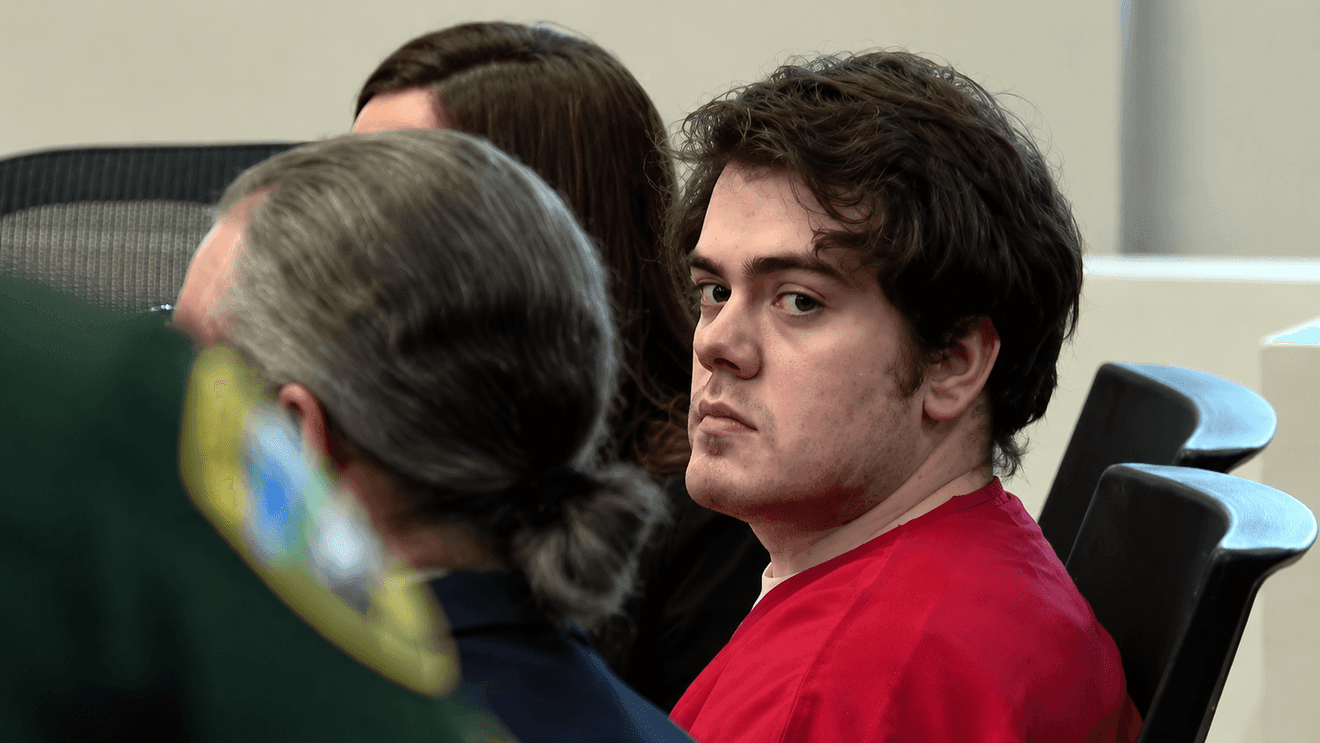
TALLAHASSEE, Fla. — When Leon County Circuit Judge Lance Neff first considered delaying accused FSU shooter Phoenix Ikner’s capital murder trial this spring, he questioned why defense attorneys could not be ready by October.
“I think there’s a lot of case law out there that says your client is entitled to a fair trial, not a perfect trial,” Neff said during a May hearing.
Three months later, the judge reached a different conclusion.
In an order issued Aug. 12, Neff moved Ikner’s trial from October 2026 to June 8, 2027, writing that the defense had now supported its request with the documentation the court previously required. He also cautioned that no additional continuances would be granted absent extraordinary circumstances.
The order offers a window into the challenges of preparing a death penalty case, where defense attorneys argue the stakes and workload differ significantly from other homicide prosecutions.
According to court filings, the Office of Criminal Conflict and Civil Regional Counsel representing Ikner has two death-qualified attorneys assigned to handle capital cases across a 32-county region spanning six judicial circuits. The office also reported losing an experienced capital attorney earlier this year while continuing to manage multiple death penalty cases.
The filing says attorneys are reviewing more than 500 body camera videos, hundreds of witness interviews, digital evidence, medical records, forensic reports and mitigation materials before trial.
“The State is seeking to execute a human being, and there exists no higher stakes litigation,” the defense wrote in its motion.
Ikner, 21, is charged with two counts of first-degree murder and multiple counts of attempted first-degree murder in connection with the April 17, 2025, shooting at Florida State University. Prosecutors have filed notice that they intend to seek the death penalty.
The continuance marks the latest shift in a case that has remained under intense public attention since the shooting.
During the May hearing, defense attorney Blake Johnson argued his team was still reviewing more than 800 gigabytes of video evidence, 239 separate 911 recordings, more than 120 Tallahassee Police Department reports and thousands of pages of digital records, including ChatGPT conversations.
State Attorney Jack Campbell argued at the time that, despite the volume of evidence, the case itself remained straightforward.
“I think it’s a straightforward homicide,” Campbell told the court.
The defense maintained that preparing a constitutionally adequate defense in a capital case involves far more than reviewing the evidence tied directly to the alleged crimes.
Tania Alavi, a Florida attorney who has handled capital litigation since 2008 and is qualified to represent defendants in death penalty cases, said capital prosecutions are fundamentally different from other criminal trials because they involve two distinct phases.
“In capital cases, you really have two trials,” Alavi said. “One is the first part where the jury decides whether your client is guilty or not of first-degree murder… Then if they find your client guilty, then you go into essentially a completely separate trial.”
That second phase requires attorneys to investigate a defendant’s life history, including family background, mental health, medical history and other mitigating evidence that jurors may consider when deciding whether a death sentence is appropriate.
Alavi said that investigation often extends far beyond the evidence surrounding the crime itself.
She said moving too quickly can create legal issues that may surface years later during appellate review.
“When we don’t have enough time to do that, this just makes the victims’ families relive this over again potentially because the case comes back because defense counsel wasn’t able to do the things that they were supposed to do,” Alavi said.
Capital convictions automatically receive heightened appellate review under Florida law, making trial preparation particularly significant in death penalty cases.
For victims’ families, however, continuances often mean living with uncertainty for months or years longer.
Ruth Markel knows that experience firsthand.
Her son, Florida State University law professor Dan Markel, was murdered in Tallahassee in 2014. Over the next decade, his family attended multiple trials, appeals and sentencing hearings as prosecutors secured convictions against five people connected to the murder-for-hire plot.
Markel said one of the most difficult parts of the process was the uncertainty that accompanies lengthy criminal proceedings.
“One of the most important and unfortunate situations that families face when they go through the criminal system is actually the waiting,” she said.
Rather than questioning why courts sometimes take longer to reach trial, Markel said communication with victims’ families becomes increasingly important as cases grow more complex.
“I think the court system has to have help in helping families anticipate a little more clearly what the process looks like for a victim, and particularly victims of homicide,” she said.
Neff’s order gives both sides additional time to prepare before jury selection is scheduled to begin next June.
The order also makes clear that the court expects the new trial date to remain in place.
Absent extraordinary circumstances, Neff wrote, no further continuances will be granted.