
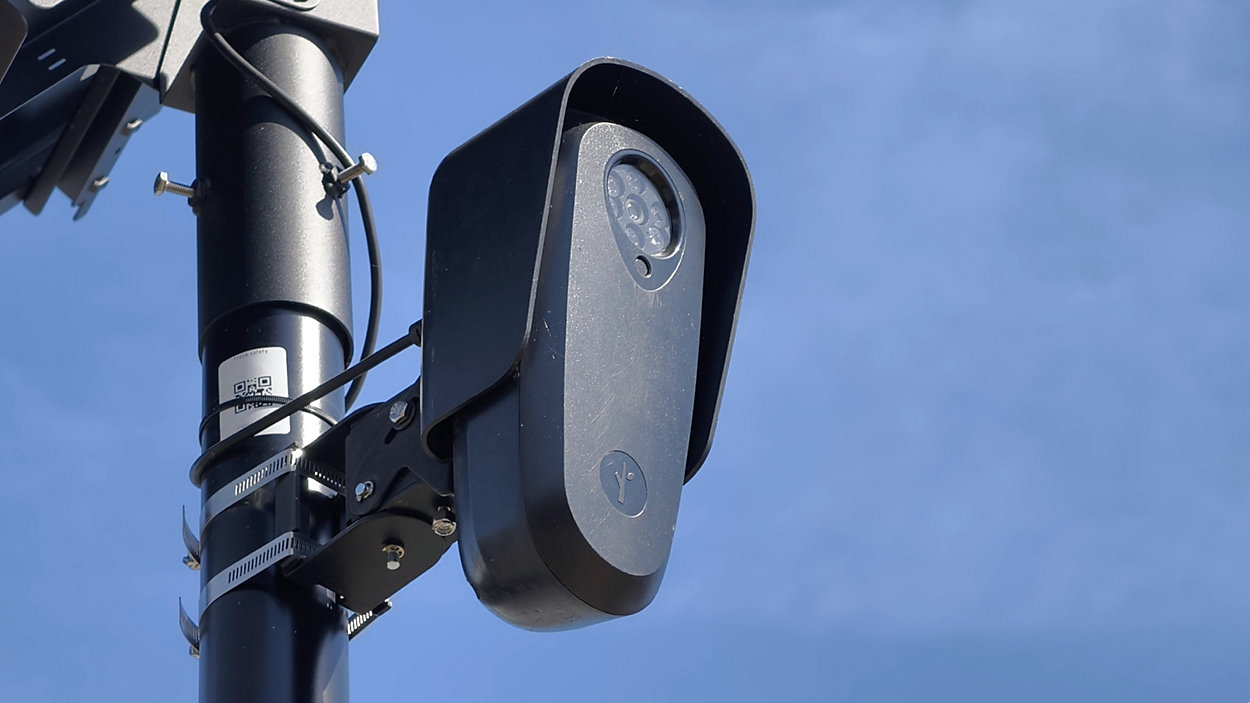
The St. Petersburg City Council could begin its first discussions of the city’s Flock camera network this week, more than two years after approving a five-year contract for the license plate readers without debate.
Council Vice Chair Richie Floyd is asking colleagues Thursday to refer the city’s contract with Flock Safety and use of the cameras to the Public Services and Infrastructure Committee.
The review would examine how police use the controversial technology, what happens to the data it collects and whether the privacy tradeoff is one St. Petersburg should continue to make.
The city began using Flock cameras in 2022 through a Police Department test program before the Council approved a five-year, $730,250 contract in January 2024 that expanded the network to roughly 50 cameras. The contract passed on the consent agenda without questions or public discussion.
Floyd is now pushing the Council to have the conversation it skipped the first time.

“In 2024 we got Flock cameras, and it was a consent agenda item that had no discussion,” Floyd told Florida Politics. “I wasn’t even in attendance and I think at least one other person missed the meeting as well. So there was no discussion about it.”
Floyd said he has been told the city now has about 54 cameras and has spent roughly four or five months talking with local organizers, activists and St. Petersburg Police Chief Anthony Holloway about their use. Holloway has defended the Flock camera use, according to Fox 13.
“After meeting with activists and the Police Chief, I decided it was time to put in an item to discuss it at the very least,” Floyd said. “It’s time for a discussion.”
Floyd said he wants the Council to examine how the Police Department uses Flock, what control the city has over the data once Flock is involved, and the balance between public safety and participation in a surveillance network that routinely records license plates through the city.
The Police Department has already provided the Council with information outlining safeguards surrounding its use of the system, Floyd said.

“But in that memo that they sent to Council, it also said that they cannot control how Flock uses the data,” Floyd said. “So that’s one thing, privacy concerns surrounding Flock as a company.”
The larger issue, he said, is the tradeoff between surveillance and public privacy.
“Have we traded too much?” Floyd said.
Floyd said his biggest concern is Flock itself and whether the company is the right partner for the city.
“I personally am moved most by Flock as a company being not so good actors, and not very strong with data security,” Floyd said. “That’s probably the biggest thing that pushed me to have the conversation and want to reevaluate if they’re right for our city.”
The scrutiny comes as Flock itself is rolling out new privacy and accountability measures meant to address abuse and data-security concerns.
The company announced Aug. 13 that it is changing its recommendation for the default retention of automatic license plate reader data from 30 days to seven days.
Flock said more than 90% of searches that do not involve a complete plate number occur within the first week. For investigations that require records to be kept longer, the company said it is developing an “Evidence Mode” that allows detectives to preserve data connected to active cases.
Existing customers, however, will keep their current retention periods unless they choose to change them. St. Petersburg currently retains the data for 30 days.
Flock is also introducing controls allowing local governments to restrict the types of investigations outside agencies can search their camera data for. The company offered immigration enforcement as one example of a category a city could block.
Other changes include requiring law enforcement customers to use an automated system that detects abnormal user activity, implementing automatic account lockouts when suspicious activity is detected and requiring case codes for law enforcement searches by the end of the year.
Floyd said the changes address some criticism surrounding the company, but they do not eliminate the larger policy question St. Petersburg never publicly wrestled with.
“I think that eases a little bit of what the attacks on the company are, but still there’s the aspect of just privacy versus security that I think our community did not have a conversation about,” Floyd said.
He said that debate is “not going away” as long as cameras can read license plates, “and potentially more.”
Flock opponents in St. Petersburg recently organized a DeFlock St. Pete meeting, and the cameras have also emerged as an issue in the city’s mayoral runoff.
Former Gov. Charlie Crist has called for a moratorium on expansion of the system until the city more fully understands how the cameras are being used. Mayor Ken Welch has defended the technology and said the cameras have helped the city during criminal cases, according to Bay News 9.
Floyd said he expects opponents to continue organizing, and plans to call for a policy review during Thursday’s City Council meeting. Discourse would come later, once the issue is scheduled for committee discussion.
“What we’re going to see this Thursday is literally just a referral to committee,” Floyd said.
Floyd said he wants that eventual discussion to include more than police and city officials, with outside experts weighing in on privacy, data security and civil rights.
“Obviously we’ll have representatives from the Police Department, but I’m also looking for an expert on privacy and data security, and maybe civil rights as well, to come discuss this with us so we can get a real full picture,” Floyd said.