
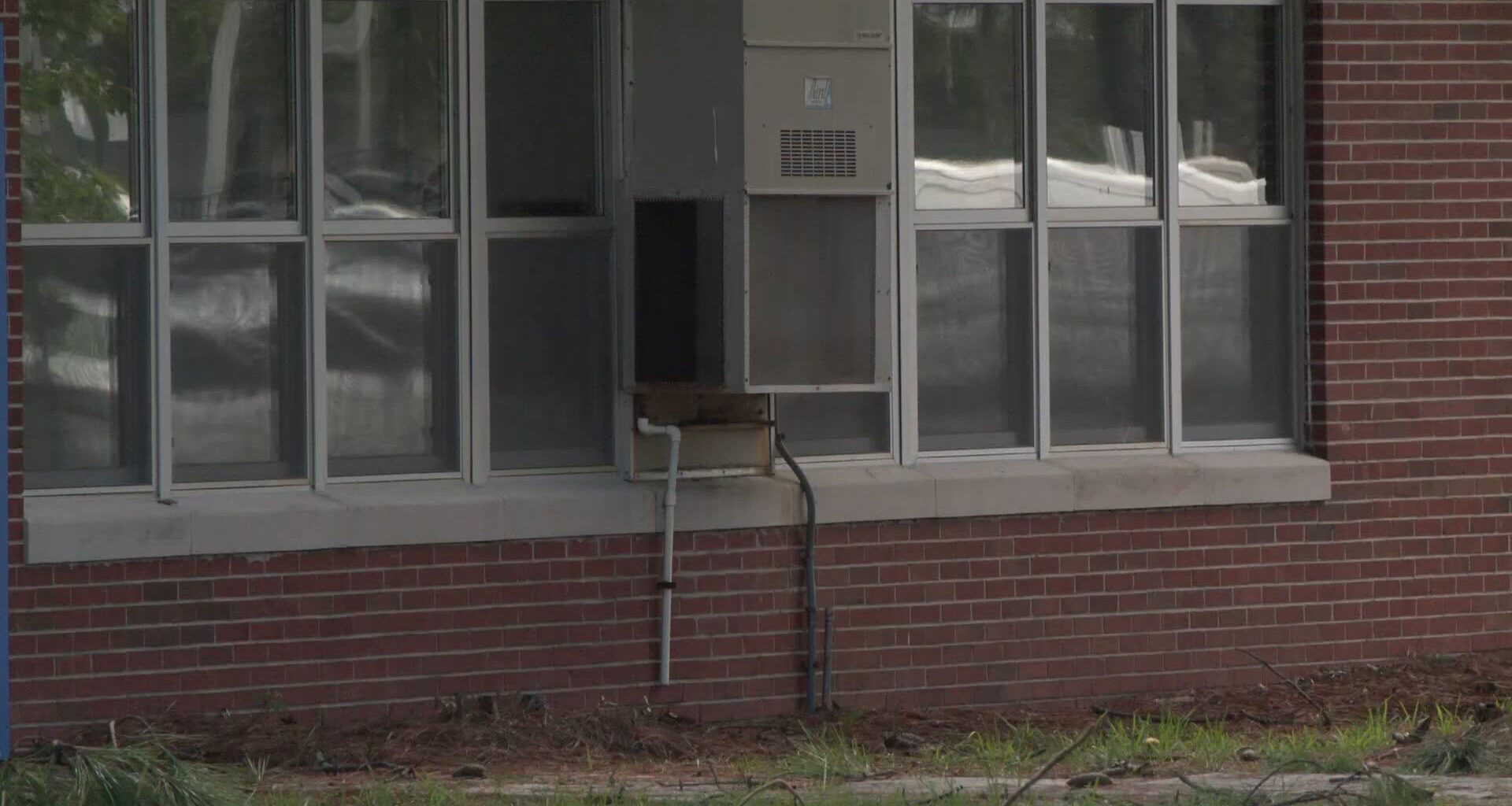
After AC problems affected Jacksonville schools during the first two weeks, DCPS is increasing maintenance funding and planning major HVAC upgrades
JACKSONVILLE, Fla. — After AC problems affected Jacksonville schools during the first two weeks of the 2026-27 school year, Duval County Public Schools is increasing maintenance funding and planning major HVAC upgrades.
DCPS Chief Operations Officer Jim Culbert acknowledged the disruptions, saying, “We know that intermittent AC issues and conditions have made some school days uncomfortable and inconvenient.”

This story continues below.
Four schools had major AC problems on the first day, followed by about three the second day. By Friday, no entire school had a major outage, and fewer than six classrooms were still being repaired. The district received “definitely more than hundreds” and “closer to a thousand” maintenance tickets during the first two weeks.
DCPS began running AC systems 24/7 about three weeks before school started to identify problems. But temperatures near or above 100 degrees and the return of 110,000 students and staff placed additional strain on the systems.
“When you suddenly add 110,000 people, all 98 degrees, right, coming into a school on the first day, those systems take a shock,” Culbert said.
The district has seen failures involving pumps, fans and other components, while storms and nearby lightning have also damaged equipment.
Maintenance and major maintenance funding is increasing from $17 million to $40 million this year, with plans to reach $50 million next year. HVAC work is now the top priority.
“I do think that the District, unfortunately, has not put funds towards doing preventive maintenance on our systems, that has changed,” Culbert said.
DCPS plans to completely replace HVAC systems at six to eight schools each year, prioritizing schools with the most maintenance requests and recurring problems. The district will also begin evaluating chillers at every school in about a month.
The district has invested about $2.5 million in upgraded control systems and expects another $5 million to $8 million could go toward replacements. It has also purchased about 20 portable spot coolers and is buying larger units for spaces such as gymnasiums.
Maintenance calls are prioritized by severity. Entire-school AC outages and ESE classroom outages receive the highest priority, with crews expected to respond to a schoolwide outage within about 30 minutes.
“We’re not able to fix every single maintenance item every single day,” Culbert said. “But we are prioritizing the tickets that are out there.”
Culbert said HVAC staffing has not been cut and that DCPS added positions this school year. The district is also launching a maintenance training and apprenticeship program for high school students.
Aging school buildings add to the challenge, with some Jacksonville schools dating to 1912. Older buildings were not always designed to accommodate modern chillers and air handlers.
The district says it wants to address aging infrastructure and preventive maintenance rather than simply respond to individual outages.
“We’ve got to really spend some money on preventive maintenance,” Culbert said. “And bringing some teams in, and then going back to what we used to do years ago, which is putting money into our schools.”
Culbert said conditions have improved since the first week but acknowledged the district is not “completely out of the woods.”
He also apologized to families affected by outages, particularly those with students with special needs.
“My heart reaches out, especially to some of our most fragile students that have to come to school without AC,” Culbert said. “It hurts my heart.”
The district has not yet announced which six to eight schools will receive complete HVAC replacements. Officials say they will prioritize schools with the highest number of maintenance requests and recurring AC problems.
Funding for the increase from $17 million to $40 million this year was not identified during Friday’s news conference.