
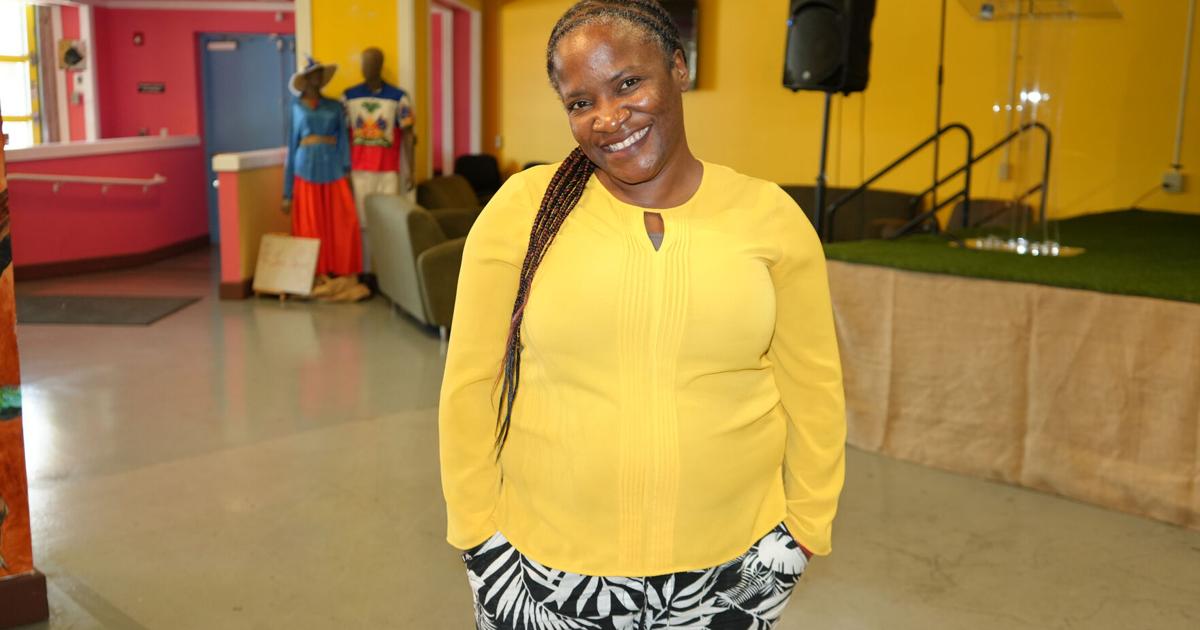
When Mfon Abia began crying without explanation and staying awake through the night, she didn’t think she was experiencing depression.
Even when people who followed her social media posts suggested she might be depressed, Abia rejected the possibility.
“I never believed I could have a mental health illness,” she said.


An attendee learns about Miami-Dade Public Library resources during NAMI Miami-Dade’s Pathways to Hope Conference in Little Haiti.
(Ivette Franco for The Miami Times)
Abia, originally from Nigeria and now living in South Florida, described herself as outgoing and accustomed to helping others. Depression didn’t fit the image she had of herself.

Miami-Dade Public Library System representatives share community resources during the Pathways to Hope Conference.
(Ivette Franco for The Miami Times)
Then one night, amid difficulties in her marriage and while caring for her young son, Abia considered taking her own life.
She looked at her son, then a baby. “I said, ‘If I take my life, who will take care of this child?’” she recalled.

Attendees gather during NAMI Miami-Dade’s Pathways to Hope Conference at the Little Haiti Cultural Complex.
(Ivette Franco for The Miami Times)
Abia reached out for emergency help and was taken to a mental health facility. Her son is now 8, and she openly shares her experience in hopes others will recognize signs she initially couldn’t see in herself.
Years later, she was among dozens of people who gathered Saturday at the Little Haiti Cultural Arts Center for NAMI Miami-Dade County’s fifth annual Pathways to Hope Conference, where mental health professionals, faith leaders, advocates and residents discussed mental health and access to care. NAMI Miami-Dade, the local affiliate of the National Alliance on Mental Illness, provides mental health education, advocacy and support.
The two-day conference, held Aug. 21 and 22, highlighted a challenge extending beyond the event: Even as mental health becomes more openly discussed, stigma, financial pressures and gaps in access can still stand between Black residents and care.
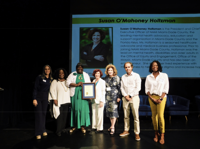
From left, Brenda Lampon, Michelle Johnson, Shara Johnson, Susan O. Holtzman, Ana Viamonte Ros, Emigdio Rojas and Tiffinie Bratcher during a Miami-Dade County recognition of NAMI Miami-Dade’s Day of Hope.
(Sofia Jimenez/NAMI Miami-Dade)
Breaking through stigma
Susan Holtzman, president and CEO of NAMI Miami-Dade County, said barriers in Black communities include discomfort around acknowledging mental health conditions, confusion over how to access services and a shortage of providers, particularly those from similar racial and cultural backgrounds.
“There are beliefs that people in the Black community do not die by suicide, or that children cannot have a mental illness,” Holtzman told The Miami Times. “These ideas are not accurate and may hold people back from seeking the information and support that we offer here at NAMI.”
National data underscore the concern. The age-adjusted suicide rate among non-Hispanic Black Americans increased 25.2% from 2018 to 2023, according to the Centers for Disease Control and Prevention (CDC). Among Black people ages 10 to 24, the rate rose 29.4%.
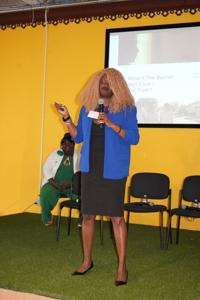
Dr. LaToya Lewis speaks during NAMI Miami-Dade’s Pathways to Hope Conference.
(Ivette Franco for The Miami Times)
Dr. LaToya Lewis, an associate professor at the University of Miami School of Nursing and Health Studies, told The Miami Times that stigma can be embedded in cultural expectations about strength, privacy and resilience.
Within parts of the Black diaspora, Lewis said, people may grow up believing they should not discuss what happens inside their home with outsiders.
“If you then go outside the house to say, ‘I need help’ … you’re considered weak,” Lewis said.
Abia experienced that tension herself. After she began discussing her mental health publicly, she said her twin sister questioned why she would share such personal information and worried about how others might view her.
Access goes beyond stigma
Among U.S. adults who experienced a mental illness in 2023, 43.8% of non-Hispanic Black adults received mental health treatment during the previous year, compared with 58.7% of non-Hispanic white adults, according to the Substance Abuse and Mental Health Services Administration.
Lewis described health equity as “consistent access” to therapists and other mental health professionals, behavioral therapy and trauma counseling, while also ensuring care reflects a person’s cultural background.

Panelists discuss mental health access and community trust during NAMI Miami-Dade’s Pathways to Hope Conference.
(Ivette Franco for The Miami Times)
Holtzman said NAMI is seeing more people reaching out for professional help, but increased demand has also led to longer waits for appointments.
Asked about factors contributing to mental health challenges in South Florida, Lewis pointed to the region’s rising cost of living.
“As costs go up, mental health is not going to decrease,” Lewis said. “It’s going to increase.”
She said someone experiencing anxiety may simultaneously be worrying about paying for gas, electricity or food — financial pressures that can compound mental health challenges.

Anthony Robinson, executive director of the Overtown Children and Youth Coalition, at NAMI Miami-Dade’s Pathways to Hope Conference.
(Ivette Franco for The Miami Times)
Anthony Robinson, executive director of the Overtown Children and Youth Coalition, told The Miami Times that the high cost of living, social media and pressure to keep up with peers are among the stresses affecting young people.
“We far too often know that mental health in a community such as Overtown is not dealt with, is not talked about a lot,” he said.
Taking help into the community
Robinson said one of his takeaways from the conference was learning more about 988,the Suicide & Crisis Lifeline, underscoring what he sees as another barrier to care: knowing where to turn.
“Oftentimes it’s just lack of resource or lack of knowledge,” he said.
Holtzman also pointed to 988 for people experiencing a mental health crisis and said NAMI Miami-Dade operates a helpline at 305-665-2540 for those seeking information, support or help finding a provider. In her response to The Miami Times, she said faith leaders can also play an important role because they are often among the first people families approach about mental health concerns.
But Robinson said awareness alone isn’t enough, calling for greater funding for community-based organizations and partnerships with mental health professionals.
“Without the financial resources, we can’t get the support that our young people need,” Robinson said.
That type of collaboration was central to Pathways to Hope, which brought mental health professionals together with faith and community organizations. The conference also included sessions on health equity and access to routine and emergency mental health care.
Abia said events like Pathways to Hope can help residents learn about resources they may not otherwise know exist, but greater outreach is needed.
“People don’t even know things are happening,” she said. “People need to know.”
For Abia, that need is personal. After surviving her own crisis, she tried to help a friend who was struggling, sharing her experience and encouraging her to seek help. The friend later died by suicide.
Abia paused, wiping away tears as she recalled the loss.
Years after struggling to recognize depression in herself, Abia now speaks openly about her experience in hopes of helping others recognize when they may need support.
“If I don’t tell my story,” she said, “people wouldn’t even know that they have mental health issues.”