
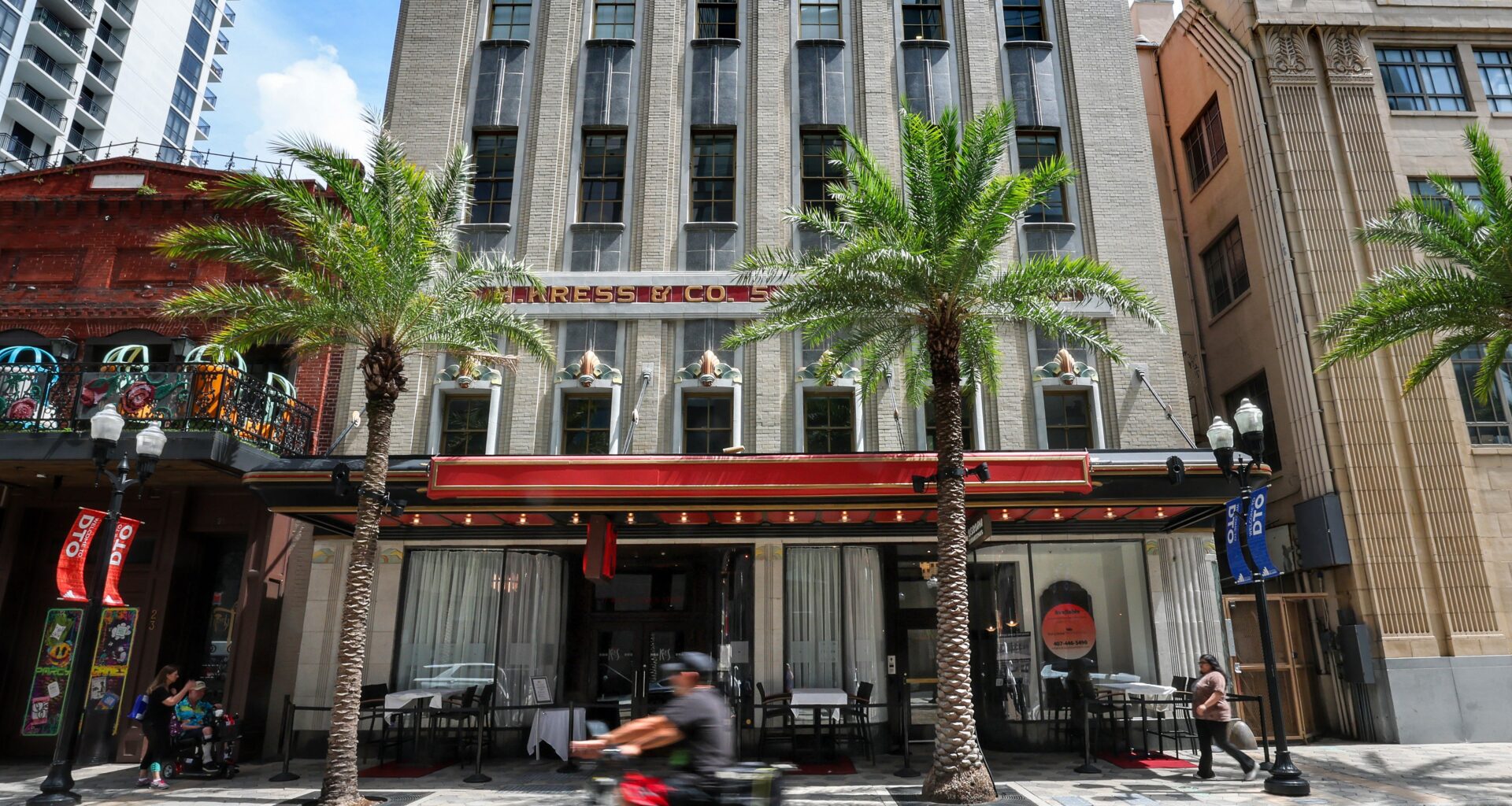
Orlando’s decision to temporarily loosen development rules in its historic downtown has drawn the ire of a state agency that oversees historic preservation grants.
In a letter sent Friday to Mayor Buddy Dyer, Florida’s historic preservation officer said the Department of State reviewed Orlando’s ordinance — a measure meant to be in place for three years and jumpstart development in downtown — and determined that if it is not rescinded, property owners and the city will not be eligible for grant funding meant to help historic properties.
By a 5-2 city council vote in June, Orlando agreed to the moratorium during which development proposals within the current historic boundaries will not have to go in front of the city’s Historic Preservation Board — a citizens advisory panel tasked with awarding a “certificate of appropriateness.”
The downtown historic district was created in 1980 and covers eight blocks along Orange Avenue, including Church and Pine Streets, taking in buildings constructed from 1880s to the 1940s.
The moratorium was an effort to kickstart a new era of redevelopment in that heart of Orlando’s downtown and was approved even as preservationists pleaded with Dyer and city officials not to proceed, fearful local landmarks would meet the the wrecking ball without the work of the preservation board.
The state letter said cities that want to be designated a “certified local government” and eligible for grants need to have a historic preservation board review alterations, demolitions and new construction for designated properties.
The agency gave Orlando 180 days to correct the violation, or it will recommend the Secretary of the Interior to decertify it as a “certified local government.”
A presentation by Commissioner Patty Sheehan, who voted against the moratorium, found that buildings in the city have received more than $7 million in grants dating back to the 1980s. Most went to private owners, including St. Luke’s Cathedral, the Black Bottom House of Prayer, the Kerouac House and the Maxey-Croom House.
Sheehan said Tuesday she hoped the city would reconsider the change to salvage its standing with the state and remained frustrated she couldn’t sway her colleagues to vote it down in June.
“It’s pretty bad when the state of Florida is more progressive than the city of Orlando,” Sheehan said. “It’s also going to decrease the amount of money that residential people are going to be able to get to improve their homes … I’m devastated by this news.”
Asked about the letter, a city spokesperson said the ordinance was provided to the state’s Division of Historical resources “as a courtesy.”
“The city is currently reviewing the comments and will make any clarifications within the six-month response timeline,” said Ashley Papagni, a city spokesperson. “The city remains committed to historic preservation and its status as a Certified Local Government to preserve and celebrate our community’s history.”
City officials pushed the three-year moratorium on historic preservation reviews because there has been no new development within the eight-block historic district, which faced the additional review of the preservation board.
Prior to the final vote on June 22, Dyer and the city council received a letter from the state warning that if the city passed the ordinance without giving it 30 days to review the plan, the city could lose its “certified” status.
Dyer, at the advice of a city attorney, changed the effective date of the ordinance to Aug. 10, which city attorneys believed at the time would keep it in compliance.