
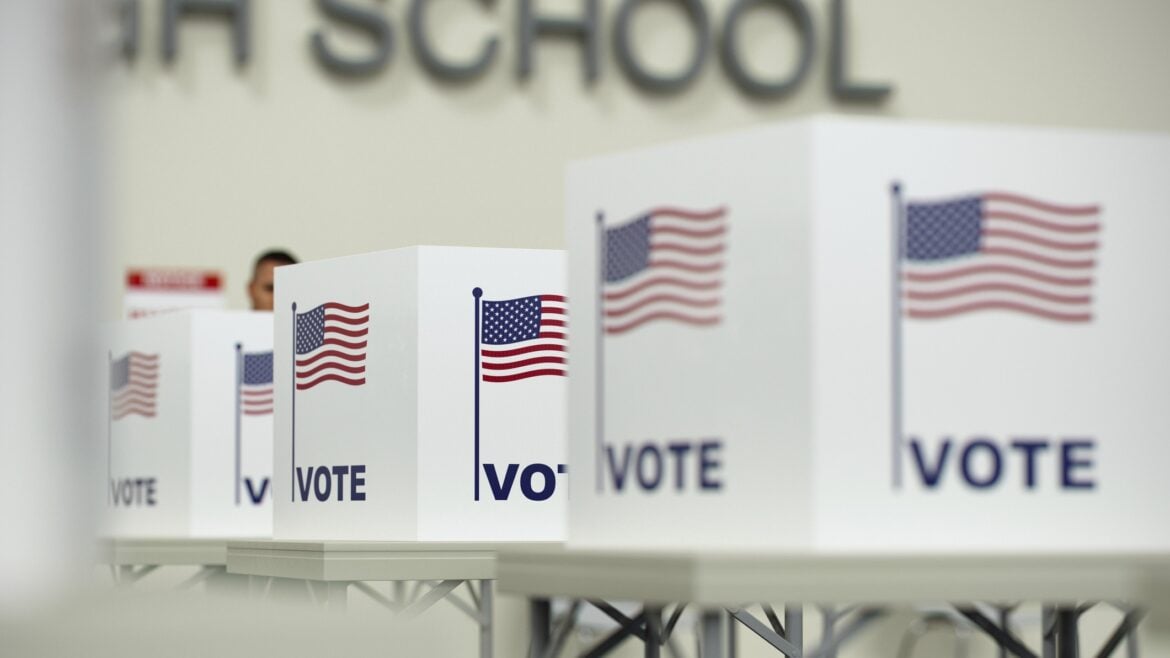
Newsrooms across Florida participated in a new initiative to produce and share reporting on local school board elections.
Candidates in these races typically attract very little media coverage, yet their priorities and issue positions can make a big impact on education outcomes in their districts and beyond.
The Florida Trib, a nonprofit newsroom with a government accountability and investigations focus, organized the collaborative coverage through its Florida Election Reporting Partnership, which launched in July. The 27 participating organizations include public media stations, nonprofit newsrooms, newspapers, commercial broadcasters and universities. Through university partners, 45 college students and recent grads reported on school board races this summer.
The project addresses a vacuum of news and information about elections in Florida, especially on candidates running for local school boards. In 2024, more than one-third of Florida counties had no school board election reporting.
Though Florida has a large and growing population, the 2024 State of Local News report found that it ranks last among all states in the number of news outlets per person. The annual Northwestern University study tracks the declining availability of local journalism and the emergence of new business to sustain local newsrooms. Its most recent report, published in 2025, found that Florida has five counties with no local news organizations and 24 counties with only one.
The FERP project also aimed to provide more accountability for the billions in public funding that school boards steward for their districts, according to a July 13 report on the project’s launch.
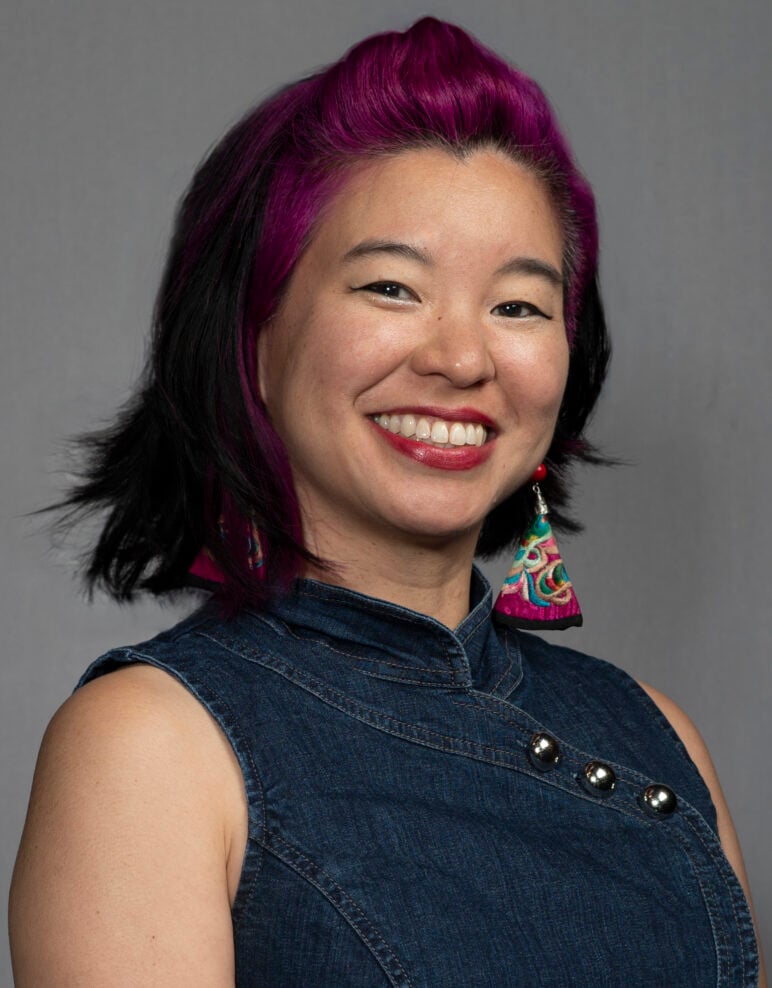
Though Florida school board races are nonpartisan, they’ve become increasingly important in Florida politics, said Marian Liu, audience and product lead for Florida Trib. “The school board is usually the first elected office that someone gets into, but oftentimes it is their first stop, not their last stop,” she said.
 Liu
Liu
She pointed to Moms for Liberty, the conservative political organization that advocates for parents’ rights in school curriculum and policy. The organization was founded in 2021 in Florida by two former school board members, according to its website.
Built on collaboration
Prior to Florida’s August 18 primary elections, news organizations in the partnership reported on every county school board race, spanning 67 counties and including uncontested races.
The coverage launched in mid-July and primarily focused on candidates’ backgrounds and policy positions in individual races. Stories published through the partnership were accessible without paywalls and available for republication by all participating news organizations, according to Liu.
The partnership encouraged reporters from different newsrooms to work together to close gaps in local coverage, Liu said. “In one case, an NPR affiliate reported a story and a nonprofit newsroom edited it. That kind of cooperation is exactly what the collaborative was built to enable.”
Coverage was coordinated and assigned during biweekly meetings among partners, who used a running spreadsheet to track coverage status for all school board races.
Liu is a former Washington Post editor who shared in the publication’s 2022 Pulitzer Prize for team coverage of the U.S. Capitol riot in January 2021. Earlier in her career, she launched a local entertainment website for the South Florida Sun Sentinel, according to her LinkedIn. The opportunity to work with the Florida Trib came up after she left the Washington Post. Liu said she was inspired to return to Florida to help increase the availability of accountability reporting.
Based in Jacksonville, the Florida Trib launched in 2021 as a nonprofit newsroom focused on government accountability and investigative journalism on underreported topics. The newsroom is highly collaborative and has extensive experience working with other news organizations, which provided a strong basis for the elections partnership, said Deirdre Conner, CEO and publisher.
“Leading into it we already were working with the vast majority of the organizations that are part of the partnership,” Conner said. “That made a huge difference in terms of getting people on board quickly.”
‘Ultimately, our goals are the same’
 Tardif
Five NPR member stations are among those partners: WUSF in Tampa, Central Florida Public Media in Orlando, WGCU in Fort Myers, WFSU in Tallahassee and WLRN in Miami.
WUSF covered school board races in six counties within its listening area and created a webpage dedicated to those elections. Amy Tardif, the editor who oversees election coverage, said WUSF also republished coverage reported by other partners.
In a separate partnership for the Florida primaries, WUSF and CFPM collaborated on social media posts providing voting information, such as a how-to on voting at the polls.
For the November midterms WUSF and CFPM are working with public media newsrooms across the state to produce and distribute a nonpartisan voter guide. The two stations first collaborated on a voter guide to the 2024 elections, according to LaToya Dennis, CFPM news director and managing editor.
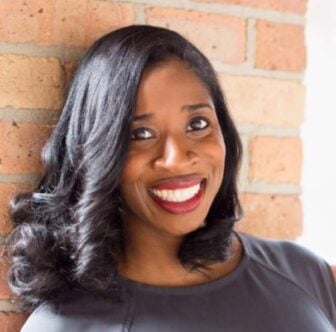
Collaboration among Florida newsrooms isn’t new, but the amount of newsgathering and republishing they’re doing together now is unique, Dennis said. It shows just how much the local news landscape is changing.
 Dennis
“Five years ago we saw each other as competition, and in some ways we still do,” Dennis said. “What … we’ve realized is that collaboration is the way of the future, because ultimately our goals are the same.”
“We’re on the air, online and social — trying to reach everyone we possibly can,” Tardif said. “[I]t ultimately comes down to voter education.”
‘I write for the reader’
The Florida Election Reporting Partnership was inspired in part by news organizations in California and Maryland that provide journalism mentorships and training to university students, Liu said.
Liu consulted with CalMatters, the nonprofit newsroom that covers California politics, and journalism educators who run the University of Maryland’s Capital News Service. Both provide specialized on-the-job training and mentorship to student journalists on issues with statewide impact.
In addition to 39 students from universities across Florida who reported on candidates, six students from Historically Black Colleges and Universities in other states and the District of Columbia participated.
The Florida Trib provided training materials and other support for students and professional journalists who reported for the partnership. These included lessons from Muck Rack, sample questions for candidate interviews, drop-in office hours and instructions on how to use FLAdata.com, which compiles public databases into one central location.
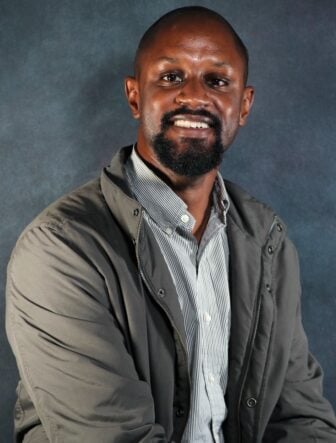
Wesley Wright, assistant director of student media at Florida Atlantic University, helped to coordinate participation by five HBCU students — three of whom had recently graduated.
 Wright
Wright previously worked with HBCU students on a 2020 voter guide produced through SPJ News, the training and talent development program operated by the Society of Professional Journalists. For the Florida Election Reporting Project, Wright coordinated and edited students’ reporting prior to sending their stories onto the Florida Trib.
Education is a beat that offers a lot of opportunities to student reporters, Wright said. “There’s no reason that they can’t pull together a complicated story with enough time and enough resources.”
Julianna Bendeck, a University of Florida student studying journalism and political science, reported for the partnership. She interviewed candidates and gained experience with researching and filing public records requests. One of her journalism professors introduced Bendeck to the partnership.
“It taught me that I don’t write for my sources. I write for the reader to be able to make an informed decision,” Bendeck said of the experience. She hopes to continue covering local politics.
Florida Trib plans to continue incorporating students into its reporting. After the primary election, Press Forward South Florida, a coalition of five community foundations that are investing in local news media, awarded a $20,000 grant to support FERP stipends for students in the region to cover elections in Miami-Dade, Broward, and Monroe counties, Conner said. The coalition is part of the national Press Forward network of philanthropies collaborating to sustain local news.
Now that the primaries are over, the Trib plans a debrief with its election reporting partners, Conner added. “We’ve heard a lot of enthusiasm from the members, so I would expect that we’ll continue it and hopefully be able to expand it over time…, and look for more students who might be a part of it.”
Liu also hopes that this partnership will continue beyond the primary elections and extend into other public interest topics.
“This is really just the start of figuring out how we can work together not only for the school board election, but for upcoming elections and even natural disasters,” Liu said.