
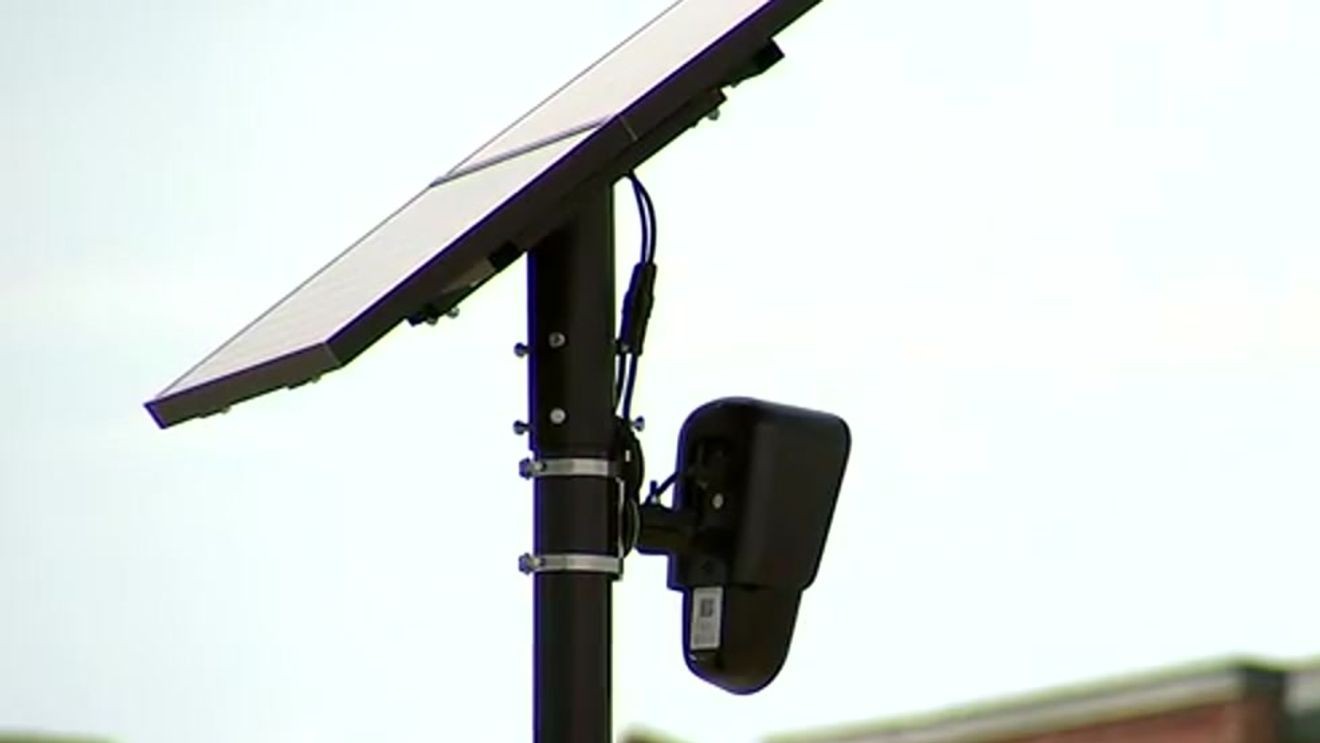
TALLAHASSEE, Fla. — After months of questions and concerns about Flock license plate readers in Leon County, local law enforcement agencies are offering the public a new way to see how the technology is being used.
The Tallahassee Police Department and the Leon County Sheriff’s Office have launched online transparency portals that provide information about their Flock camera systems, including how many cameras each agency has, where they are located, how often the system is searched and which agencies they share information with.
Flock cameras capture license plates as vehicles pass, giving law enforcement a tool used to help locate stolen vehicles, missing people or vehicles connected to investigations.
The sheriff’s office said the information that is now available online reflects some of the questions it hears most often from the public.
“I think anytime we can be more transparent with the citizens of Leon County, being able to have a platform that we can put that information out is very critical to earning the trust to the public and maintaining that trust,” said Leslie Rabon, Executive Director of the Intelligence Operations and Analysis Division at LCSO.
Some residents who have spoken out against the technology said the new portals do not address their broader concerns.
“Part of the safety conversations that we’re talking about is trust and trust is earned. And trust is earned by engaging in good faith and frankly, de-radicalizing, demilitarizing… the kind of trust building that I’m talking about negates the need for these,” said Timothy Stadlmueller, a public advocate.
The sheriff’s office said not everything in the system can be made public because some information is protected, but it said resident feedback could help shape what is available on the portal going forward. LCSO also said the camera system has multiple layers of oversight, including audits, training and restricted access.
“Knowing that the agency does audit that and we are enhancing our ability to audit the audit, I think that should be reassuring that there’s going to be multiple layers of oversight on who’s using it, how that information is used,” Rabon said.
Critics also questioned whether the portals include enough information about what the technology is accomplishing.
“I would love to see the statistics on how many crimes they solved actually on the portal as well, if that’s such an asset,” said Jade DiGerolamo, a public advocate.
LCSO said it can point to results, including more than 120 stolen vehicles recovered last year through license plate reader technology. The agency also emphasized that a Flock alert is only a lead and that officers still must verify the information before taking further action.
DiGerolamo said the debate over the technology could have broader implications.
“There is a silver lining to this. It challenges the interpretive nature of our courts and technological era in this new frontier. So, we constantly have to reevaluate the Fourth Amendment with respect to data. I think that’s going to be valuable in the future,” she said.
Concerns about license plate readers are also being raised beyond Leon County. During a press conference today, Gov. Ron DeSantis said he believes the use of license plate readers needs to be overhauled, saying law enforcement should have tools to fight crime without creating what he called a “surveillance state.”