
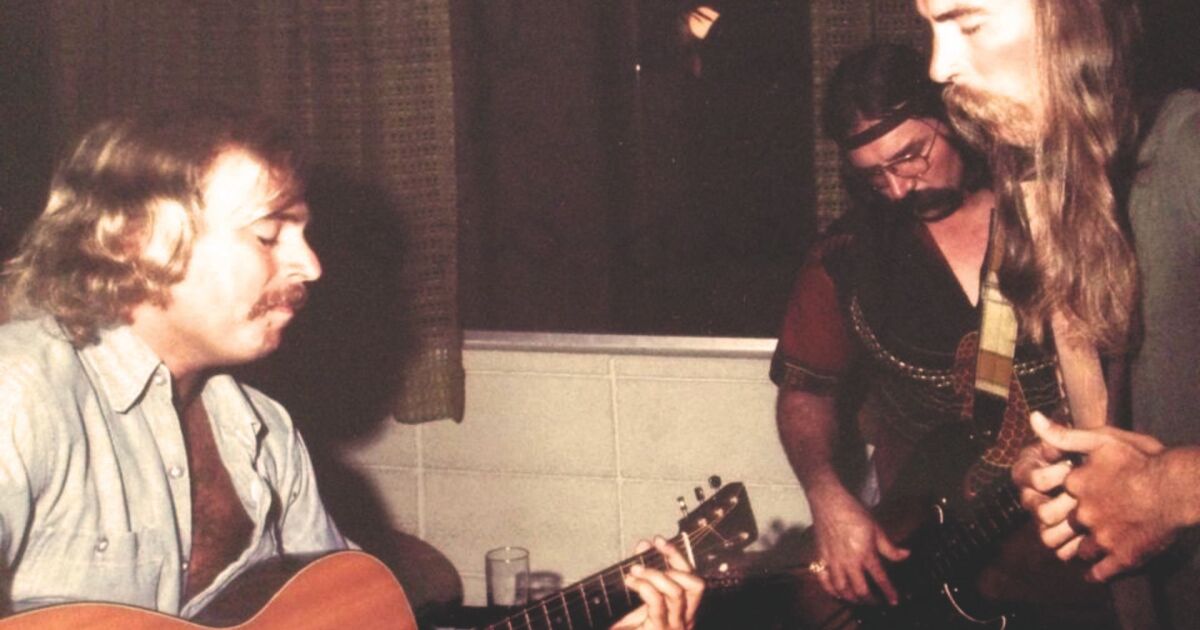
It was a 24-hour cocktail party, an extended drug trip and a time of unbridled creative and sexual abandon. Nineteen-seventies-era Key West was also a destination hideaway of literary, cinematic and musical luminaries including Hunter S. Thompson, Peter Fonda, Jack Nicholson, Margot Kidder, Thomas McGuane, Jerry Jeff Walker, Truman Capote and, perhaps most iconically, Jimmy Buffett. Amid it all was St. Augustine artist, restaurateur and founder of the Black Fly Outfitters resort Vaughn Cochran, original member of Buffett’s band, later dubbed the Coral Reefers. “I was the jug-band guy, playing the washboard, mandolin, and banjo,” he recalls. Now, Cochran is part of a new documentary, Occupational Hazard: The First Coral Reefers, examining what it means to carry the legacy of a romanticized but often poorly remembered era.
Guest: Vaughn Cochran, artist, founder of Black Fly Outfitters and original member of the Coral Reefers, Jimmy Buffett’s band
Remembering Ax Handle Saturday
Sixty six years after a racist mob armed with ax handles and baseball bats attacked Black residents in Jacksonville, the city is unveiling a new marker to remember the violent event. On Aug. 27, 1960, known as Ax Handle Saturday, hundreds of white rioters threatened and beat peaceful protesters demonstrating at Jacksonville lunch counters, as well as Black passerby. We sit down with civil rights activist Rodney Hurst, who was forced to flee from attackers, to discuss the importance of formally recognizing the incident with a marker on Jacksonville’s Civil Rights Trail. Hurst will join Mayor Donna Deegan at 11 a.m. Thursday for the marker’s unveiling ceremony at James Weldon Johnson Park.
Guest: Rodney Hurst, Ax Handle Saturday witness, activist, author and Black historian
True originals
As part of the nation’s 250th celebration, the Smithsonian museum is looking back at the greater bulk of continental history, in which indigenous people inhabited what we now know as the U.S. for more than 13,000 years before the arrival of European explorers. Titled Americans and developed by the Smithsonian’s National Museum of the American Indian, curators say the project focuses on four significant historical events: Thanksgiving, the Trail of Tears, the Battle of Little Bighorn and the life of Pocahontas. A companion exhibit at the Amelia Island Museum of History, developed in collaboration with the University of North Florida, the Seminole Tribe of Florida and the Miccosukee Tribe of Indians of Florida, is titled Visualizing Indigenous Florida. We talk to the curator about how the shows landed at the small First Coast museum and what they contain.
Guest: Tirik Peterson, curator, Amelia Island Museum of History
Topics and guests subject to change.