
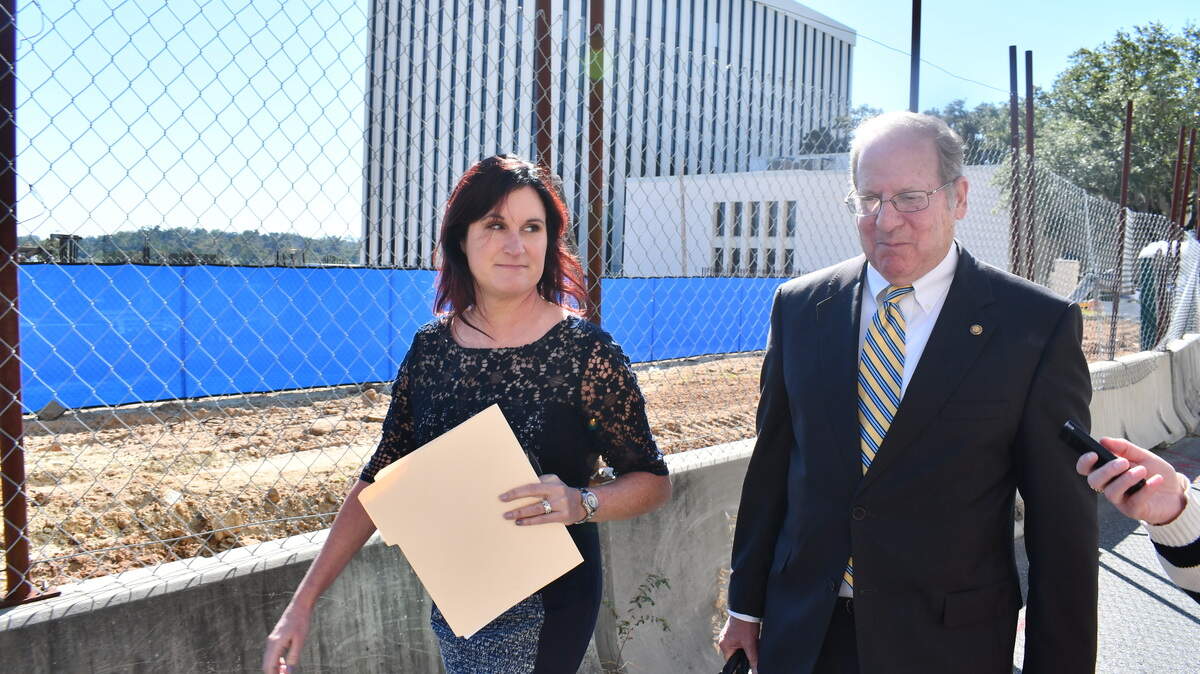
Amy Ronshausen and her attorney, Ken Sukhia, after leaving the Leon County Courthouse on Tuesday, Oct. 14. Ronshausen wouldn’t answer a reporter’s question about her testimony to the grand jury in the case involving the Hope Florida Foundation.
Justin Garcia
Tampa Bay Times
Reality Check is a Herald series holding those in power to account and shining a light on their decisions. Have a suggestion for a future story? Email our journalists at tips@miamiherald.com.
The grand jury investigating the role of senior DeSantis administration officials in the “misappropriation” of millions of taxpayer dollars encountered well-connected witnesses with bar licenses, conflicting testimonies and memory problems, a copy of the sealed grand jury report obtained by CBS News Miami reveals.
That collective amnesia made it impossible to prosecute the case, according to the report, which says the grand jury could “plainly see that taxpayer money was misused for political purposes” when $10 million was diverted from a Medicaid settlement to political organizations in the fall of 2024, with a state charity acting as the middleman.
“No witness would take responsibility for making the decision,” and no one “had any memory of who made” it, the report states.
READ MORE: Hope Florida grand jury findings revealed despite efforts to keep report private
The investigation delved into the DeSantis administration’s $67 million settlement with Medicaid contractor Centene, which was altered in the weeks before the 2024 election to include the Hope Florida Foundation. The Foundation, created to support an effort spearheaded by first lady Casey DeSantis, quickly redirected its $10 million cut to two organizations — Save our Society from Drugs and Secure Florida’s Future.
Those groups then gave most of the funds to a political committee run by now-Attorney General James Uthmeier aimed at defeating a 2024 ballot amendment that would have legalized marijuana in Florida. At the time, Uthmeier was chief of staff to Gov. Ron DeSantis.
The report — filed under seal and withheld from the public as people named in it sought redactions — reveals a string of witness testimony from high-level DeSantis administration officials who said they could not remember details of key conversations pertaining to the huge sums of money they procured.
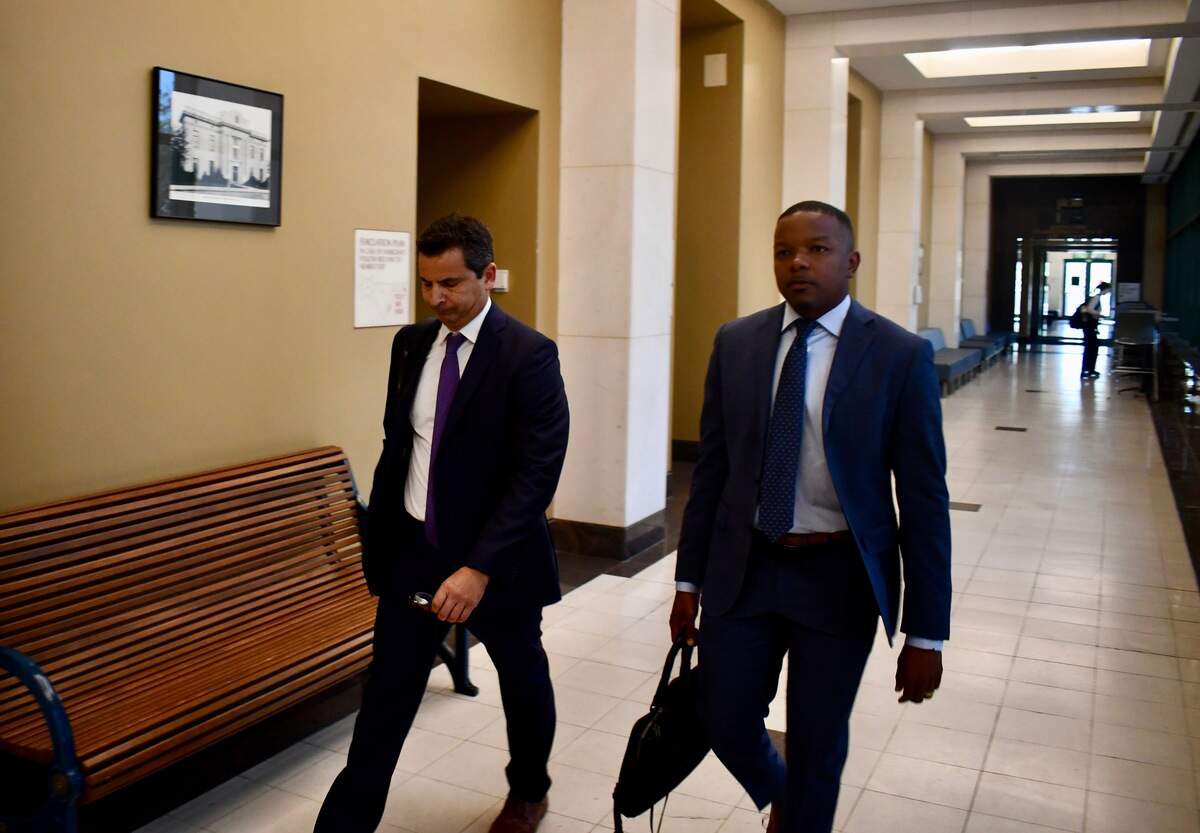 Former Hope Florida Foundation President Joshua Hay, right, leaves the Leon County Courthouse on Wednesday, Oct. 15, 2025. Justin Garcia Tampa Bay Times
According to the report:
The executive director of Save our Society from Drugs, Amy Ronshausen, testified that, while Uthmeier was the person who encouraged her to seek a grant from the Hope Florida Foundation, she “does not recall” if he was the one who suggested she request $5 million.The executive director of Secure Florida’s Future, Mark Wilson, “did not recall” who suggested how much money he should request.Wilson also “did not remember who gave him the idea of applying for a grant from Hope Florida.”Then-Secretary of the Florida Agency for Healthcare Administration Jason Weida testified that he “does not recall who suggested that Hope Florida should be the recipient” of the taxpayer funds.DeSantis’ deputy chief of staff, Katie Strickland, had “no recollection” of discussing the settlement with Uthmeier or DeSantis.Despite soliciting a signature from the Florida Department of Health’s chief of staff on the settlement, Strickland said she “does not recall that conversation specifically” and has “no recollection of who told her to get the settlement signed” by that staffer.The members of the grand jury found Strickland to be “not credible,” stating that “contrary to other witnesses identifying her as a participant in meetings and conversations, she could hardly recall any details or information.”The testimony of the Hope Florida Foundation’s then-attorney, Jeff Aaron, and its then-Chairman Joshua Hay conflicted in ways the jury called “curious.” The jury wrote: “Mr. Hay said Mr. Aaron was the person that told him that Hope Florida would be receiving a $10 million donation; but Mr. Aaron claimed that he was not aware of the $10 million donation.”Of the 13 witnesses the grand jury interviewed, in summation, the report states: “No witness admitted or identified who directed the money to go to Hope Florida.”
The report does include one piece of information about who may have set in motion the plan to include the Hope Florida Foundation as a recipient in the settlement: It states that Strickland told the grand jury that the idea came from Weida, who is now the governor’s chief of staff.
Weida did not immediately respond to a request for comment.
Still, the jury said the witnesses’ fuzzy memories made it impossible to bring criminal charges — a problem amplified by the fact that “virtually everyone involved is a lawyer and acted on the advice of other lawyers.”
“We recognize that this would be an impediment to criminal prosecution,” the report states.
The limited testimony that led to the grand jury’s decision not to bring criminal charges reveals a larger culture of secrecy and corruption in Tallahassee, said José Javier Rodríguez, the Democrat running to unseat Uthmeier in November.
“Everyone involved suddenly has conflicting memories and nobody takes responsibility. That is not a coincidence. That is a wall of silence built to protect conspiratorial corruption in Tallahassee,” he said in a statement Wednesday.
Meanwhile, Republicans named in the report have touted that lack of criminal charges as evidence that there was no wrongdoing. Then-Attorney General Ashley Moody — whose chief deputy signed the settlement agreement “without conducting his due diligence,” according to the report — said she did not know how the money would be used.
Moody is now a U.S. senator campaigning to keep the seat to which DeSantis appointed her last year.
“The reports confirm what we have said all along,” said Will O’Grady, a spokesperson for Moody. “Neither the Department of Legal Affairs nor the former Attorney General had knowledge of how the settlement money would be spent.”
Uthmeier’s office did not respond to a request for comment from the Herald/Times. He told reporters in The Villages Thursday that if the report is “true … it shows that there was no probable cause found that anybody did anything wrong.”
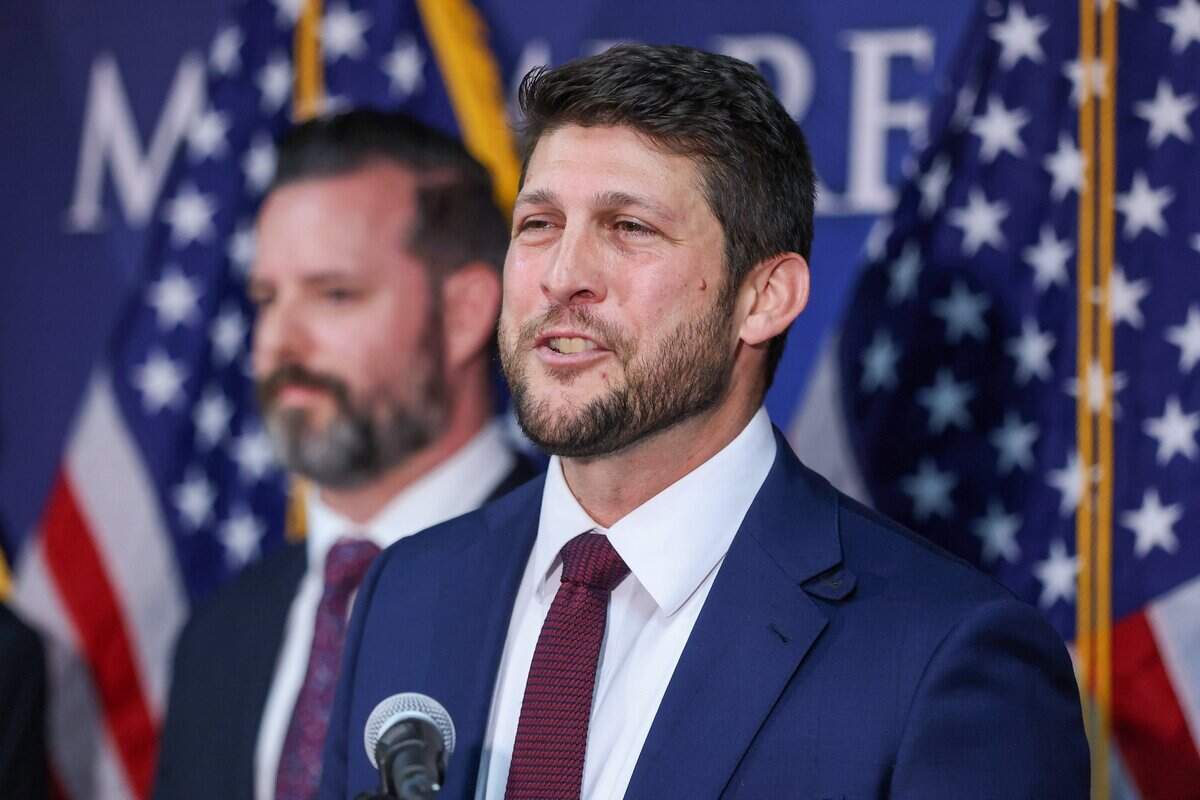 Florida Attorney General James Uthmeier, right, speaks alongside federal and state law enforcement officials during a press conference at the FDLE Miami Regional Operations Center announcing a new unit focused on investigating public corruption and government spending.on Thursday, February 19, 2026, in Miami, Florida. Left to right are: U.S. Attorney for Southern District of Florida Jason A. Reding Quinones, and Attorney General James Uthmeier. Carl Juste cjuste@miamiherald.com
Despite the finding of “misappropriated” taxpayer funds, DeSantis’ office touted the fact that the grand jury did not bring any criminal charges.
“This baseless smear has been debunked over and over again,” a spokesperson for DeSantis, Alex Lanfranconi, said. “In fact, if any confidential grand jury report was leaked to the press, that’s the only crime committed here.”
DeSantis — who has since appointed many of the people involved in the settlement decision to higher positions — defended the flow of settlement funds during an event at Florida International University Wednesday, before the report had been made public.
He, like many of the witnesses interviewed by the grand jury, said he had little knowledge of the key discussions in the arrangement.
“I wasn’t involved in the settlement agreement,” he said, “but I’m very happy with how everything was done.”
Herald/Times Tallahassee Bureau staff writer Romy Ellenbogen contributed to this report.
This story was originally published August 27, 2026 at 10:56 AM.
.jpg)
Miami Herald
Claire Heddles is the Miami Herald’s senior political correspondent. She previously covered national politics and Congress from Washington, D.C at NOTUS. She’s also worked as a public radio reporter covering local government and education in East Tennessee and Jacksonville, Florida.