
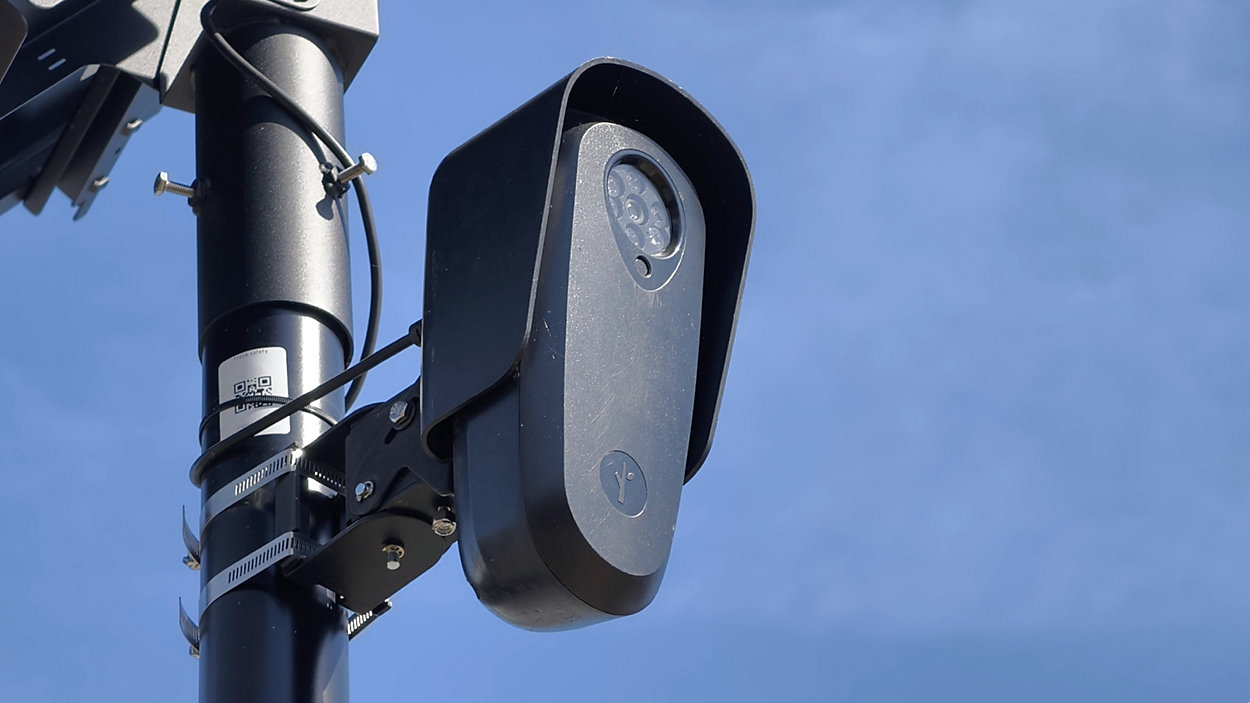
St. Petersburg’s network of over 50 Flock cameras has spent years watching the city’s streets. Now, City Council is finally turning an eye on Big Brother.
The scrutiny is arriving after the fact. The cameras went up first. The policy debate is coming later.
Council Vice Chair Richie Floyd on Thursday asked his colleagues to send the city’s contract with Flock Safety and its use of automated license plate reader cameras to the Public Services and Infrastructure Committee for a closer look.
Council agreed to refer the request to the Committee by unanimous vote.
The referral sets the stage for something St. Petersburg mostly skipped when building its camera network: a public discussion about whether the surveillance system, and the rules that govern it, strike the right balance between public safety and privacy.

The city started using Flock in 2022 with a 25-camera pilot program run by the Police Department. That initial rollout did not go before elected officials for a vote. Two years later, Council approved a five-year, $730,250 contract that nearly doubled the network to 50 cameras.
This time, the contract did come before Council, but not as a major policy decision. It was included in the consent agenda and passed without questions from Council members or any public discussion.
Today, the city has about 54 cameras in operation. Floyd is now urging Council to take a closer look at how St. Petersburg police use the system, who can access the data, how long information is kept, and what controls are in place for searches and information sharing.
Police have defended the technology as a valuable investigative tool, particularly when officers are trying to quickly locate stolen vehicles or vehicles associated with suspects.
Flock cameras automatically photograph passing vehicles and record information including license plate numbers, vehicle characteristics, location and time. Law enforcement agencies can search that information as part of criminal investigations.

But the cameras have drawn increasing scrutiny over privacy, data security, and the reach of surveillance networks that allow law enforcement agencies to search information collected far beyond their own jurisdictions.
Those concerns spilled into City Hall on Thursday, where residents who spoke during public comment argued that the privacy discussion should have occurred before cameras became an established part of city policing. Deborah Deacon said the issue is a tradeoff between security and individual liberty, and was among a number of speakers who raised Fourth Amendment concerns.
“We want our communities to be safe, and we want law enforcement to have the tools necessary to protect us,” Deacon said. “The question is, how much of our freedom are we willing to give up for safety? That question becomes especially important with the growing use of Flock cameras.”
Another resident, attorney Phil Hoffman, took aim at both the process that put the cameras in place and the potential legal exposure that could come with relying on them. Hoffman cited a recent court ruling involving law enforcement access to detailed location data held by a third-party tech company, arguing similar Fourth Amendment questions could eventually apply to Flock’s license plate database. He cautioned Council that if courts ultimately find some uses of the technology unconstitutional, evidence gathered through those searches could be challenged or suppressed in criminal cases.
“I believe that when this does get found to be a violation of the Fourth, all the evidence gathered by this to use for prosecutions will most likely be thrown out,” Hoffman said.
Other speakers questioned what happens to the data after it is collected. Amy Parsons suggested the data may never truly be deleted.
“Flock cameras are, you know, data and data centers love that Flock camera data. It can be used for so much information and stored forever. Let’s be real, this information isn’t going to be deleted, ever. Once they get it, they love it, and big money buys it,” Parsons said.
This late debate in St. Petersburg is unfolding just as Flock itself becomes a more political issue.
Opponents have organized locally, while cameras have become an issue in St. Petersburg’s mayoral runoff. Former Gov. Charlie Crist has called for a moratorium on expanding the system until the city better understands how it is being used. Mayor Ken Welch has defended the cameras as an effective public-safety tool and dismissed calls to pull them.
Thursday’s vote means City Council will finally have a public conversation about the system.
The referral sends the matter to the Public Services and Infrastructure Committee for a future discussion.