
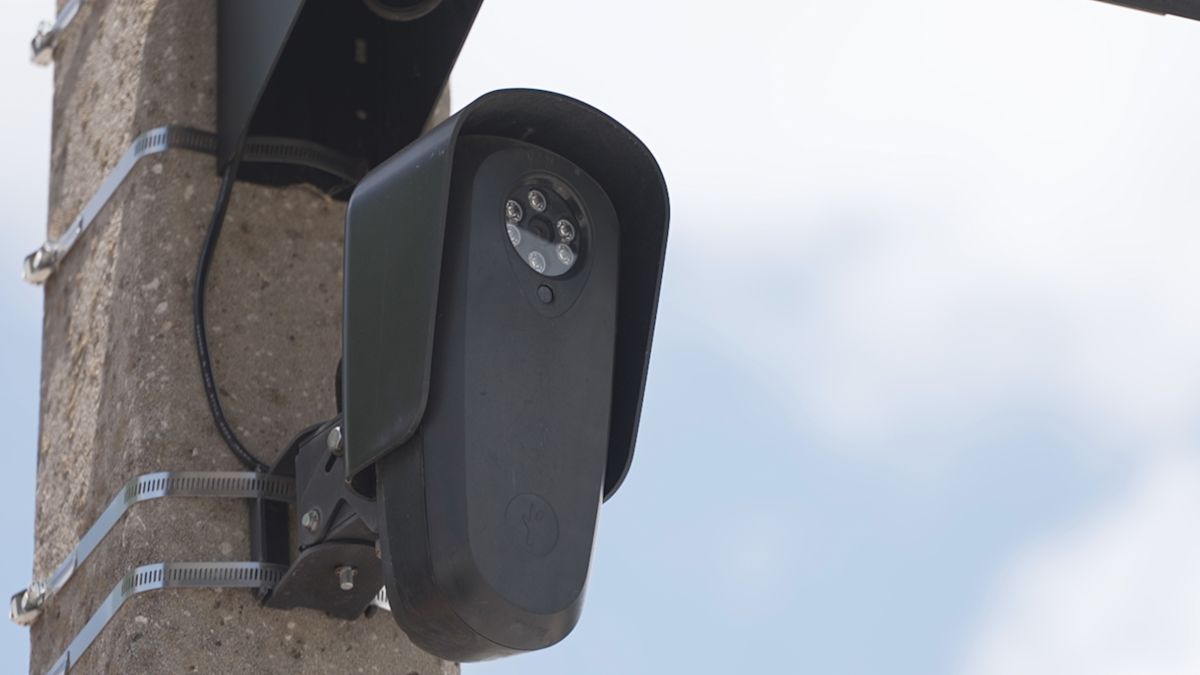
The St. Petersburg City Council is beginning a broader discussion about the city’s use of Flock license plate-reading cameras, as concerns over privacy and surveillance continue to grow across the Tampa Bay region.
The council voted Thursday to refer the city’s existing Flock contract to the Public Services and Infrastructure Committee for further discussion.
The move was requested by Councilmember Richie Floyd, who said he has concerns about whether the technology’s potential crime-fighting benefits outweigh the privacy risks.
“This right here is just like the wild west at this moment,” Floyd said.
What are Flock cameras?
Flock cameras are automated license plate readers that capture images of vehicles and can identify information including license plates, vehicle make, model and color.
Law enforcement agencies have praised the technology as a tool that can help investigators locate vehicles connected to crimes and identify suspects more quickly.
But critics say the cameras can also create a record of where law-abiding people travel.
St. Petersburg has about 50 Flock cameras throughout the city. The city began using the technology through a pilot program in 2022, with its current contract beginning in 2024.
Privacy concerns
Floyd said one of his biggest concerns is that the cameras are operated by a private company and that police departments may have limited control over how the collected data is ultimately handled.
“The police department released a memo that described how they allowed access to their databases,” Floyd said. “And in that memo, it had basically an asterisk that said we cannot control how Flock handles the data.”
Floyd said reports of alleged misuse of Flock data around the country have also raised concerns about whether the information can be adequately protected.
“Ultimately, it’s a private company doing this surveillance, and that’s really concerning,” he said.
Floyd also questioned the lack of a warrant or judicial review required before someone’s movements can potentially be tracked through the system.
Residents push back
The debate has also sparked protests in St. Petersburg.
Carl Gunn, who has dubbed himself the “Flock Blocker,” has been spending weekends protesting the cameras and attempting to block their view.
Gunn said he believes the cameras allow residents’ movements to be tracked throughout the city.
“Every time I drive by there, which is quite a lot, they got a picture of me and they know where I’m going,” Gunn said.
A newly formed group, DeFlock St. Pete, has also raised concerns about the amount of information collected by the cameras and what happens to that data.
Other Tampa Bay communities reconsider Flock
St. Petersburg’s discussion comes as other communities across the Tampa Bay region take steps to reconsider their relationships with Flock.
The Pasco Sheriff’s Office announced this week that it will end its contract with Flock and remove the cameras from county and state roads by the end of September.
In Manatee County, commissioners voted unanimously to prevent new Flock license plate-reading cameras from being installed at county-owned parks, facilities and buildings.
The moves come amid a growing national debate over automated license plate readers and privacy.
According to anti-surveillance organization DeFlock, more than 90 cities have made moves to cancel or reject Flock license plate readers as of Wednesday.
Even Gov. Ron DeSantis has expressed concerns about the technology.
“I think these cameras, the license plate readers, I think it’s out of control,” DeSantis said.
DeSantis said law enforcement should have tools to hold criminals accountable, but added that he does not want the technology to contribute to a “surveillance state.”
What happens next in St. Pete?
Thursday’s vote does not immediately end the city’s contract with Flock or remove the cameras.
Instead, it begins a broader conversation about how the technology is being used and whether St. Petersburg should continue its relationship with the company.
Floyd said he expects representatives from the police department, as well as privacy and security advocates, to participate in the committee discussion.
His personal preference is to at least pause the city’s use of the cameras — or potentially end the contract altogether.
“I feel quite strongly that this might not be the right thing for St. Petersburg,” Floyd said.
The issue is expected to come before the Public Services and Infrastructure Committee in the coming months, though a specific date has not yet been set.