
Starting Oct. 1, St. Petersburg residents will see higher bills for water, sewer, stormwater, and trash service. The City Council faced a familiar dilemma: how to fund critical infrastructure while recognizing that many households are already stretched thin.
After a lengthy public hearing, Council approved three utility-rate ordinances. The decision came despite clear concerns that rising costs are already putting pressure on many families.
The new rates mean potable water will go up 7.5%, wastewater by 6.5%, reclaimed water by 9.75%, stormwater by 8.5%, and sanitation by 6%. For most households, that translates to an overall utility bill increase of about 7%.
Council Member Corey Givens Jr. said the city cannot ignore its aging infrastructure, but argued residents have limits of their own.
“Just because the city has to fix its crumbling infrastructure doesn’t mean that my family stops eating. It doesn’t mean that the lights stay on. We still have to find ways to comply with regulations, but we also gotta find ways to stay alive,” Givens said.

“You can only squeeze so much juice out of the same lemon. And I really think we have squeezed this lemon one too many times.”
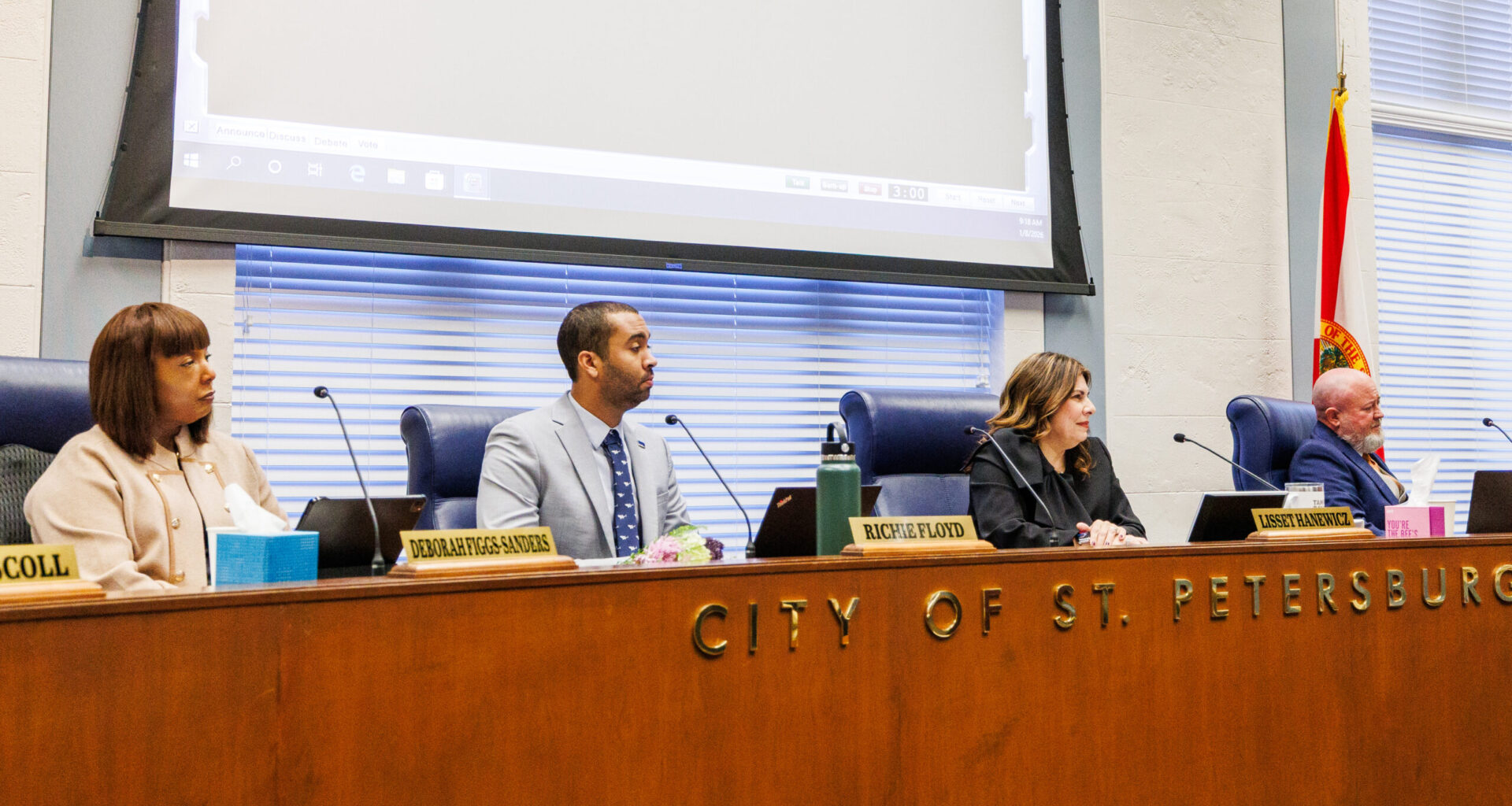
Givens joined Council Member Gina Driscoll in opposing the sanitation and stormwater increases, both of which passed 6-2. Council Member Richie Floyd joined them in opposing the broader water, wastewater and reclaimed-water ordinance, which passed 5-3.
Thursday’s votes followed months of debate over how to pay for a utility system that needs hundreds of millions of dollars in repairs and upgrades. All the while, residents have been grappling with higher costs in nearly every part of their budgets.
City officials point to infrastructure as the main driver behind the increases. Staff told Council that while day-to-day operating costs for water and stormwater have stayed relatively steady, the real challenge is meeting the city’s growing capital needs.
Over the next five years, St. Petersburg expects to spend about $215.5 million on stormwater projects and another $705.5 million on water and wastewater infrastructure. That includes replacing old pipes, upgrading sewer systems, and maintaining equipment at the city’s three water reclamation plants.

Council Member Copley Gerdes said the city is still investing less than its long-range plans indicate is necessary simply to maintain its systems.
“Nobody wants to raise rates. I don’t want to do it. I don’t want to do it to people. Selfishly, I don’t want to do it to me,” Gerdes said. “It’s not fun. This is not a fun thing.”
“But when you see stats of 27 years of no increases, 18 years of no increases, unfortunately, we’re the ones that signed up to make the hard decisions. What do you do? Do you let the system continue to get worse? Or do you try to move the needle to try to make it better?”
Gerdes warned that putting off needed investment only raises the risk—and the eventual price tag.
“What I don’t want to happen is our water system fails,” Gerdes said. “That’s the worst-case scenario.”
Council Member Mike Harting said the debate is personal, citing conversations with his own family and with residents who are struggling to keep up.
“I have no interest in raising rates, and that starts with a conversation that I had this morning with my wife over coffee about what we were talking about today — in addition to the folks that we hear from in the community and my daughter, who is now a school teacher, who can’t afford to have rates raised.”
Still, Harting backed the increases. He pointed to a $33 million pump station project in Shore Acres, meant to reduce chronic flooding, as the kind of work the city can no longer afford to delay.
“There are things that are just too critical not to address,” Harting said.
Driscoll took a different view. She said her perspective has shifted over the past year, and argued that residents have reached a breaking point where the city needs to find ways to ease the burden.
“You can only say, ‘Let’s start next year,’ so many times,” Driscoll said. “Right now, we know how much people are being squeezed.”
Driscoll noted that residents are not just facing higher utility bills. They are also dealing with rising property taxes and a November referendum that could authorize up to $600 million in bonds for more water, wastewater, and stormwater projects.
The bond referendum is a separate issue from the rate increases. Utility fees cover current operations and capital needs, while the proposed bonds would speed up additional resilience projects and be paid back through property taxes.
“We’ve got to give people a break somewhere,” Driscoll said.
Council has already taken some steps to soften the immediate impact.
Stormwater rates were originally set to rise by 15% next year. Instead, the city cut that increase to 8.5% by temporarily leaning more on borrowed money for capital projects.
Council also raised the sewer capacity fee for new development from $1,000 to $1,700. Floyd pushed for the change to make sure existing customers are not subsidizing the costs created by growth.
Floyd praised that change Thursday, noting that while residents face roughly a 7% increase, developers connecting to the wastewater system will see the capacity fee climb about 70%.
“I think that’s much more equitable,” Floyd said.
Floyd backed the sanitation and stormwater increases but opposed the water, wastewater, and reclaimed-water package. He has called on the city to lower fixed water charges, revisit utility system fees, and require new development to cover the full cost of the extra capacity it needs.
“I think that we can do a better job as to how we pay for these things in the future,” Floyd said.
Those proposals might shift who pays, but Council Chair Lisset Hanewicz argued they do not change the fundamental cost of keeping the system running.
She said residents routinely demand action on flooding, deteriorating pipes and other infrastructure problems, all of which eventually have to be paid for.
“You don’t raise rates, guess what happens? Deferred maintenance,” Hanewicz said. “Something is paid for. It may not be with dollars, but it may be with deferred maintenance. It may be more flooding in an area.”
In the end, that was the choice facing Council on Thursday.
For most Council members, the risk of letting the city’s infrastructure fall further behind outweighed the hardship of another rate increase for residents.