
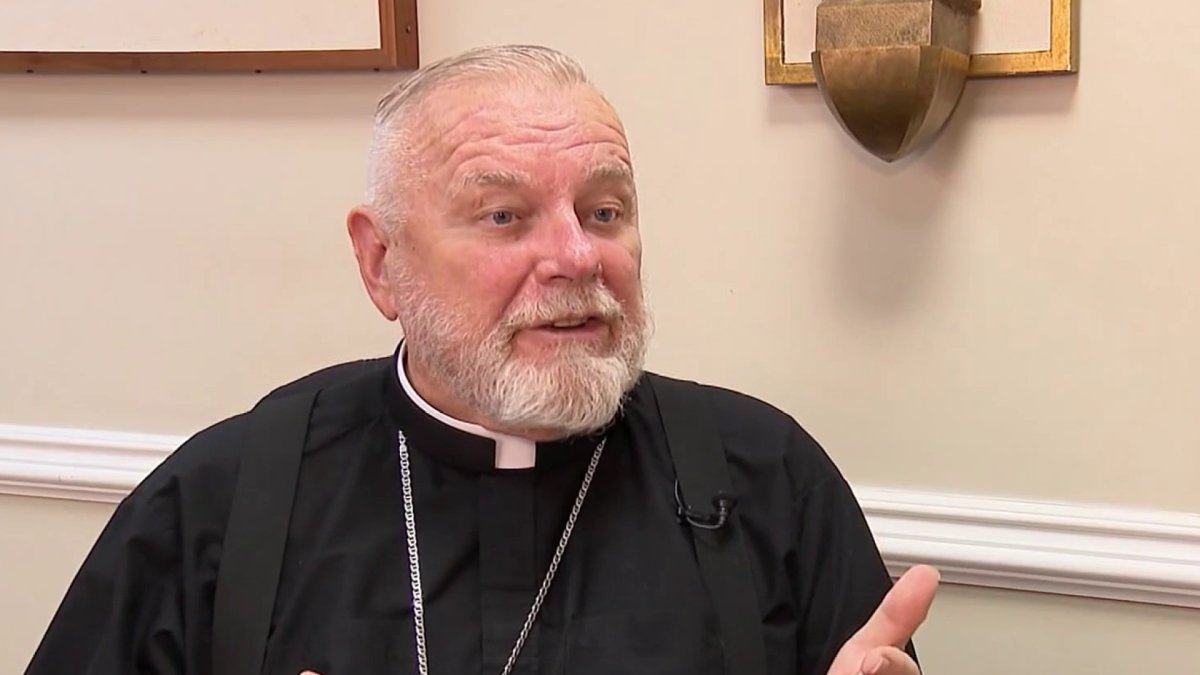
A dispute over school vaccination exemptions has pitted Florida Attorney General James Uthmeier against the Catholic Church, after the state official urged Catholic schools to grant religious exemptions and warned that refusing could put their participation in state education scholarship programs at risk.
The Archbishop of Miami, Thomas Wenski, told Telemundo 51 in an interview on Friday that the Catholic Church supports vaccination, both for health reasons and to protect the common good, and that there is no basis in Catholic doctrine for granting a religious exemption to vaccines.
“We’re interested in promoting the common good, and protecting our children in schools is part of that common good,” Wenski said.
The dispute became public after Uthmeier sent a letter on July 31 to the Florida Conference of Catholic Bishops.
“Therefore, I urge Catholic schools to comply with Florida law and grant religious exemptions to school vaccination policies. Failing to do so could put their eligibility for state education scholarship programs at risk,” the attorney general wrote.
Wenski maintains that the Church has already determined that vaccines are not contrary to Catholic doctrine and, therefore, there is no religious basis for Catholic schools to grant that type of exemption.
The Archdiocese of Miami does allow medical exemptions when there is a documented health condition.
The archbishop also defended widespread vaccination as a measure to protect the entire community.
“There’s a benefit to everyone having that protection… to protect us from outbreaks and diseases that, thanks to vaccines, had practically disappeared,” Wenski said.
Uthmeier later reiterated his position in a post on X on Aug. 17, in which he questioned whether a private school that does not comply with state laws meant to protect parents’ rights and religious beliefs should continue receiving public funding.
“However, a separate question is whether a private school that does not comply with state laws protecting parents’ rights and deeply held beliefs should be able to continue participating in state programs and receiving public funding,” he wrote.
Wenski, however, argues that the controversy also raises an issue of religious freedom and the limits of state authority.
The archbishop said the Constitution protects religious institutions from having the government determine what is or isn’t their doctrine.
“It’s not the role of the state to declare or determine what our teachings are as a religion… that belongs to the bishops of the Church,” he said.
Wenski also noted that the legislation that created the state scholarship program included safeguards designed to prevent a school’s participation from being dependent on its religious beliefs or practices.
The controversy thus pits two distinct arguments against each other: on one hand, the attorney general argues that schools must respect state protections for parents seeking religious exemptions; on the other, the Catholic Church says the state cannot force it to recognize as Catholic doctrine an objection to vaccines that its own religious leaders say does not exist.
This story was translated from Spanish with the help of a generative artificial intelligence tool. An NBC6 editor reviewed the translation.