
For years, Hillsborough County Commission Chair Ken Hagan wondered what he would say if the county ever actually reached this moment.
He has spent more than a decade pushing to bring the Tampa Bay Rays across the Bay, dating his effort to 2010. Along the way came abandoned stadium plans, shifting locations, changing ownership and plenty of political bruises.
He finally got his answer.
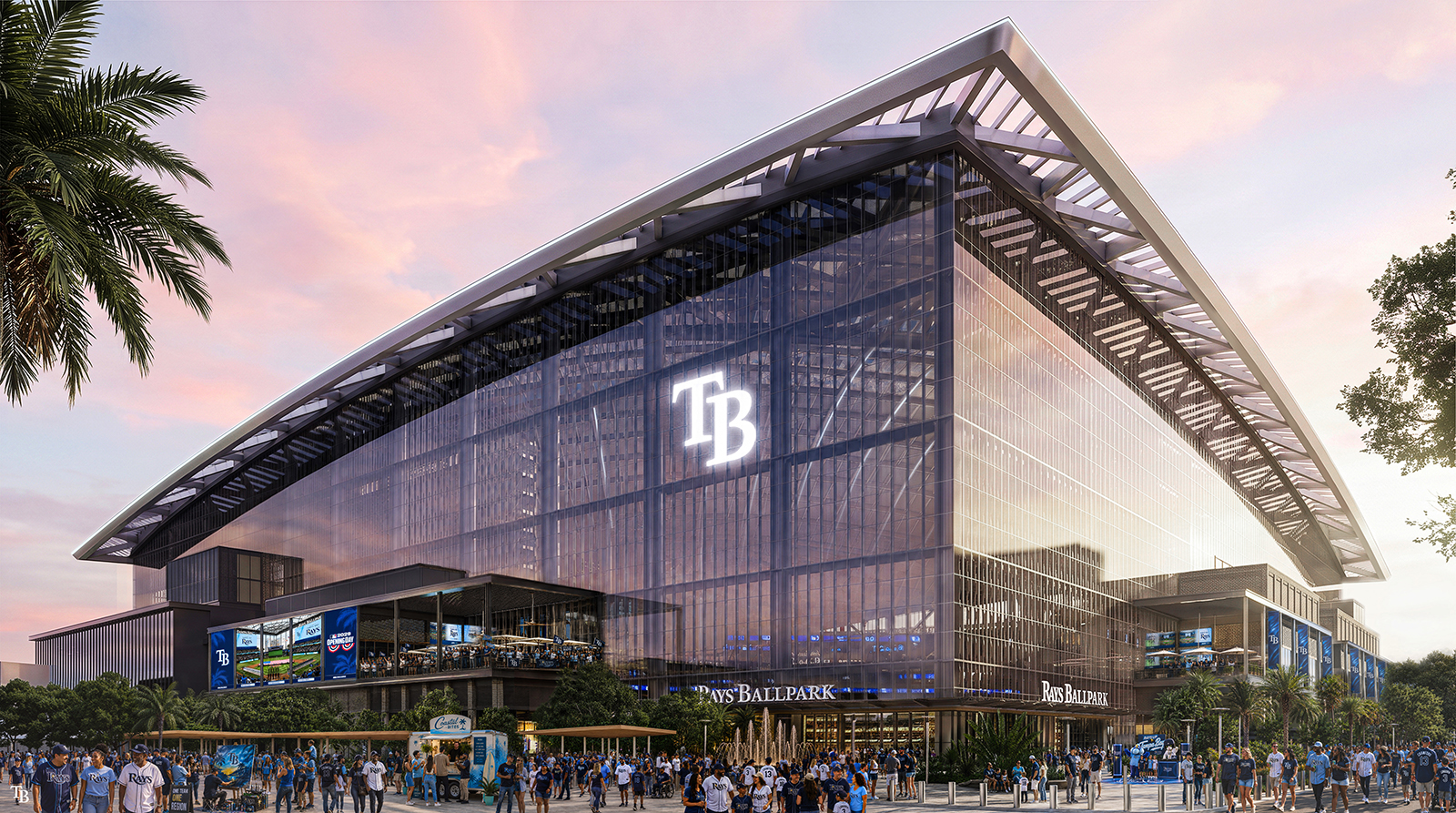
Hillsborough County Commissioners approved nearly $796 million for the Rays’ proposed stadium and redevelopment project Friday, securing the largest piece of public funding behind a roughly $2.36 billion ballpark and mixed-use district on Hillsborough College’s Dale Mabry campus.
The measure passed 5-2.

Hagan said the vote was the culmination of years spent trying to get a proposal to a place previous efforts never reached.
“I want to thank everyone who participated over the last several months. Most of all, though, I want to thank the person who was responsible for me being in this seat and responsible to my love of baseball. His name is also Ken Hagan. He’s my dad. Dad, we did it.”
Friday’s approval completes an approximately $876 million local-government package after the Tampa City Council approved another $80 million Thursday. The Rays are responsible for the rest, along with design expenses and construction overruns.
Major agreements, financing validations and land-use approvals remain before public money can flow. But after years of stadium searches that repeatedly stopped short, the central public-funding question is settled.
Hagan argued the stakes extend beyond baseball. He sees the stadium as a catalyst for billions of dollars in private development around Hillsborough College, alongside a rebuilt campus, transportation improvements and a new source of tax revenue.

“Which side of history do you want to be on? Three, five, 10 years from now, do you want to be responsible for not only the Rays’ forever home, but for the generational project that’s in front of us?” Hagan said, calling it “the largest and most transformative development in Hillsborough County history.”
What changed since May
Commissioner Harry Cohen supported the nonbinding framework with the Rays in May, but said that vote was about continuing negotiations — not promising his support for whatever came back.
What returned, he said, was materially better.
The Rays agreed to pay Hillsborough $4 million in annual rent, adjusted for inflation, which staff estimates could total up to roughly $200 million over 35 years. The team’s share of the overall project also increased from roughly half to about 63%.
The state had already pledged $100 million toward improvements to Lithia Pinecrest Road, a project Hillsborough had expected to help fund through its Community Investment Tax (CIT). But the final agreement added a safeguard, which Cohen credited to Commissioner Christine Miller. If Florida fails to fully deliver that money by the end of 2031, Hillsborough can reduce its stadium-related CIT contribution by the same amount.
“Between the rent and that, you have a $300 million difference between what we’re voting on today and what we discussed with the MOU back in May,” Cohen said.
Cohen said one issue gave him significant pause: the possibility that voters approve a constitutional amendment in November further restricting property taxes on homesteaded residential property, a concern that surfaced repeatedly during Friday’s discussion.
He ultimately came to see that uncertainty as another reason to support the redevelopment. If residential property-tax growth becomes more constrained, Cohen argued, Hillsborough will need more commercial, rental and other non-homesteaded development to strengthen its tax base.
“If it passes, it is going to force this community to look for deals exactly like this one in order to preserve our tax base,” Cohen said. “The property tax referendum, more than anything else — it does have a small effect on commercial — but its major effect is going to be on residentially homesteaded properties. This is exactly the kind of project that we need in order to mitigate that.”
For Miller, the Lithia Pinecrest safeguard illustrated why holding out for better terms mattered.
“I come from Plant City where you don’t buy the first strawberry in the row, and District 4 did not buy the first stadium deal either,” Miller said. “We held out, and now Tallahassee is subsidizing a long-awaited road project.”
She also highlighted the larger Rays contribution, annual rent, county ownership of the ballpark and the protection tied to the state road funding.
“The deal that was handed in May is not the deal in front of me today. It’s better in every way,” Miller said.
Miller also stressed that the Rays must prove their financing is in place before public dollars begin moving.
“If they don’t, the money stays where it is,” Miller said. “President (Ronald) Reagan gave us three words for exactly this moment, and they’ve held up 40 years. Trust, but verify.”
A cautious yes
Commissioner Chris Boles reached much the same destination, but with fewer superlatives.
Boles said he spent the weekend combing through the agreements and sent county administrators roughly 20 areas of concern. By the time revised documents arrived Tuesday, he estimated about 90% of the issues he raised had been addressed. His concerns included the certainty of the Rays’ private financing, responsibility for overruns, protections if the team fails to perform and whether taxpayers would see enough return from the surrounding development.
The revisions strengthened several of those areas, he said, but did not eliminate all of his reservations.
Boles continues to believe too much of the county’s eventual return depends on the development around the stadium. He also criticized the formula for splitting future property-tax increment between Tampa and Hillsborough, arguing the county’s historically lower property-tax rate leaves it with a smaller share than it deserves.
But Boles said governing required weighing those weaknesses against the stronger protections and the consequences of rejecting the project altogether.
“This is not an enthusiastic yes,” Boles said. “It’s a cautious and accountable yes, with my eyes fully open to both the opportunity and the risk. The agreement changed, protections improved, the remaining risks are now more defined and manageable. So for those reasons, I will vote ‘yes.’”
He also made one final change before casting it. Boles successfully pushed the minimum Community Benefits Agreement to $60 million.
The case against it
Commissioner Donna Cameron Cepeda said the message she has heard traveling Hillsborough is much less enthusiastic.
Residents may love baseball, she said, but they do not want to finance a stadium. She objected to using $360 million from the Community Investment Tax, arguing voters renewed it in 2024 without being told a professional sports stadium could become one of its uses.
Cepeda said those dollars could instead support roads, drainage and other infrastructure residents are already waiting to see completed. She also objected to using $103 million in county resources while Hillsborough remains vulnerable to hurricanes.
“Most people love baseball, but they just do not want to spend their hard-earned taxpayer dollars on building a stadium,” Cepeda said.
Commissioner Joshua Wostal made a more detailed fiscal argument against the ballpark.
He pointed to Hillsborough’s backlog of sidewalks, roads and other public improvements competing for CIT money, and questioned the $103 million cash contribution — much of which staff said would likely come from the general fund.
Wostal also argued the $796 million headline figure does not capture the long-term cost of borrowing against tourist development tax (TDT) revenue. He cited an agreement exhibit showing roughly $569 million in scheduled bond payments over 35 years.
“This deal is an albatross,” Wostal said. “It is extremely one-sided to the unincorporated residents of Hillsborough County.”
He also predicted the CIT financing would face a legal challenge. County Attorney Julia Mandell said her office and outside counsel found no express prohibition preventing the tax from being used for a new professional sports facility.
The opportunity beyond baseball
Commissioner Gwen Myers focused instead on what the partnership could deliver.
She pointed to jobs, workforce development, affordable housing and a rebuilt Hillsborough College campus. College President Ken Atwater called the redevelopment a “generational opportunity,” highlighting new facilities, workforce programs and stronger community partnerships.
“This is an opportunity to make it happen,” Myers said.
Those goals now have at least $60 million behind them through the benefits agreement, which is expected to include affordable housing, anti-displacement efforts, workforce development, youth sports, transportation and public safety.
The detailed agreement still must return for approval.
Before Hillsborough spends ‘one dime’
Hillsborough’s nearly $796 million contribution includes $360 million in CIT revenue, roughly $303 million in TDT financing and reserves, $103 million from other county resources and $30 million in federal disaster-recovery money restricted to eligible stormwater work.
The CIT portion would be paid in four $90 million installments during construction, avoiding borrowing costs on that piece. Much of the tourist-tax contribution would be bonded, while some existing tourism allocations would have to be replaced from other sources.
County Chief Financial Officer Tom Fesler said staff considers roughly $463 million the amount it needs to recover from the project, excluding restricted tourist-tax money and the federal grant.
Staff believes rent and new tax revenue can offset that amount over time. Along with up to roughly $200 million in Rays rent, AECOM projects about $145 million for Hillsborough from its share of state sales taxes generated by the project and another $120 million in additional CIT collections as taxable sales grow.
Those are projections, not guarantees. Much depends on what gets built around the ballpark. The Rays envision 6 million to 8 million square feet of housing, offices, retail, hotels and entertainment. AECOM found support for a more conservative buildout of roughly 3.1 million square feet of multifamily rental development and nearly 500,000 square feet of other commercial uses.
Future property-tax growth would be shared among Tampa, Hillsborough and a new Community Development District (CDD), with the district gaining a larger share as taxable value increases.
Friday’s vote also does not immediately open the county checkbook. Mandell said roughly 28 conditions must be satisfied before Hillsborough puts “one dime” into the project.
The Rays must demonstrate their private financing is in place, while the parties still must complete the Ballpark Operating Agreement and Community Benefits Agreement, secure land-use approvals, establish the CDD and tax-increment structure and successfully validate key pieces of the public financing in court.
Payments would flow through a construction trust tied to documented costs, and the Rays remain responsible for overruns and construction defects.
After substantial completion, the roughly 21.5-acre stadium parcel and ballpark would transfer to Hillsborough County. A separate non-relocation agreement generally requires the Rays to remain in Hillsborough County through the initial 35-year term.
Other pieces remain unresolved, including long-term capital maintenance responsibilities. The Rays also intend to separately seek money from Hillsborough’s 1% high-tourism-impact tourist development tax, which is not included in Friday’s $796 million commitment and would require another vote.
So Friday was not the end of the stadium process, but it was the vote Hagan has spent more than a decade trying to reach.