
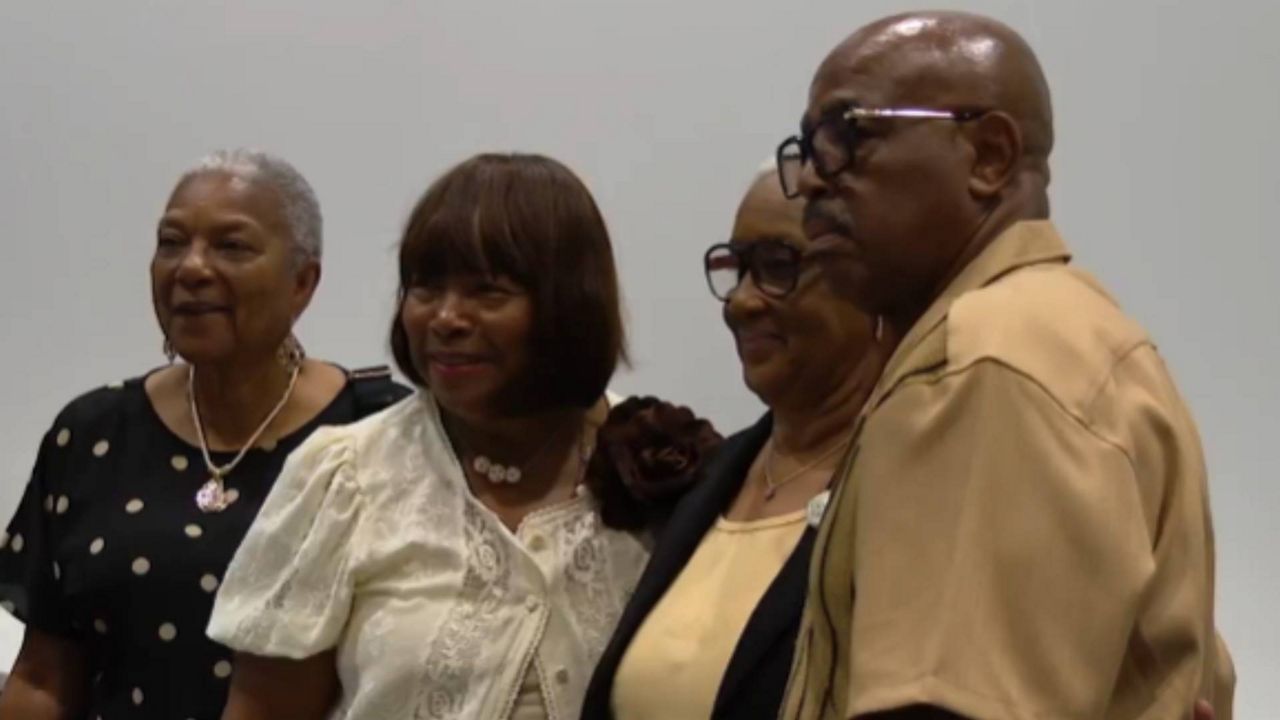
ORLANDO, Fla. — The Groveland Four Legacy Luncheon, honoring the descendants of the Groveland Four, was held Friday afternoon in Orlando at the Orange County Multicultural Center.
It was hosted by State Senator LaVon Bracy Davis.
Charles Greenlee, Samuel Shepard, Walter Irvin and Ernest Thomas were Black. Samuel Shepard and Walter Irvin were veterans.
All of them were accused of raping a white woman during the Jim Crow era of 1949.
The four were brutally beaten, tortured, and even shot by the sheriff while in custody.
Despite the lack of evidence, Shephard and Irvin were sentenced to death, and Greenlee was sentenced to life behind bars due to his young age. He was 16 years old when he was charged.
Their sentences were handed down by an all-white jury.
After years of cover-ups, the state legislature eventually issued an apology to their families. In 2019, Gov.Ron DeSantis issued a full posthumous pardon to them. In 2021, the men were exonerated, and over the summer, DeSantis approved $4 million in compensation to their descendants.
Many of them were at the Groveland Four Legacy luncheon together for the first time since the compensation was granted.
“We walked through it. We went through a whole lot. You know, we walked through. It all was worth it,” said Samuel Shepherd’s niece, who attended the event.
It was a moment to reflect and rejoice together. Each attendee was given a special gift — a deck of commemorative cards to share the history.
“Every time we tell the story, we make it a little harder for history to forget,” said Bracy Davis to the crowd.
Pulitzer Prize-winning author Gilbert King, who wrote a book about the Groveland Four, said that many don’t know that when the Groveland Four’s story was publicized years ago to a national audience, donations flooded into the NAACP.
“And they were able to fund Brown vs. Board,” King said. “It enabled the NAACP to put together a really powerful motion in order for the desegregation of the school’s case.”
“The other thing that’s really important is that the lawyers who worked on this case in Groveland were so inspired by the fact that the state was trying to kill somebody for these sexual assault charges. What they ended up doing was writing legislation or writing a motion that ultimately ended the death penalty for rape,” he added.