
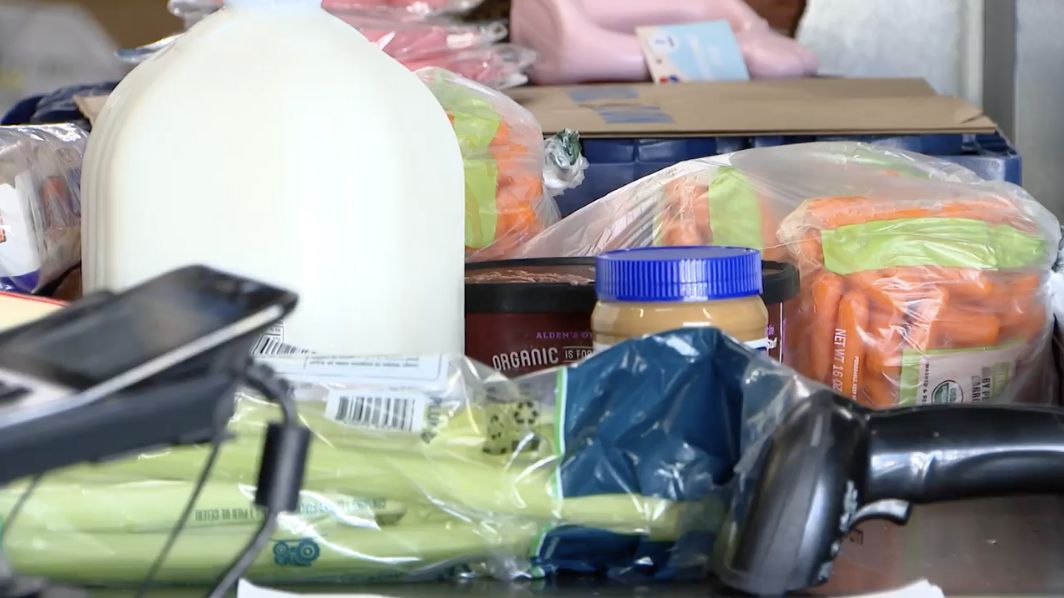
ORANGE COUNTY, Fla. — SNAP participation is continuing to fall nationwide, and Florida has seen one of the largest declines as local organizations in Central Florida report more families seeking help with food.
New USDA data shows about 36.6 million people received benefits through the Supplemental Nutrition Assistance Program in May, down from more than 42 million a year earlier. In Florida, SNAP participation has dropped nearly 20% since July 2025.
In Orlando, Brianna Sawchuk said she and her son, Enzo, had relied on SNAP benefits until she was recently found ineligible after reapplying.
“I was on food stamps. And then when I did my reapply, I didn’t get approved,” Sawchuk said. “They said I was ineligible and I uploaded all the documents that (were) needed.”
Sawchuk said her only income has come from DoorDash. She said she submitted a work calendar showing how much she made each day.
“It was barely much anything at all,” she said. “And they still said it wasn’t eligible.”
The decline comes after new federal rules passed in July 2025 tightened SNAP eligibility and expanded work requirements. The Trump administration also pointed to efforts to reduce fraud.
“Because of these eligibility requirements, people are not going to fall off. At the same time, this is going monthly. So all the other people that are coming up in the fourth quarter, their eligibility might be, you know, at risk as well,” said Anjali Vaya, executive director of United Against Poverty in Orlando.
Vaya says they work with families across Central Florida through a grocery program that offers free membership to people below 200% of the federal poverty level. Vaya said the organization has seen an increase in new memberships, including families with children.
Advocates say the loss of SNAP benefits can also affect children who qualify for school meal programs.
“Many kids that receive free and reduced meals during the school year are able to do so because they are eligible based on their family SNAP enrollment,” said Sky Beard, Florida director of No Kid Hungry. “And so there is definitely a connection between families participating in SNAP.”
As more families face challenges, food banks and other organizations are working to fill the gap.
“We’re currently putting enough food out the door for 300,000 meals a day,” said Greg Higgerson, chief development officer for Second Harvest of Central Florida. “But it’s important to have the context of knowing that the SNAP program provides nine meals for every meal that a food bank like ours is able to do.”
Higgerson said Second Harvest of Central Florida is seeing increased need compared with this time last year.
For families like Sawchuk’s, local food resources are helping them make ends meet while they try to regain benefits.
“It’s a huge help,” Sawchuk said. “But hopefully, I can get them back soon.”