
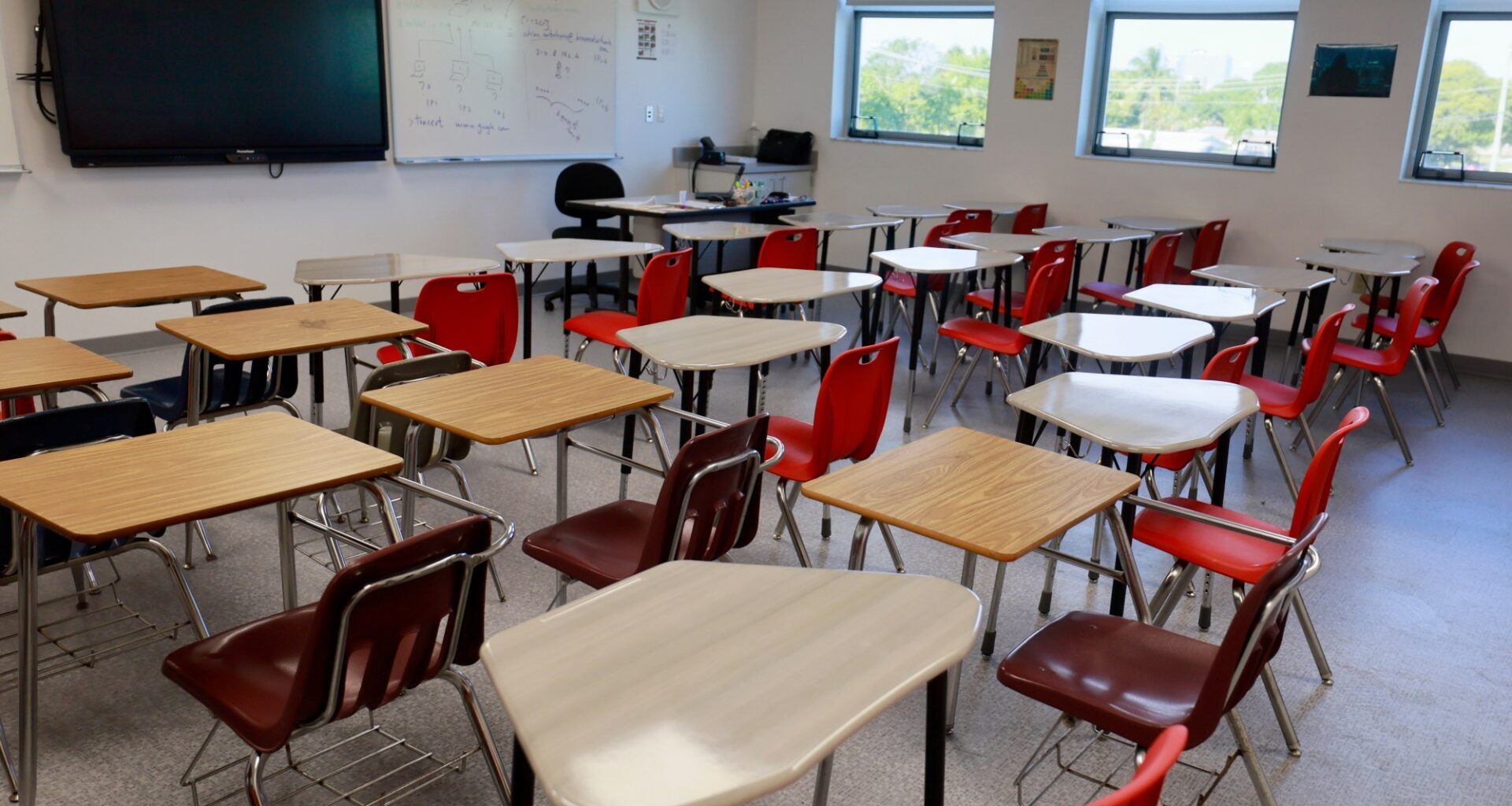
The first day of school is always filled with smiles, introductions and hope for the year ahead. Like every year, Florida’s public-school teachers, staff and administrators are focused on ensuring that every child is welcomed with open arms and genuine care.
Yet, despite educators’ best efforts, as hundreds of thousands of children return to their neighborhood public schools, too many will enter classrooms without a permanent, fully certified teacher. This year, public schools across the state will start the school year without enough bus drivers, paraprofessionals, ESE aides, custodial staff, cafeteria workers, nurses and other essential educators who keep students healthy and safe in school.
 Andrew Spar is president of the Florida Education Association. (courtesy, Andrew Spar)
In the first week of August, Florida districts reported over 3,000 instructional vacancies. When combined with the more than 2,300 support staff vacancies, the total number of unfilled positions is even higher than the year before. These persistent vacancies don’t just signal a problem; they reveal a deepening funding crisis that continues to disrupt student learning and undermine the promise of public education.
Amid disheartening and disruptive school closures and thousands of position cuts districts have been forced to implement due to million-dollar budget shortfalls, vacancies have continued to climb. Years of underfunding have led to a 12.4% drop in average teacher salary (when adjusted for inflation) over the last decade. This year’s budget includes less than a 2% increase to the base per-student funding, which is nowhere near enough to keep up with inflation and rising costs.
This same deliberate underfunding has led Florida educators to be ranked 50th in average pay nationally for three years running, pushing many educators out of the profession or the state altogether. Adding to this burden are out-of-control healthcare costs that have forced many educators to choose between their family’s health and their profession. As the educator shortage worsens, lawmakers have authorized billions to flow into an unaccountable voucher program devoid of meaningful safeguards, even as Florida ranks 41st in per-pupil spending.
This year alone, $5 billion in taxpayer funds will be siphoned away from public schools to prop up Florida’s unaccountable voucher program, diverting dollars from the more than 80% of children who attend public schools. Voucher programs now absorb nearly a quarter of state education funding, yet serve only 15.3% of students, primarily those who were already in private schools.
As a result, public schools are forced to cut staff and programs, close campuses and stretch dwindling resources, while voucher schools cherry-pick students, denying entry to or kicking out those who don’t fit their “type.” This puts profits above students and families and undermines the constitutionally mandated promise of a high-quality education for every child.
This growing disparity is why the Florida Education Association, parents, educators, civil rights groups and community members have joined together in a lawsuit demanding the state uphold its constitutional duty: to provide every child a “uniform, efficient, safe, secure, and high-quality system of free public schools.” If success for all students is the priority, Florida should be working with, not against, teachers, staff and parents to strengthen our public schools.
That means increasing funding by at least $1,000 per student immediately, eliminating punitive laws that systematically disadvantage public school students and educators, setting consistent and uniform standards for all schools so parents can make the best decisions about their child’s education, and raising educator salaries so districts can attract and retain the qualified teachers and staff who are fundamental to student achievement.
Through this lawsuit, we are demanding accountability, transparency and consistent educational standards, so parents have the information they need, and every student gets the education they deserve. Floridians have made it clear that they want to strengthen, not abandon, our public schools. If even one child walks into a school this year without their full complement of teachers, that’s one child too many. Florida’s future depends on ensuring every child can reach their potential, and when public schools thrive, so do our students — and so does the state.
Andrew Spar is president of the Florida Education Association, the state’s largest association of professional employees, with 120,000 members.