
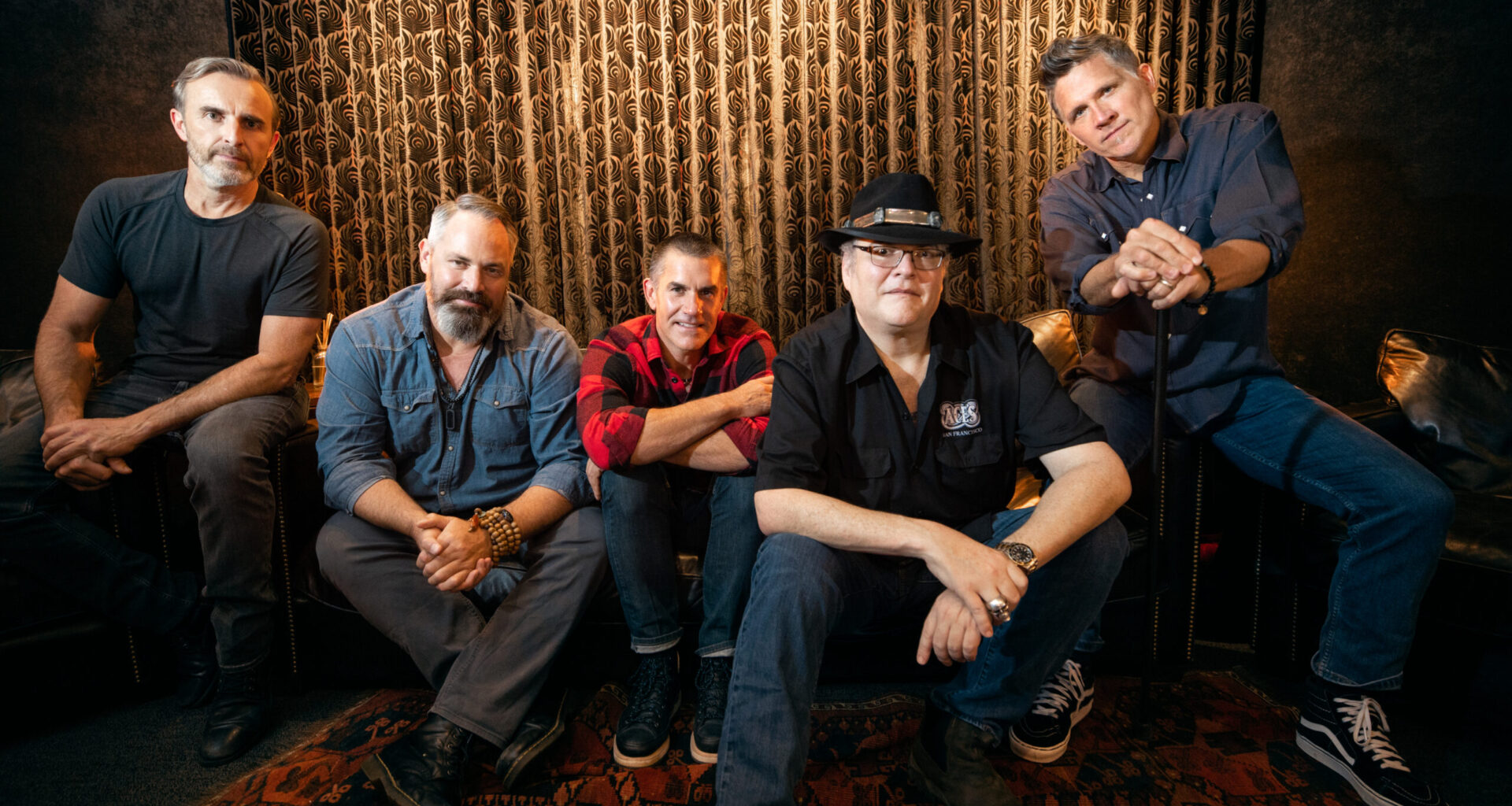
The image, from mid 1990s MTV, is indelible: The rock ‘n’ roll band Blues Traveler, with a bespectacled bear of a man out front, singing and playing harmonica with the speed (and melodic finesse) of a concert pianist. The songs: joyful, upbeat and organically optimistic.
His name was, and is, John Popper, and three decades after “Run-Away,” “Hook” and other Blues Traveler songs were in hourly rotation on the cable music giant, Blues Traveler is still on the road and enjoying a well-earned reputation as a dynamic live band.
Blues Traveler is onstage Tuesday at the BayCare Sound, with fellow era-specific groups Gin Blossoms and Spin Doctors.
(Six degrees of separation: Popper was also a founding member of Spin Doctors, but departed to devote full-time to Blues Traveler.)
Guitarist Chan Kinchla, who co-founded Blues Traveler with Popper, bassist Bobby Sheehan and drummer Brendan Hill, spoke with the Catalyst in advance of Tuesday’s show.
The road hasn’t always been smooth for the blues band from Princeton, N.J.: Sheehan died of a drug overdose in 1999; Popper suffered a major heart attack and other serious health issues; and the band’s label, A&M, dropped them when the hits stopped coming.
And yet, here we are.
Kinchla’s younger brother Tad took over on bass, keeping it all in the family. Ben Wilson has been the band’s keyboard player for 26 years.
St. Pete Catalyst: It’s always said about Blues Traveler, “they’re overcome tremendous adversity.” With all that happened along the way, are you surprised the band still exists?
Chad Kinchla: Certainly Bobby passing away, God bless him, many years ago was adversity. I think with any group of adults, there’s going to be some health things, but generally John’s been pretty healthy … we all have. Any time you’re talking about a 40-year span with a group of people, there’s going to be some adversity. For anyone. I think that’s just life.
For us, we know Bobby would want to keep going. He put a lot of heart and soul into creating Blues Traveler, and making it what it was.
I guess the interesting thing is, a lot of our contemporaries from back then, they usually get back together after having at some point broken up, or stopped doing it for 10 years. And we’ve kinda just kept at it the whole time without much drama. I think it’s mainly ‘cause we just love playing live. So the idea of just not going out and doing some rock shows seems like a waste of some time, you know?
We were a high school band. We kind of grew up together, so I think there’s a lot of ties that keep us together beyond just being in a band together. So I think any drama or contention between us, like a family you know you’re going to sort it out, so we don’t really over-react. I think that’s what sometimes gets bands in trouble.
After the band got huge, was there any worry that John might go solo?
We’ve always been supportive. Me and Bobby did a side record, John’s done side records. We have plenty of time to work on side projects. So “going solo,” I think it’s more of a press-related thing, especially this day and age.
That was never really an issue for us. And it never came up to take a year off, because we could just tour a little lighter some years … but we don’t really work that hard! So to go out and play some rock shows and make a little money always seemed like a good idea to us.
Do you consider Blues Traveler a jam band?
Sure! The jam band category is, or at least used to be, much more varied. I think jam band means bands that improvise a lot during their sets, with solos and transitions, and they change up the songs regularly. There are some bands that do it a lot more, especially changing around the sets and everything, than we do. We always change ‘em up every night – we put a couple songs here and there.
The difference is, we have some really big hits that, unlike most jam bands, we’re kind of obligated to play. And it’s not an obligation we don’t like!
I know, you really enjoy playing “Run-Around” and “Hook.”
Every time you play ‘em, everyone goes nuts. It’s fun!
But we are definitely a jam band in that we improvise a lot, and the songs are a little different every time we play ‘em. Because we’re reacting to the environment and what the vibe is that night.
When we started, the term jam band didn’t exist. They called us neo-hippies, or stuff like that. It was us and Phish, Widespread Panic, Aquarium Rescue Unit and some other great … but also a lot of bluegrass bands and a lot of different types of improvisational music. So that’s kind of the way we look at it.
There are a lot of great blues harp players. And obviously John can so that, but he does so much more. He’s a melodic harmonica guy. It’s a lead instrument. I think that’s kind of rare.
Well, he’s a very singular musician, and he’s a great singer too, of course. And he can really lean into some traditional blues.
The funny thing was, his idol growing up was Jimi Hendrix. There were the traditional blues guys, but John was really trying to do what Jimi Hendrix did, on harmonica.
And he loves all kinds of music. So he was never trying to copy the trad blues guys – he was trying to copy guitar players, and sax players, you know, Coltrane, Miles Davis and Jimi Hendrix. That was more what he was going for.
One of the things about Blues Traveler, we love all kinds of music. Going all the way back, we weren’t trying to be one thing. I think it’s that eclectic blend of influences, along with improvisational music, which really makes what that jam band category is.
Why is live more fun than studio work?
It’s a different kind of fun. They’re just so different. Live is just all in the moment, so mistakes are fun, exploring’s fun. You’re not really sure what’s gonna happen, and it comes and it’s just a transient moment. That’s what makes it so special.
The studio, you’re really trying to craft something that’s like a focused representation of the idea. And you’re working on the arrangement. You know, it’s coming through a little speaker for people to listen to, or earbuds. So it’s a really different mode of expression than the live show with the lights and the sound and the crowds.
As a result, live’s more like a party. And the studio’s more like the fun of working on a craft over time, and finishing it, you know? It’s just a different vibe.
We don’t necessarily try to re-create what we did in the studio, live. There’s the melody, and the chord changes, and we’ll kinda try to stick to that. But every song we do in the studio, we just come up with its own live version.
You encourage tapers, don’t you?
We record every live show and put ‘em up on Nugs. Back in the day, that was a big deal, letting people tape at your shows. Now, everyone’s got so many recording devices, and most bands just upload stuff to various online sites for live shows.
Yeah, anyone who wants to come tape a show is fine. Honestly, in the beginning, that’s how we got word around. There was a whole community taping shows and sharing tapes. So it was just great promotion, really.
Spin Doctors, as we all know, is kind of a little brother to Blues Traveler …
We like to think of them as our little daughter! [Laughing] We love those guys. We came up together.
Certain marketing types would brand this a “90s Nostalgia Tour.” What do you think of those things?
Listen, there’s nothing wrong with a little nostalgia. And all three of these bands had massive hits, multiple massive hits in the ‘90s. So that is part of its charm, for sure.
But at the same time, all these bands have been continuing playing live, working on their songs and their craft the whole time. So it’s not like we’re bringing it back after 20 years of not doing anything. These bands have been out playing the whole time, give or take. And we’re all friends.
There is some great nostalgia there, which is fun, but these are all living, breathing bands that have been doing it for a long time. And that makes for good live music.
Tickets to Tuesday’s 6 p.m. concert are available at this link.