
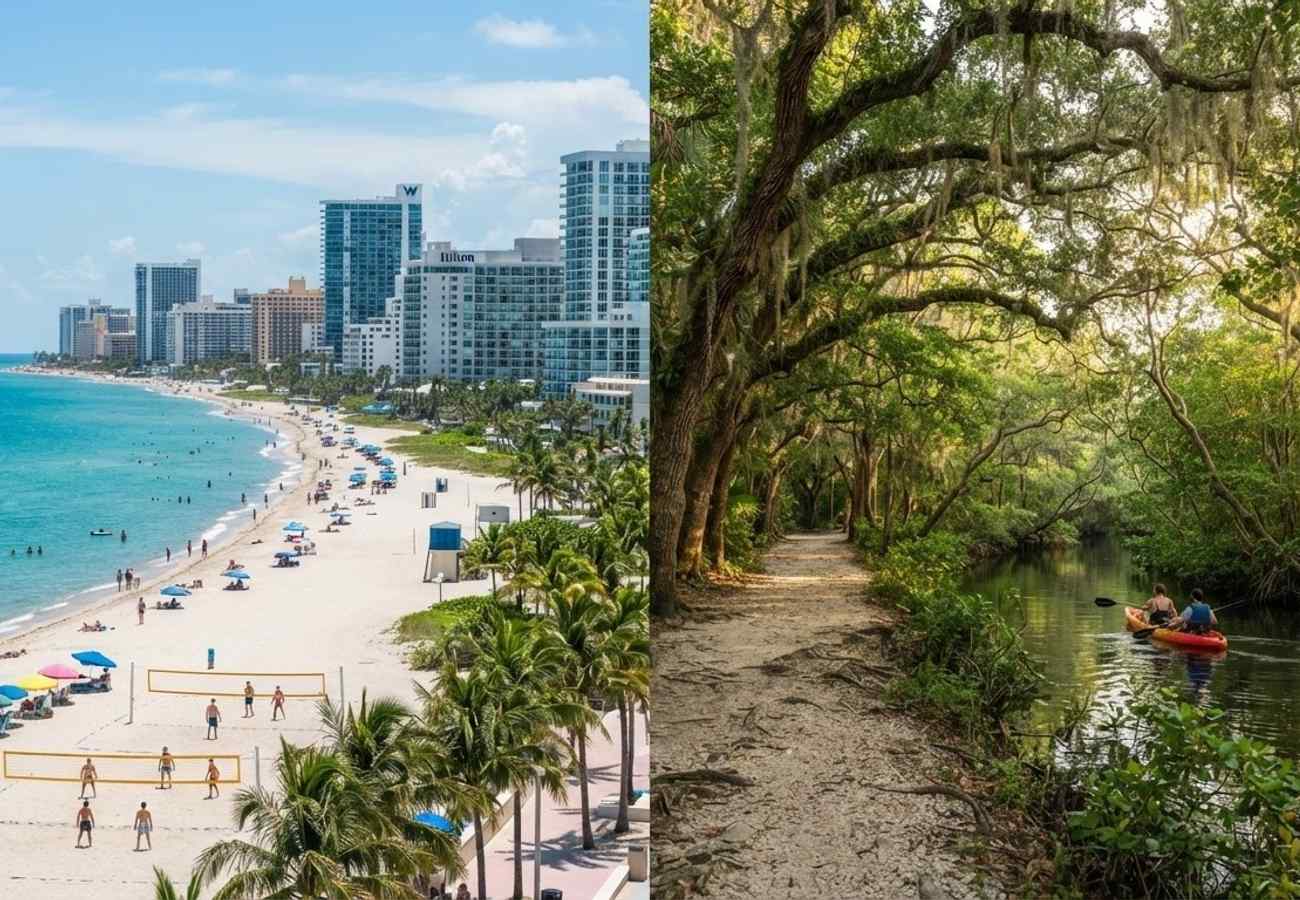
Visitors to Fort Lauderdale in 2026 face a distinct choice between the high-energy urban atmosphere of Fort Lauderdale Beach Park and the secluded, nature-centric environment of Hugh Taylor Birch State Park. While both offer Atlantic access, they cater to entirely different travel styles, from those seeking resort-adjacent action to those craving “Old Florida” tranquility.
For the modern traveler, selecting the wrong spot can mean the difference between a relaxing retreat and a stressful battle with midday heat and parking scarcity. Understanding the logistical divide between these two coastal landmarks is essential for optimizing a South Florida itinerary.
Urban Energy at Fort Lauderdale Beach Park
Located at the southern terminus of the city’s primary beachfront strip, Fort Lauderdale Beach Park is positioned near Seabreeze Boulevard and the B Ocean Resort. This location functions as a quintessential urban beach hub, where the skyline of high-rise hotels provides a constant backdrop to the white sands of the Atlantic.
The atmosphere here is characterized by activity and convenience. Visitors are positioned in the heart of the action, with immediate proximity to the beachfront promenade. This makes it a primary destination for those who want to combine a beach day with visits to nearby bars, casual eateries, and jet ski rental operators along A1A.
For those prioritizing athletics, the park is equipped with basketball and volleyball courts, alongside a dedicated children’s playground. The layout is designed for efficiency; restrooms, outdoor showers, and picnic tables with grills are clustered near the parking area, allowing families to transition quickly from a meal to a swim.
Nature and Seclusion at Hugh Taylor Birch State Park
Moving north along A1A reveals a starkly different environment: Hugh Taylor Birch State Park. Often referred to by park officials as the “Central Park” of Fort Lauderdale, this expanse is a biological sanctuary wedged between the ocean and the Intracoastal Waterway.
The sensory experience shifts immediately upon entry. The roar of city traffic and beach music is replaced by the sounds of coastal hammocks, sea grape canopies, and native wildlife. The park is defined by its freshwater lagoon, which cuts through the center of the property and offers a serene alternative to the crashing waves of the Atlantic.
While the beach is accessible, the park’s primary draw is its interior. Travelers can engage in low-impact recreation, such as cycling or walking along multi-use trails that wind through oak groves. It is a preferred destination for those seeking a “slow travel” experience, where the focus is on birdwatching and kayaking rather than the high-intensity vibe of the resort corridor.
Comparing Beach Access and Water Activities
The logistics of reaching the water differ significantly between the two sites. At Fort Lauderdale Beach Park, the transition from vehicle to sand is nearly instantaneous. The park features paved paths and a gentle slope from the parking lot to the shoreline, making it a highly accessible option for visitors using strollers, wheelchairs, or heavy beach carts. The water here is typical of the open Atlantic, featuring turquoise hues and moderate surf, with professional lifeguards maintaining a constant presence.
Hugh Taylor Birch State Park requires a more intentional approach to the ocean. The park’s interior is separated from the beach by A1A. To reach the sand, visitors must use a marked crosswalk via the beach gate near the Park & Ocean concession. While this adds a step to the process, the resulting beach experience is often more natural, with fewer towering hotels looming directly over the shoreline.
However, the “water experience” at Birch extends beyond the salt water. The freshwater lagoon allows for kayaking and canoeing through mangrove-lined channels. This creates a unique dual-water opportunity; visitors can spend the morning paddling past turtles in the lagoon and the afternoon swimming in the ocean without ever moving their vehicle.
Infrastructure and Facility Analysis
The facilities at each location reflect their primary purpose. Fort Lauderdale Beach Park is a utility-driven space. Its strengths lie in its concentrated amenities:
Sports: Sand volleyball and basketball courts.
Family: Integrated playgrounds and nearby showers.
Dining: Grills and picnic tables situated close to the parking zone.
Conversely, Hugh Taylor Birch State Park offers a sprawling infrastructure designed for longer stays and larger gatherings. The park features covered pavilions equipped with electricity and water, which are frequently reserved for family reunions and private events. Instead of concrete courts, Birch provides interpretive signage about local flora and fauna, turning a simple walk into an educational experience.
Managing the South Florida Heat
In the extreme humidity of a Florida summer, shade is a critical factor for visitor comfort. Fort Lauderdale Beach Park offers almost no natural canopy. Consequently, shade is entirely man-made, consisting of rented umbrellas or personal 10×10 pop-up tents. Visitors arriving midday without equipment often find themselves forced into nearby cafes or bars to escape the sun.
Hugh Taylor Birch State Park provides a natural solution to the heat. The coastal hammock canopy filters the sunlight, creating a significantly cooler microclimate. The picnic areas and walking trails are shaded by mature oaks and sea grapes, allowing visitors to remain outdoors comfortably even during the peak UV hours of July and August.
Parking Logistics and Value Assessment
The financial and logistical cost of visiting these sites varies based on the management system. Fort Lauderdale Beach Park utilizes city-managed paid parking. These lots are subject to hourly rates payable via mobile apps or kiosks. During the winter high season or holiday weekends, these spots are highly competitive, often requiring visitors to circle the lot for extended periods.
Hugh Taylor Birch State Park operates under a state park fee structure. While there is an entry fee for the park, it grants access to the vast interior amenities and the lagoon. For those who wish to avoid the state park fee, parking is available along A1A via city meters, though this removes the convenience of being inside the park’s protected perimeter.
Feature
Fort Lauderdale Beach Park
Hugh Taylor Birch State Park
Primary Vibe
Urban, High-Energy
Natural, Tranquil
Shade
Man-made (Umbrellas/Tents)
Natural (Oak/Sea Grape Canopy)
Water Access
Direct Atlantic Beach
Atlantic Beach + Freshwater Lagoon
Key Amenities
Basketball/Volleyball Courts
Kayak Rentals, Nature Trails
Accessibility
High (Paved paths to sand)
Moderate (Must cross A1A to beach)
Parking
Paid City Parking
State Park Entry Fee / A1A Meters
Why This Matters: Expert Travel Perspective
For the traveler, the choice between these two locations isn’t just about “beach vs. park”—it is about managing the physical toll of the environment. From a logistical standpoint, Fort Lauderdale Beach Park is a “sprint” destination: you arrive, hit the water, and leave. It is ideal for the tourist who wants the “Miami-style” beach experience with every convenience within a 500-meter radius.
However, from a wellness and experience perspective, Hugh Taylor Birch State Park offers “information gain” for the visitor. It provides a glimpse into the original ecology of the region, offering a mental break from the urban sprawl. For families with young children or elderly visitors, the natural shade of Birch is not just a preference—it is a health necessity to avoid heat exhaustion. Choosing Birch allows for a multi-activity day (kayaking and swimming) that reduces the stress of navigating city traffic multiple times.
The decision ultimately rests on whether you prefer the pulse of the city or the rhythm of the lagoon.
Related Travel Guides