
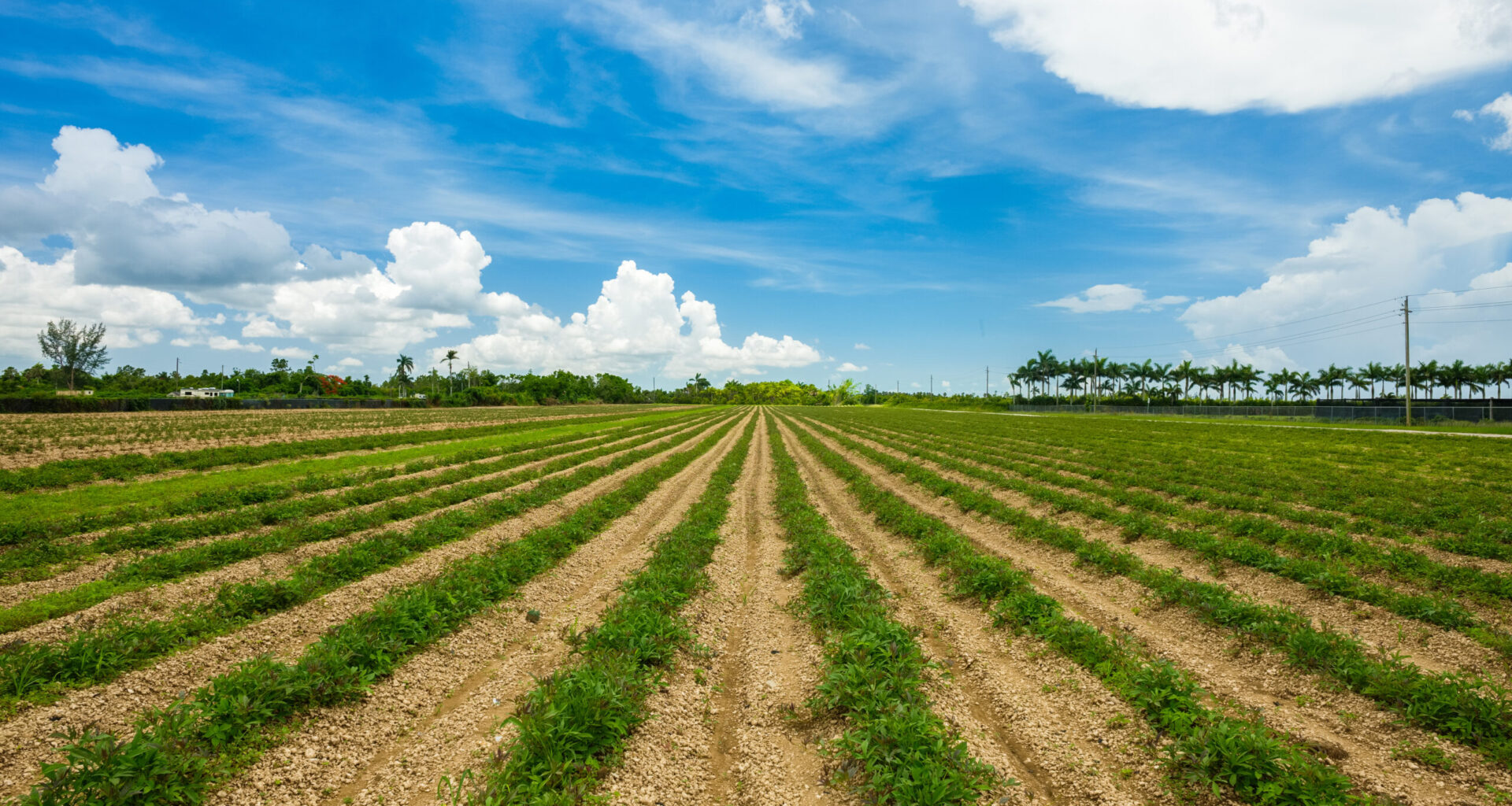
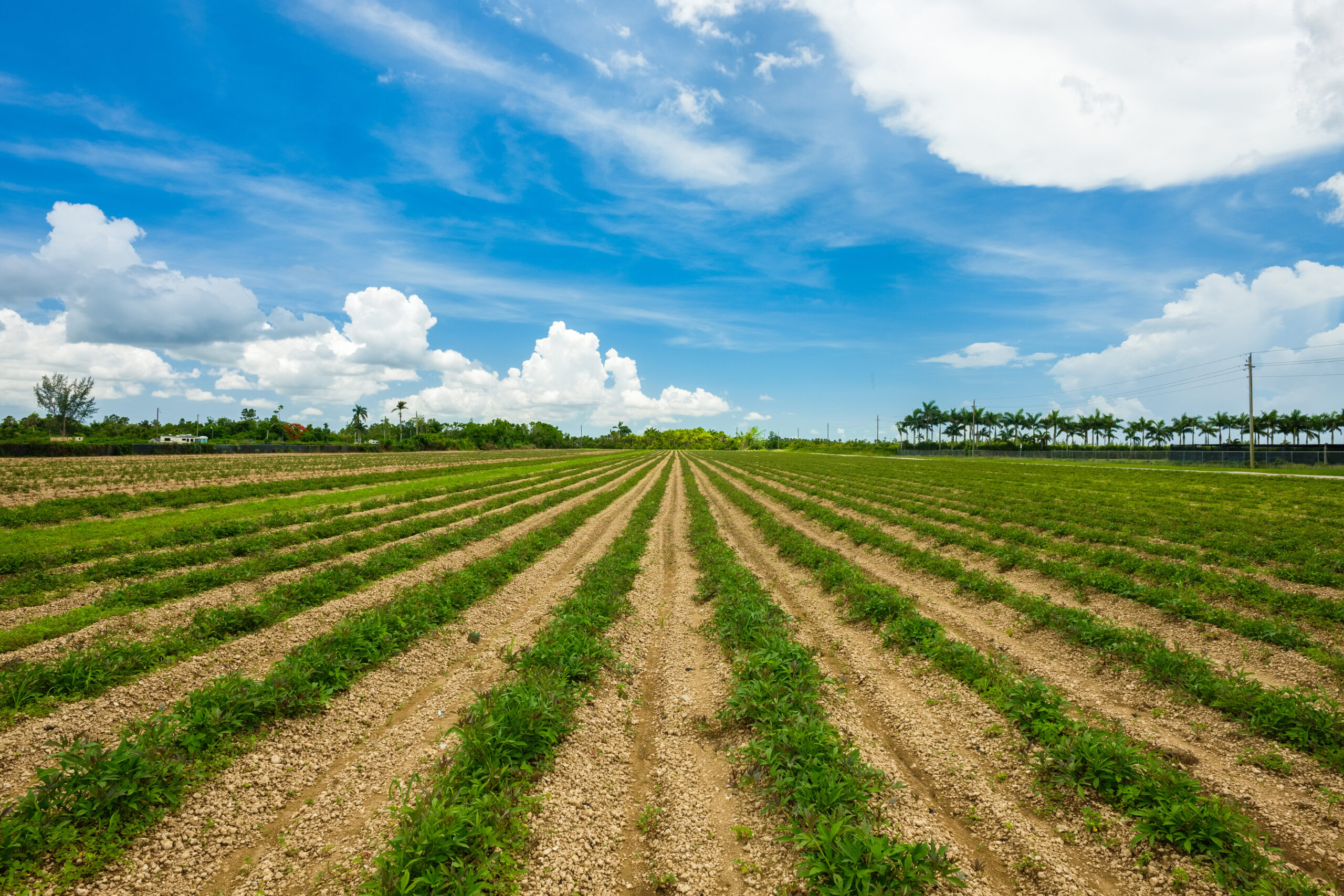
STOCK PHOTO
It’s well over 90 degrees, knee-deep in a June afternoon east of the sprawl on State Road 80 in Lee County, where a bustling Rooster’s Produce farm market almost appears out of place among nearby fields and cow pastures.
Most Floridians are living in air conditioning on a day like this. But not at Rooster’s, now open for the first summer ever, like some northern country standard, somehow out of place but happy to be there.
This can’t be real, can it?
There are long tables groaning with fresh vegetables and abundant fresh local fruit. There are coolers loaded with Florida fish or pasture-raised pork and beef from a farm less than 10 miles distant. There are shelves chock-a-block with local honey and sauces. There are locally made breads and ice creams richer than Liechtenstein. And there’s a lot more.
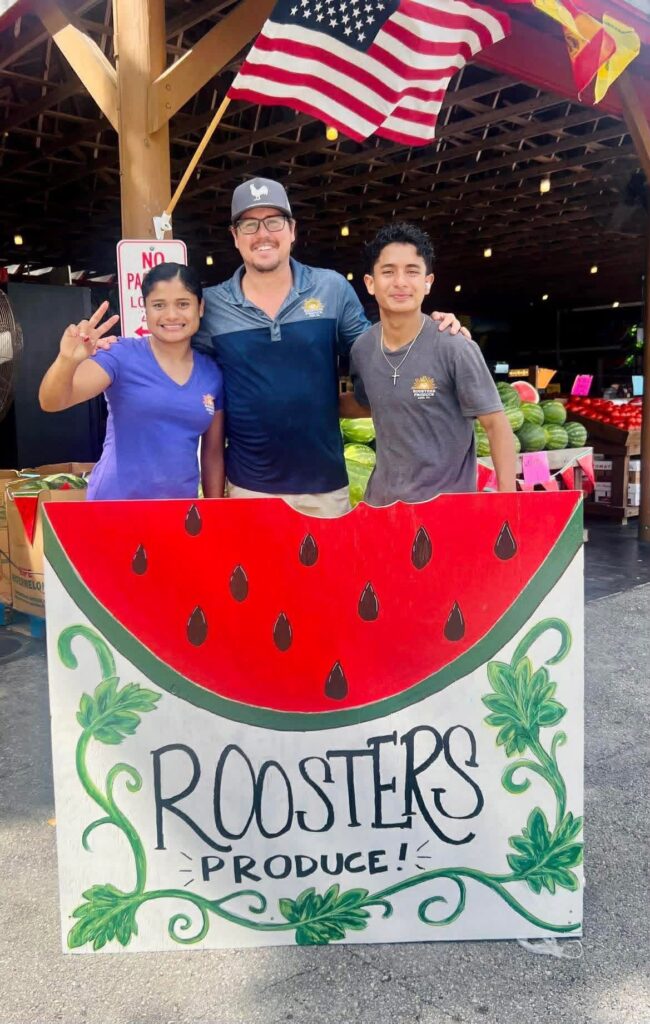
Rooster’s co-owner Trevor Baer (center) with employees Ara (L) and Ulise Luquez. -COURTESY PHOTO
Outside under the great oaks stands a picnic table or two, but nobody’s sitting there. Instead, they’re clustered around a large shady pen containing animals for adults and children to see and pet, like goats and piglets.
Traditionally, this time of year, Rooster’s and most other farm stands are huddled up in a slumbering summer silence, as if the subtropics had forbidden any fresh local produce to rise from Florida gardens and fields after the first days of May.
But now the CLOSED sign says OPEN. Seven days a week.
The same was true of a number of good restaurants that shuttered for the summer.
But some things have changed — not the weather, but other things. Demand, skill and will, perhaps. More people, certainly, people who don’t leave with the snowbirds.
On the other hand, this hasn’t changed, apparently: When food can be grown or raised in fields near their communities, people will come, no matter how hot it is outside. And they’ll bring it home eagerly to their tables.
Unless.
Unless fine restaurateurs prepare it, people like chef Melissa Donahue and her partner Thomas Juneau at Sweet Melissa’s (sweetmelissasrestaurant.com). Then people will arrive to partake.
Those appear to be laws of nature, even in the subtropics. Donahue, a James Beard Award nominee, reopened on Summerlin Road in Fort Myers after Hurricane Ian destroyed her original restaurant on Sanibel Island. For her, such fresh produce is essential not only for taste and health, but for longevity after a storm.
“Fresh local food has more shelf life, so it’s easier to avoid losing so much produce after a hurricane,” she says.
But the work required is significant, not to mention the preparation for things they probably won’t face in, say, the Chicago farm or restaurant scene: hurricanes, for example.
Trevor Baer, co-owner of Rooster’s with his brother Tyler, says it just makes sense to stay open and supply people and restaurants.
“We’re here anyways. Landscaping, prepping fields, taking care of animals … in a business like this, it’s tough to walk away.”
His farm and store manager, Amanda Bodiot, puts it this way: “Fresh is important. Maybe not to all, but to some, and most definitely to me.
“Local, during the summer, can’t be the (sole) focus because not as much does grow down here during these hottest days.”
But she loves selling the things that do.
“Local mangoes and tropical fruit mostly. Fresh okra that we can grow right here, even.”
And there’s something else they’ve grown and intend to maintain right through summer. “I want to maintain the vibe, the “Rooster” energy,” Bodiot says.
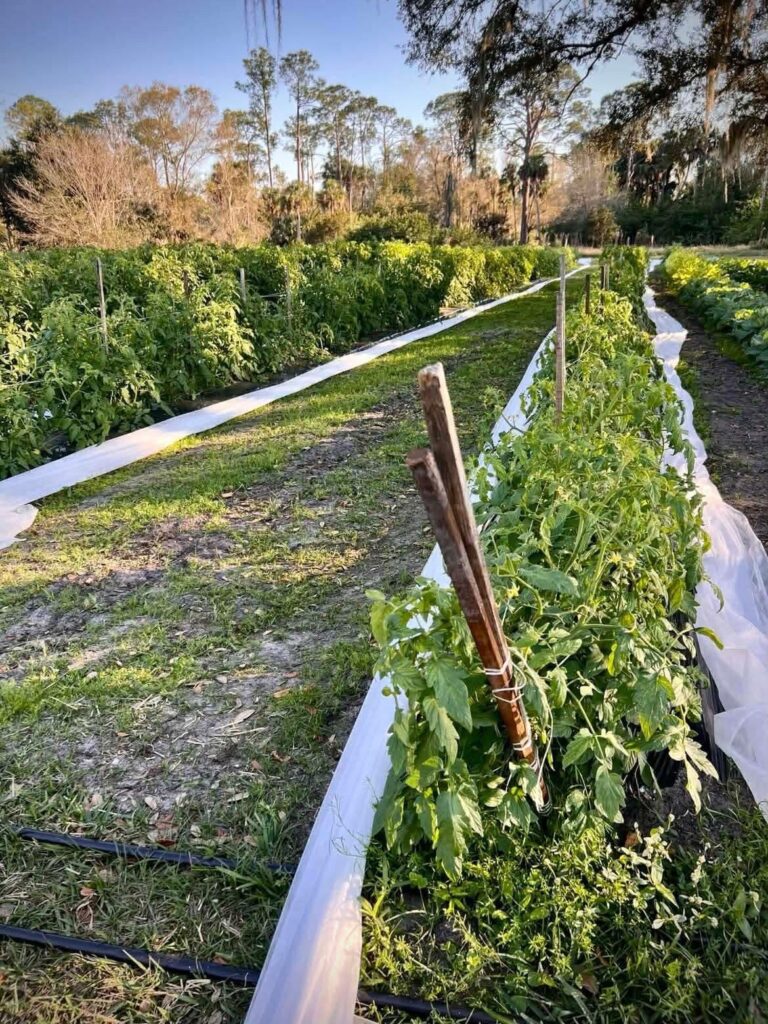
Farm to table means as direct as possible from the field to the plate, spending less time in transport and in stores. -COURTESY PHOTO
“I want us to maintain routine — our locals’ routines. We love our customers, and they love us, so it’s fun to be here for them. We may look a little different in summer since it’s not the best time for growing, but our vibe will remain, along with our love for what our customers want.”
Sure, it’s going to be hot. They don’t care, apparently. And neither do the customers.
The fields flanking Rooster’s, complete with an iconic scarecrow, are a relatively new endeavor. After producing thousands of tomatoes and greens in the winter and spring, this summer they’re sporting not only okra but black-eyed peas, representing both the geography and the food culture of the South.
“These summer crops can take the heat and rain, and you don’t have to worry,” Baer explains.
“And black-eyed peas add nitrogen to the soil, so when you’re done, you add them back in, till it in, and the earth loves them too. Then we’ll get prepped for the fall, get back to tomatoes, pepper, collards for the holidays, squashes, eggplants — the goal is to pick year around and always have something available here growing on the farm, whether it’s peas, melons or even flowers.”
Among the prominent suppliers of Rooster’s is Cypress Creek Farms and Ranch in Alva.
There, says Baer, “They grow a bunch of organic greens, tomatoes, radishes, herbs, peppers, onions — it’s all organic. And we get the meat from him year around.”
There are rib-eye steaks and ground beef, along with pork chops, sausages and bacon, all from grass-fed grazing animals.
Now the place has customers all the time. And the Rooster’s crew have made adjustments.
“We put up plastic flaps for shade — that helps the coolers keep up — and we make small adjustments for heat and rain. We built a lean-to off the big cooler to keep stuff out of the weather,” Baer says.
In the event of a big storm?
Both Sweet Melissa’s and Rooster’s are ready, they say.
“I learned a long time ago when I was living in Washington, D.C., and we had a really bad storm with power out at the restaurant — you put everything in the coolers, you empty out the ice vessel and fill it with ice, and you move that into the cooler,” Donahue says. “And at home we make sure we have a lot of propane tanks in case power is out for a while, like it was in Helene and Milton.”
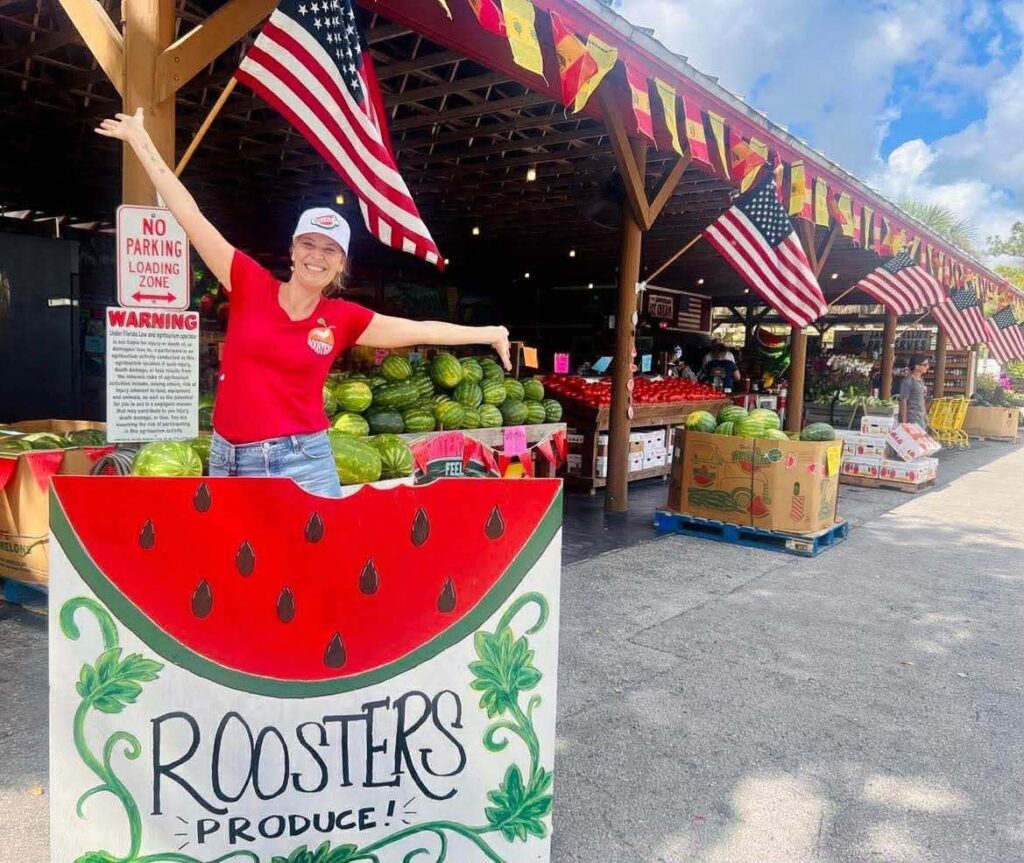
Rooster’s Manager Amanda Bodiot. -COURTESY PHOTO
That’s a chef who can make watermelon heirloom tomato salad, sweet and spicy shrimp and grits, blue crab pasta, ancho and honey braised short ribs, roasted redfish — that’s with andouille sausage ravioli, sautéed holy trinity and a Creole beurre blanc sauce she learned in her New Orleans days, which ended when another hurricane, Katrina, destroyed her restaurant there — all without ever depending on a refrigerated semi-truck delivering food already delivered in the refrigerated hold of a ship or plane from a distant continent.
For Donahue, “I keep inventory super, super tight” in seasons when storms are more likely.
And for Baer and his crew, “We know somebody who can get us generators,” so they can maintain power and refrigeration.
For both of them, though, if food is at risk of being lost, they just give it away to neighbors or people in need.
They’re happy to do that if it comes to it, they both say.
That’s farm-to-table in Florida for you.
In The KNOW:
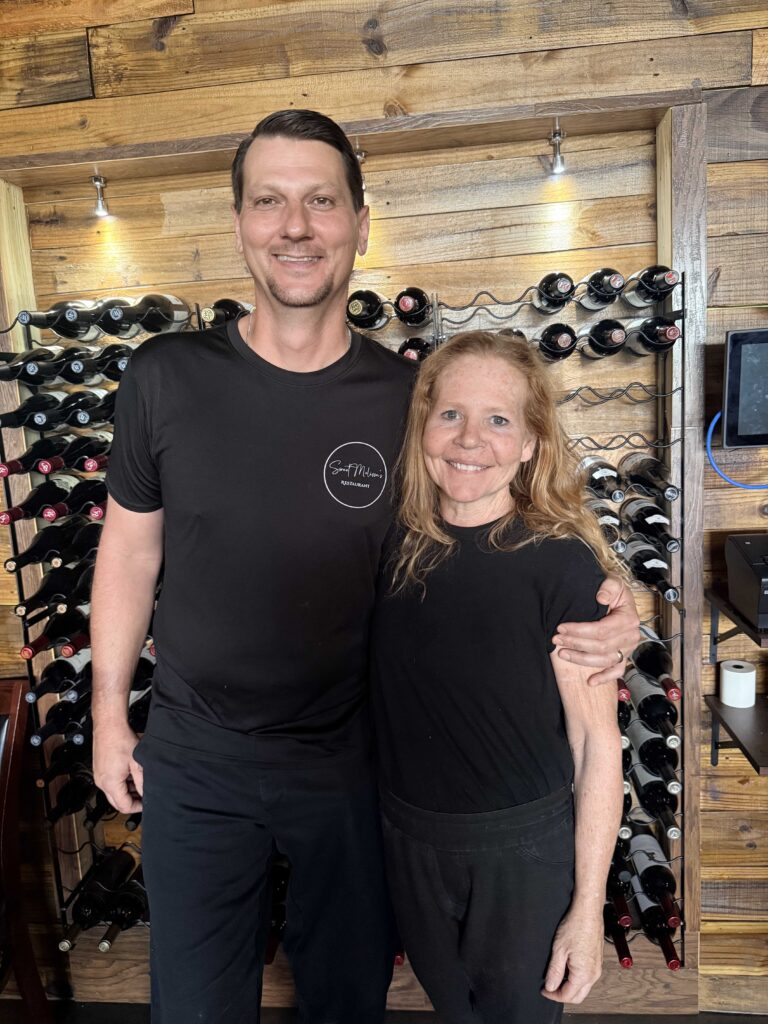
Melissa Donahue and Thomas Juneau at Sweet Melissa’s restaurant. -COURTESY PHOTO
Status of the Farm Bill
The 2026 Farm Bill which in part was drafted to support agriculture through modern challenges stalled as of late August. The 2026 Farm Bill—officially moving through Congress as the Farm, Food, and National Security Act of 2026 in the House and dubbed the Agricultural Act of 2026 in the Senate—stalled in August ahead of its Sept. 30 expiration, primarily over funding and error-rate disputes tied to nutrition assistance, or SNAP. The Senate Agriculture Committee failed to advance the bill after their 10-11 vote on Aug. 6. Lawmakers face a short time to negotiate differences when Congress returns from recess in September to meet the Sept. 30 deadline.