
Microplastics have spread throughout a protected Florida wetland, with a new study revealing that water determines where the pollution piles up.
Wash a synthetic jacket, and tiny plastic threads can slip out with the rinse water. Rain later carries them off streets and lawns into storm drains, and storm drains empty into rivers and the wetlands connected to them.
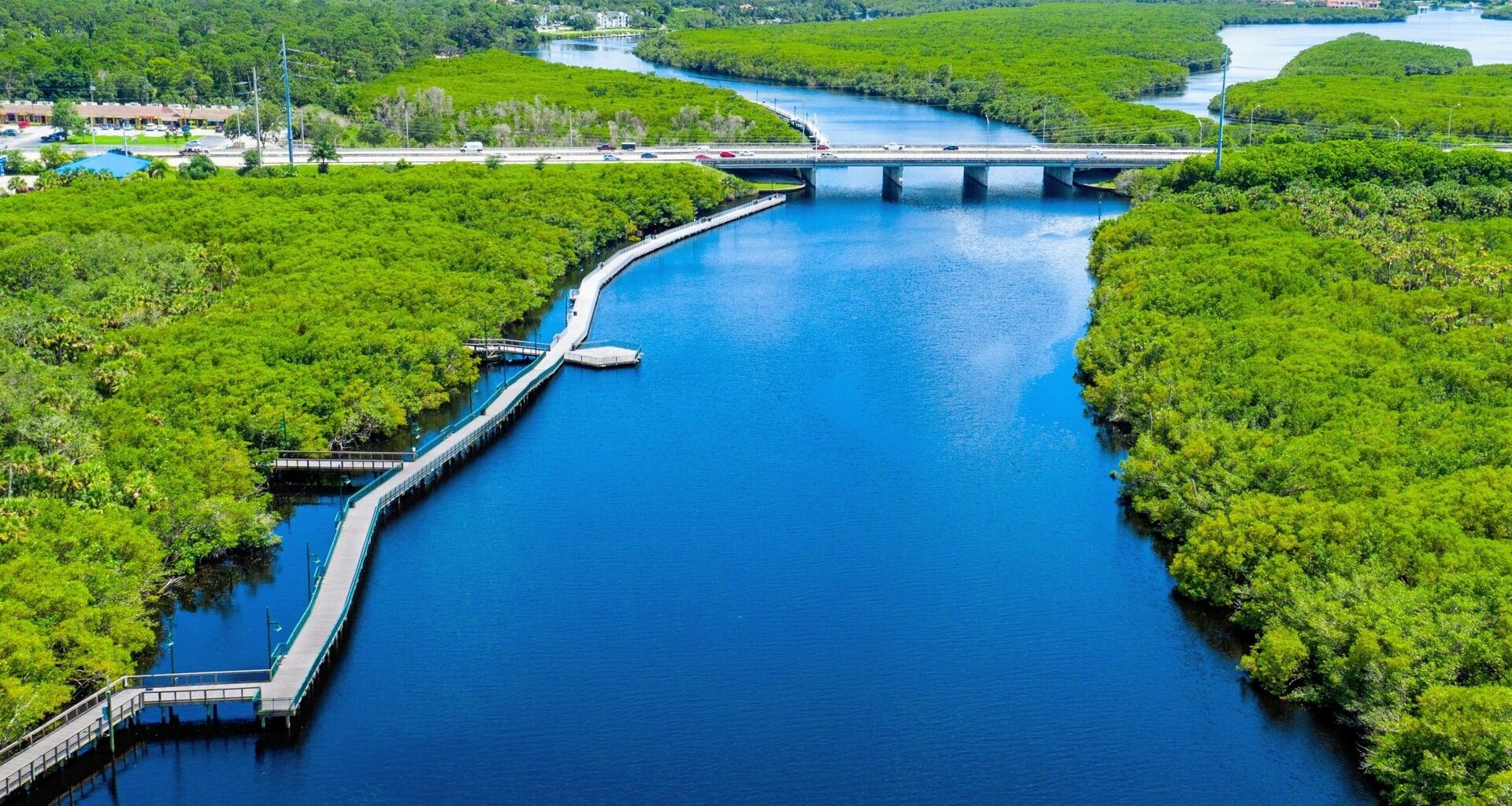
Spruce Bluff Preserve is a marshy stretch along the St. Lucie River in Port St. Lucie, Florida. It was set aside to protect it from bulldozers and pavement.
But a new study found that protection could not keep the plastic out, and where the pieces piled up followed the path of the water rather than the property line.
Researchers checked the 97-acre preserve for tiny plastic fragments and fibers known as microplastics. They found some in 38 of the 40 sediment samples they collected, turning up in every part of the property they checked.
Erik Johanson, an associate professor in the Department of Geosciences at Florida Atlantic University’s Charles E. Schmidt College of Science, led the work.
His Environmental Change Laboratory usually reads sediment for pollen and ash to reconstruct old climates. This time, the record it turned up was plastic.
“Perhaps the most striking finding is that the microplastics weren’t simply scattered randomly across the preserve – they appeared to follow the pathways of water,” Johanson said.
Plastic followed the path of water
The heaviest concentrations turned up along the river’s edge and an outlet canal built for flood control, the two spots most directly in the path of moving water.
Areas farther from the river and canal, tucked deeper into the preserve, generally held less.
“It shows that even in a protected wetland, what happens upstream can ultimately show up in the sediment,” Johanson said.
Distance alone did not explain the pattern as well as the route water takes to get there.
A spot could sit close to the river and still stay relatively clean if water rarely reached it, while a spot along a well-used flood-control channel collected far more.
“The way water moves through the landscape may be more important in determining where microplastics accumulate than simply how close a location is to water,” he said.
The plastic was mostly tiny fibers
The team gathered its samples along eight lines strung through different parts of the preserve, checking a spot every 16 feet (5 meters). All the collecting happened in December 2024, during Florida’s dry season.
To confirm that particles really were plastic, the team exposed a portion of them to infrared light.
The light reads a material’s chemical signature, so a grain of sand or a bit of shell shows up differently than plastic does.
The U.S. Geological Survey runs similar checks on lake and river samples nationwide, and this preserve is now one more site on that map.
Of the particles checked that way, 88% measured under a tenth of an inch (2.5 millimeters). Just under half were fibers, the kind of thread that comes loose from synthetic clothing, rope, and other woven material.
The small size suggests a lot of this plastic has been out in the environment for a while, breaking down and weathering rather than arriving whole.
The mix of colors and particle types points to many different sources feeding the wetland rather than one factory or one pipe.
Protected wetlands are still connected
Setting land aside from development turns out to be only part of the job. Spruce Bluff sits inside a larger Florida landscape, one laced with rivers, stormwater pipes, and flood-control canals.
The South Florida Water Management District and similar agencies run many of those canals, and they connect directly to wetlands like this one.
Those connections cut both ways. A wetland can trap plastic in its sediment, holding onto pollution that might otherwise keep traveling.
But the same channels that let water in also let plastic in, and they can carry some of it right back out downstream.
The pattern isn’t unique to marshes. Far from any city, forest soils have turned up carrying about as much plastic as urban ground. Many U.S. vanishing wetlands are shrinking even where laws protect them on paper.
A fenced boundary keeps out bulldozers. It does nothing to stop water.
Florida could track microplastics
Florida’s stormwater systems and wetlands already get tested for nutrients, sediment, and other pollutants that wash off the land. Johanson said plastic belongs on that list too.
Microplastic monitoring could potentially be added to programs already checking waterways for other pollutants.
Some of that plastic starts its journey somewhere ordinary. Washing machines send fibers into pipes, and some slip past wastewater treatment plants rather than getting caught.
Other researchers are testing new ways of filtering out plastic before it ever reaches a wetland like Spruce Bluff.
Rainy season could change the picture
Every sample here came from December, Florida’s dry season, when water levels are low and the ground is easiest to walk.
Nobody has checked the same spots once summer’s heavier rain sends far more water through that same canal, so whether concentrations climb even higher then is still unknown.
“Wetlands are often viewed as places that protect us by filtering what moves through the landscape, but they can also capture and redistribute pollutants,” Johanson said.
“If we want to protect these ecosystems for the long term, we need to understand not only what is entering them, but how water moves that pollution through the system.”
“A protected wetland is not an isolated wetland – it is connected to everything upstream and downstream through the movement of water.”
The full study was published in the journal Evolving Earth.
—–
Like what you read? Subscribe to our newsletter for engaging articles, exclusive content, and the latest updates.
Check us out on EarthSnap, a free app brought to you by Eric Ralls and Earth.com.
—–