
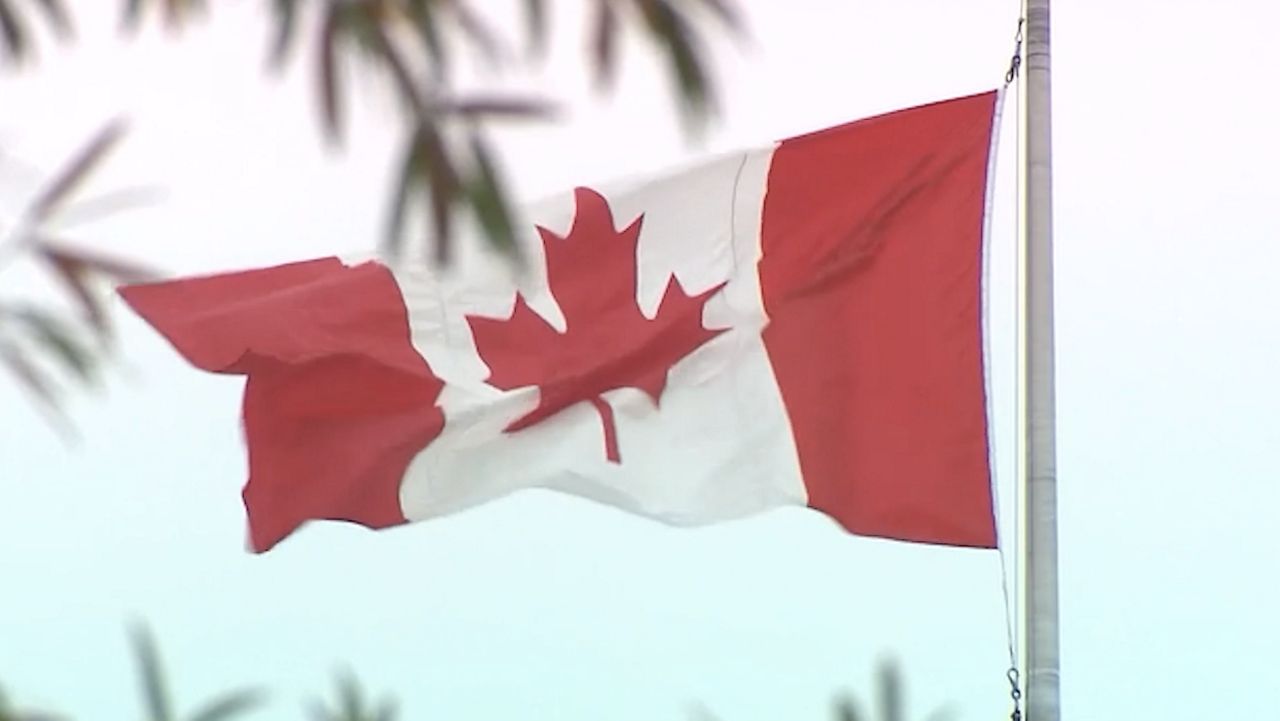
KISSIMMEE, Fla. — Canadian travel to Orlando International Airport is down 17% compared with this time last year, according to Experience Kissimmee, as local tourism leaders pointed to several factors affecting international visitation to Central Florida.
The decline comes as Canada is set to impose dollar-for-dollar tariffs on various American products starting Sept. 8 to counter a 50% tariff imposed by the United States on specific Canadian products earlier this month.
Those tensions are among the factors contributing to fewer Canadians visiting the region, travel experts said. Experience Kissimmee, the tourism authority for Osceola County, said Canada remains one of the top international tourism markets for the county.
The agency said Canadian travel to Orlando International Airport was down 21% from October 2025 to February, a decline of roughly 238,000 people.
The drop is being felt by businesses that rely on international visitors, including those at Old Town in Kissimmee.
“I’ve worked in the tourism industry for 30 years, and the tourism drops that we’ve seen this year, I have never seen before aside from COVID and things like that,” said Thearon Scurlock, general manager and vice president of Old Town Kissimmee.
Local businesses at Old Town have been affected by fewer visitors, with some storefronts on hiring freezes or navigating financial challenges, Scurlock said.
“We’ve seen a decrease in all markets, really,” Scurlock said. “You know, Canadians obviously, but UK and Brazil, which were always very strong for us, has been very soft.”
Experience Kissimmee said Canadian travelers spend an average of $1,261 per trip in Central Florida and stay an average of 7.7 days. The agency said this year’s decline in Canadian visitors could amount to millions of dollars in lost spending, citing data from Visa and the Survey of International Air Travelers.
Several Experience Kissimmee staff members recently visited Canada to meet with business partners about the decline.
“Canada is definitely a politically charged environment at the moment, and some segments of the market are choosing not to travel because of their political beliefs and some frustrations they have going on,” said Casey Leppanen, chief marketing officer for Experience Kissimmee. “Things are on the up and up. Last year, numbers were a little bit more of a decrease down in the mid-20s, but seeing a 17% decrease may seem negative, but you know, trending in the right direction.”
Factors besides the tariffs taking effect Sept. 8 include the value of the U.S. dollar compared to the Canadian dollar, Leppanen said.
“The tariffs are out of our control, right? There’s nothing we can do to change a tariff or change a policy,” Leppanen said. “Our goal is just to reinforce those of, ‘Hey, if you’re choosing not to come, that’s your choice, and you’re always going to be welcome here.’”
Overall for Experience Kissimmee, international visitation is up 2% year over year. Including domestic travel, visitation is up 7% year over year.
Leppanen said what makes Central Florida stand out, and what makes it less vulnerable to the financial impact from fewer Canadians visiting the nation, is the fact that Central Florida offers a variety of destinations, including access to the theme parks, unlike many other domestic destinations.
The largest impact is felt by people working in hotels, stores, restaurants and attractions such as Old Town, Leppanen said.
Experience Kissimmee also cited data from Visa and SIAT that stated Canadian visitor spending declined by nearly 24.6% between May 2025 and April 2026. However, the agency said the average Canadian visitor spent just over 1% more this year. Experience Kissimmee said it is hopeful the increase in average spending per visitor will help offset some fiscal impact from Canadian travelers overall.
“I don’t think that we are foreseeing a bigger decrease. Like going back, we’ve seen positive outlook the last four months,” Leppanen said. “Typically, we see our biggest influx in Canadian travelers from December through April. So here in Kissimmee, we’re optimistic that Canada is going to rebound and still see some positive growth.”
During Experience Kissimmee’s recent discussions with Canadian partners, discomfort with politics and relations between the U.S. and Canada were addressed, Leppanen said.
“Pretty much every conversation we had meeting with trade or PR revolved around politics and tariffs and how it impacted them personally or some of their choices when it came to travel,” Leppanen said.