
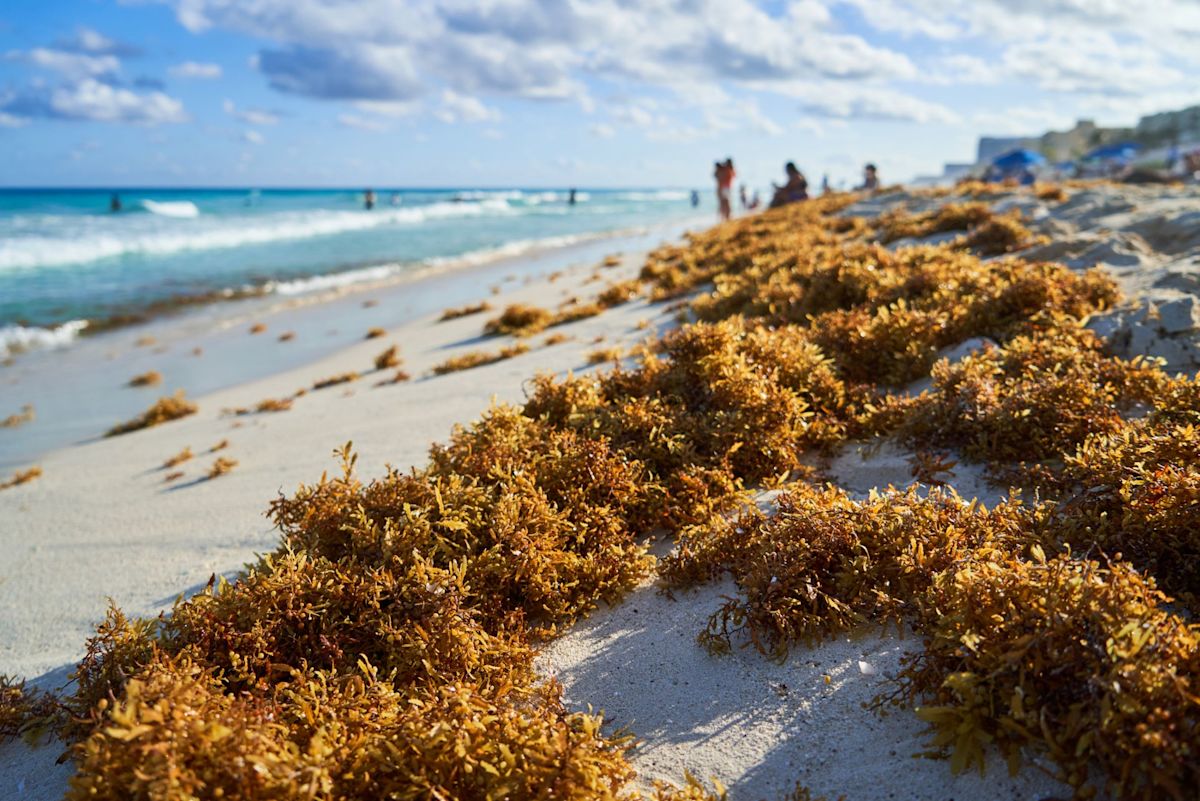
Miami-Dade County cleared a record 9,000 tons of sargassum in July after thick mats of the brown algae swamped South Florida beaches, turning what is often treated as a seasonal nuisance into a growing public health, tourism, and conservation concern.
Here’s what to know
According to The Guardian, Miami-Dade parks conservation chief Chris Bumpus is responsible for cleanup along 17 miles of county shoreline.
Even after intensive cleanup, Bumpus said, the algae can come right back. “Back in July, the beach looked clean for about an hour,” he said.
Miami-Dade spends about $3 million each year on sargassum removal, and that work is funded through tourist development taxes on hotel and short-term rental stays.
Scientists told The Guardian that the problem extends far beyond Miami-Dade: sargassum has surged since the Great Atlantic Sargassum Belt appeared in 2011, with warmer seas, shifting currents, and nutrients carried by rivers such as the Amazon, Congo, and Mississippi helping feed blooms.
More background
Sargassum plays an important ecological role in the open ocean, providing habitat for marine life. But once massive amounts drift toward shore, the situation changes.
As the algae piles up and decomposes, it can damage coral reefs and seagrass beds, reduce oxygen levels in nearshore waters, and release hydrogen sulfide — the gas responsible for the rotten-egg smell that can pose health risks to nearby communities.
Heavy accumulations can hurt tourism-dependent economies, limit shoreline access, and put added pressure on local budgets already strained by climate-related costs.
Wildlife protection is another complication. Crews must first find and mark sea turtle nests before machinery starts clearing beaches so the nests are not struck.
Brian LaPointe, a research professor at Florida Atlantic University Harbor Branch who has studied sargassum since 1982, told The Guardian that the climate crisis worsens the problem indirectly by increasing evaporation and extreme rainfall. He said that the resulting runoff carries more nutrients from land into the ocean, helping fuel larger blooms.
What’s being done?
Miami-Dade began formal seaweed-response efforts in 2019, and county leaders are asking the state for more flexibility. In July, county commissioners voted to seek permission to use beach-raking equipment more broadly, The Guardian reported.
That push would still leave key restrictions in place. The county’s permit from the Florida Department of Environmental Protection bars heavy machinery during sea turtle nesting hours, from 30 minutes before sunset until sunrise.
The Guardian reported that roughly 700 sea turtles have nested on county beaches.
Other governments are weighing stronger responses too. In Mexico, President Claudia Sheinbaum announced a $115 million national plan that includes vessels intended to collect sargassum from the water.
In the United States, agencies have largely refused to allow offshore removal because of concerns about the organisms living in floating mats, though LaPointe said lab research indicates the algae sheds much of that marine life as it breaks down near shore.
Reducing nutrient pollution from land and addressing the forces driving ocean warming will be essential if communities hope to avoid spending more money each year managing a problem that continues to intensify.
LaPointe said many coastal communities are reaching the same conclusion.
“People are realizing this isn’t going away. It’s getting worse,” he said. “It’s the new normal. It’s not only treating the symptoms but doing more research on the land-based nutrient sources that we can do something about.”
Get TCD’s free newsletters for easy tips, smart advice, and a chance to earn $5,000 toward home upgrades. To see more stories like this one, change your Google preferences here.