
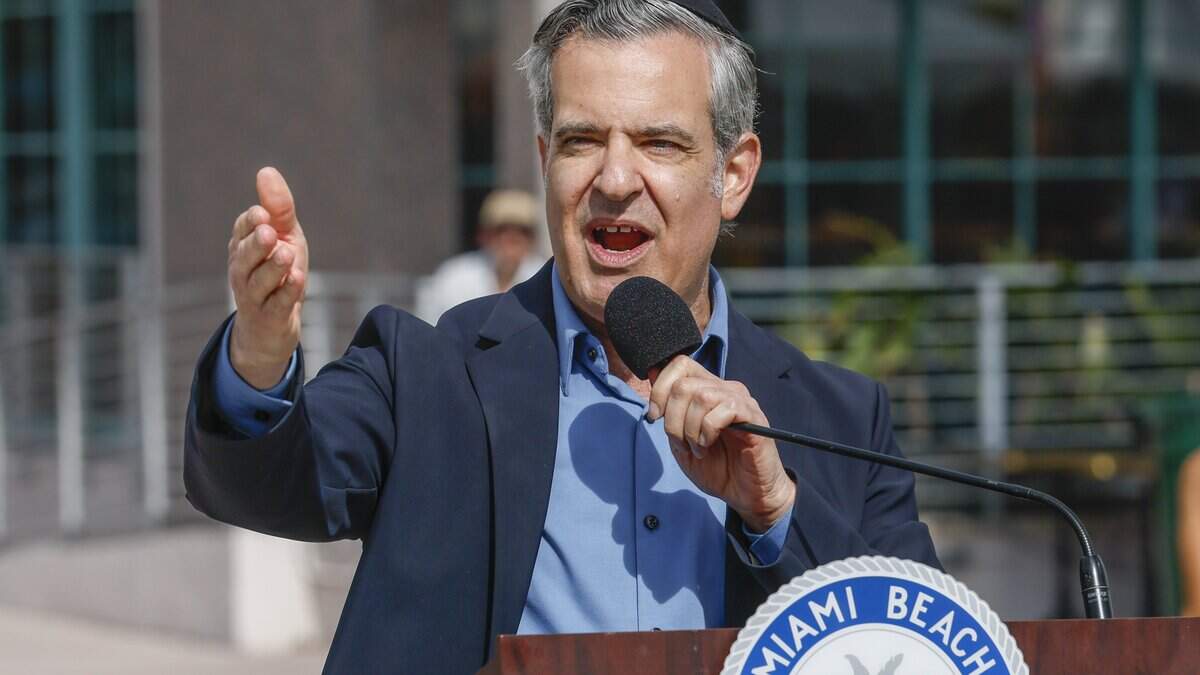
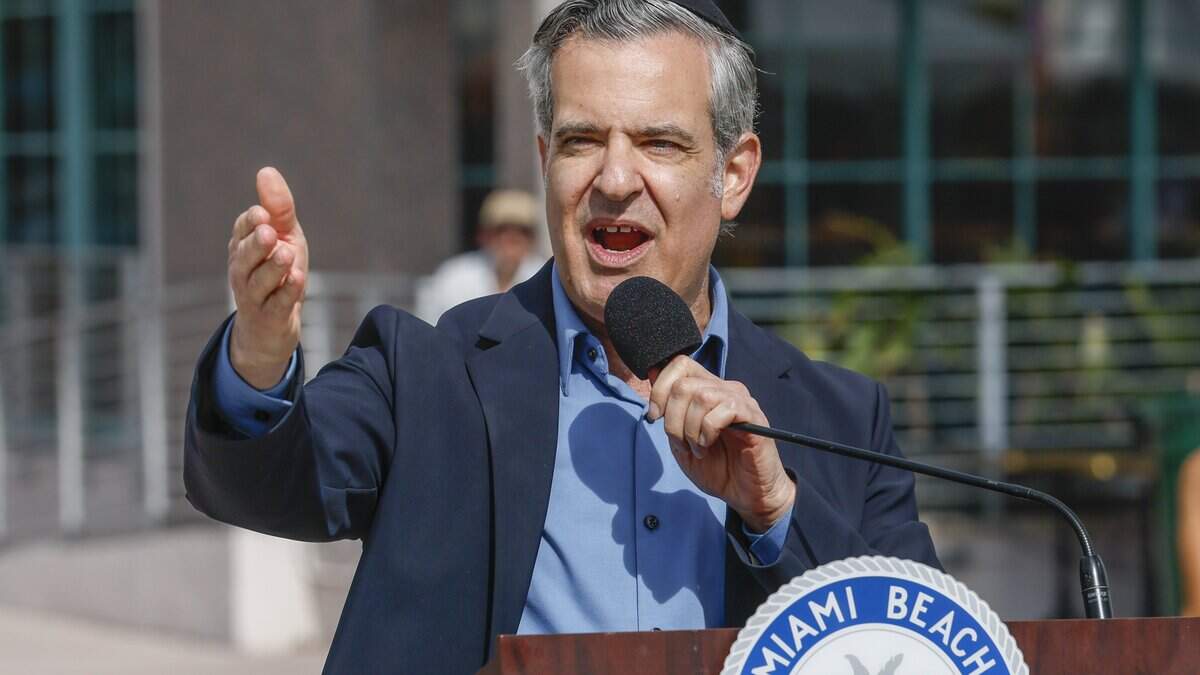
Miami Beach Mayor Steven Meiner speaks as city officials and community members gather in Lummus Park for the unveiling of a rebuilt LGBTQ+ crosswalk made of 3,606 colorful pavers on Friday, April 10, 2026.
PHOTO BY AL DIAZ
adiaz@miamiherald.com
Amid growing surveillance and privacy concerns over license plate tracking cameras, Miami Beach Mayor Steven Meiner is gearing up to fight Tallahassee to keep them in place on state roads.
He announced on social media late Monday that he would bring legislation to “take back control of our roads” after Florida’s Department of Transportation issued a memo ordering the removal of license plate recognition systems from roads intersecting with state highways within 30 days.
READ MORE: Florida Department of Transportation blocks Flock cameras on state roadways
Meiner said the cameras have “helped our Police track fleeing suspects, get guns off our streets, and arrest violent criminals.”
The Miami Beach Police Department doesn’t partner with Flock, the main company putting up the cameras, and the handful of Flock cameras in the city were put up by homeowner associations, a spokesperson told the Miami Herald last month.
Instead, the department has cameras posted throughout Miami Beach operated by two other companies, Motorola Solutions and Axon Outpost. The department has had a policy in place for license plate recognition systems since 2013 with “strictly controlled” access, a spokesperson said Tuesday. The department did a three-month trial of Flock’s software two years ago, the spokesperson added, but decided not to sign a contract with the company.
Meiner’s stance puts him at odds with the growing bipartisan pushback against the technology in the state — and sets the stage for a battle to come between state and local officials. Meiner is a former Republican who switched to no party affiliation, but has previously aligned himself with Gov. Ron DeSantis.
DeSantis has become an outspoken voice for stronger guardrails around surveillance systems in recent weeks.
“What we don’t want in the state of Florida is to have a digital AI surveillance state where everything we’re doing is being tracked at all times,” he told reporters Monday.
Florida’s gubernatorial candidates, on both sides of the aisle, have also called for greater regulation of the technology.
This week, Democrat David Jolly said he thinks DeSantis should convene a special legislative session to regulate Flock cameras. In July, Republican Byron Donalds called for a “full pause” to ensure people’s privacy rights are protected.
The state’s position on Flock cameras, however, has not always been so skeptical.
DeSantis and the Florida Cabinet have approved about $2.5 million in state immigration grants to police agencies to implement Flock camera technology. Florida’s Department of Highway Safety and Motor Vehicles signed a “study agreement” with Flock in 2023, according to a copy obtained by the Herald/Times.
At least 100 individual police and sheriff’s departments have signed contracts with Flock, according to the Electronic Frontier Foundation’s database.
Meiner’s stance in defense of the cameras after Monday’s announcement from FDOT — which suspended all current and future approvals for the use of the technology on state highways — comes in contrast to some other local officials who’ve also moved to roll back the technology.
In Jacksonville, Sheriff T.K. Waters announced Monday the immediate discontinuation of all its usage of license plate recognition systems.
In Pasco County, commissioners rescinded support for the county’s contract with Flock earlier this month leading the sheriff’s office to announce plans to remove about 60 of their cameras.
Herald/Times Tallahassee Bureau correspondent Liv Caputo contributed to this report.
This story was originally published September 1, 2026 at 11:40 AM.
.jpg)
Miami Herald
Claire Heddles is the Miami Herald’s senior political correspondent. She previously covered national politics and Congress from Washington, D.C at NOTUS. She’s also worked as a public radio reporter covering local government and education in East Tennessee and Jacksonville, Florida.