
Litewave Media leans on virtual production and state incentives to film ‘The Last Earthling’ locally.
ST. PETERSBURG, Fla. — A science-fiction film years in the making began production this week at a St. Petersburg studio, where filmmakers are using cutting-edge visual technology and Florida’s tax rebate system to bring the project to life without leaving the Tampa Bay area.
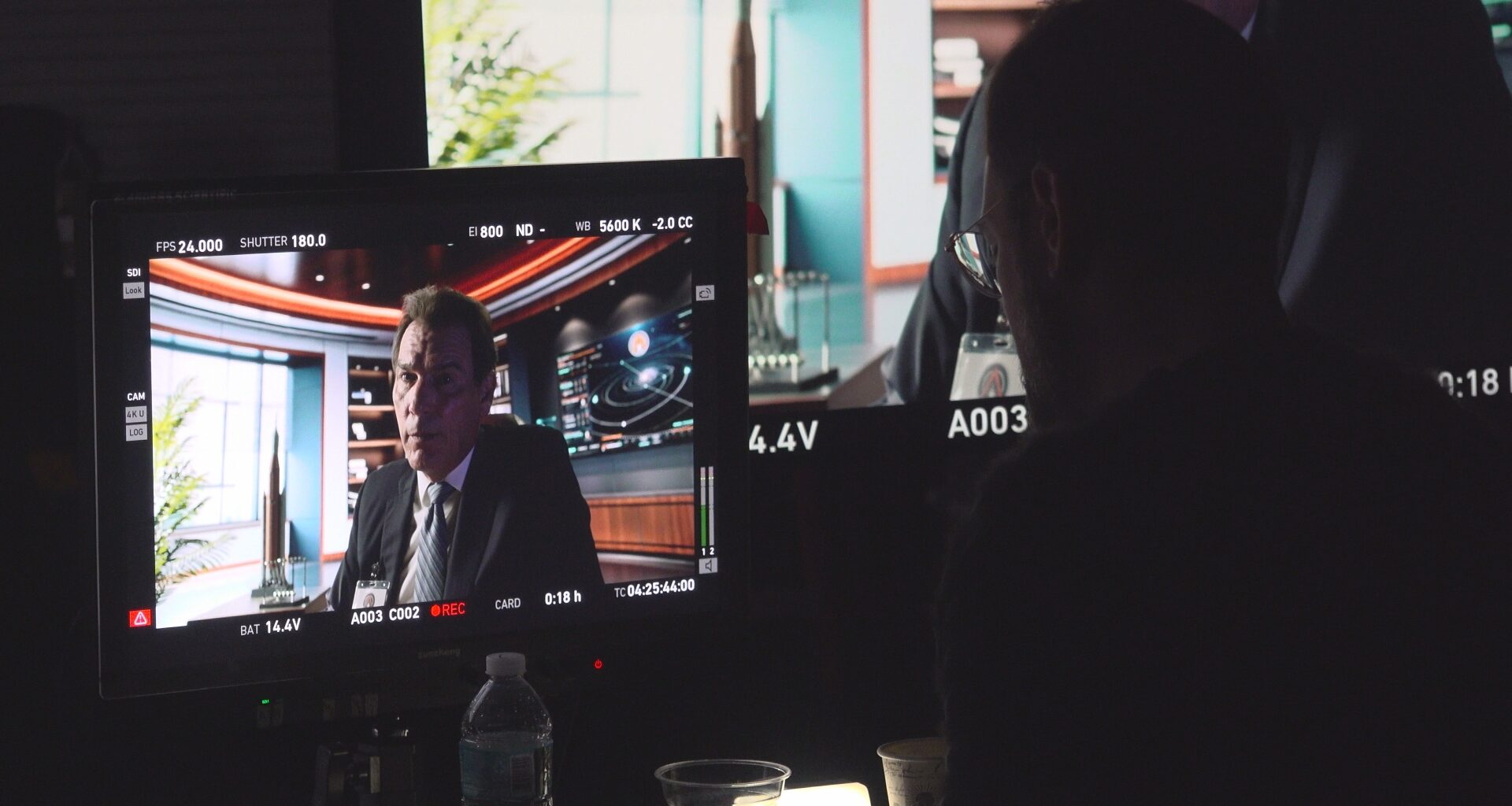
“The Last Earthling,” directed and co-written by Christian Cashmir, started its first of 17 days on set Tuesday. The production is being filmed almost entirely inside Litewave Media‘s studio, using a 40-foot-wide by 14-foot-tall LED screen to create its otherworldly settings.
Florida does not offer a statewide tax incentive for film production companies. But Litewave Media, the company behind the project, has taken advantage of local tax rebates, which allow filmmakers to receive money back sooner after shooting wraps.
St. Petersburg actor Paul Wilson, who plays Glen Riseman, the head of U.S. Space Command in the film, said the virtual set has practical benefits beyond the story itself.
“Certainly, we make it look like we’re in space or in the future in a studio is really luxurious. Plus, I get to sleep in my own bed in St. Pete,” Wilson said.
Roughly 95% of the production is local, including its videographers, actors and costume production, the filmmakers say.
Wilson noted that the technology has dramatically cut costs compared to previous eras of filmmaking.
“A movie like this 15 years would have cost $35 or $40 million dollars,” he said.
Wilson is known for his roles in “The Conjuring” franchise and work with his fellow actor brother Patrick Wilson in “Big Stone Gap.”
Angry Elf Entertainment producer Cameron Brumbelow also working on the project said companies filming in Hillsborough County can recover 80% of the rebate within 60 days of production.
“You are looking at true rebates which means you don’t have to wait for tax credits. You don’t have to sell your tax credits. You can basically film and they will cut you a check,” Brumbelow said.
In neighboring Pinellas County, filmmakers often have to wait longer for reimbursement because of extensive distribution requirements and additional deliverables, according to the production team.
Despite the difference, Cashmir said he had no interest in filming his story — centered on the question of how to save humanity — anywhere else.
“Virtual production technology lets us go to different worlds and different places very efficiently and for much lower cost than you might have been able to years ago where you’d have to build a practical set,” Cashmir said.
Filmmakers expect a rough cut of “The Last Earthling” to be complete sometime in 2027, with a possible film festival run in either 2027 or 2028.
The movie is expected to be available on a streaming platform, such as Amazon Prime or Tubi, sometime next year.