
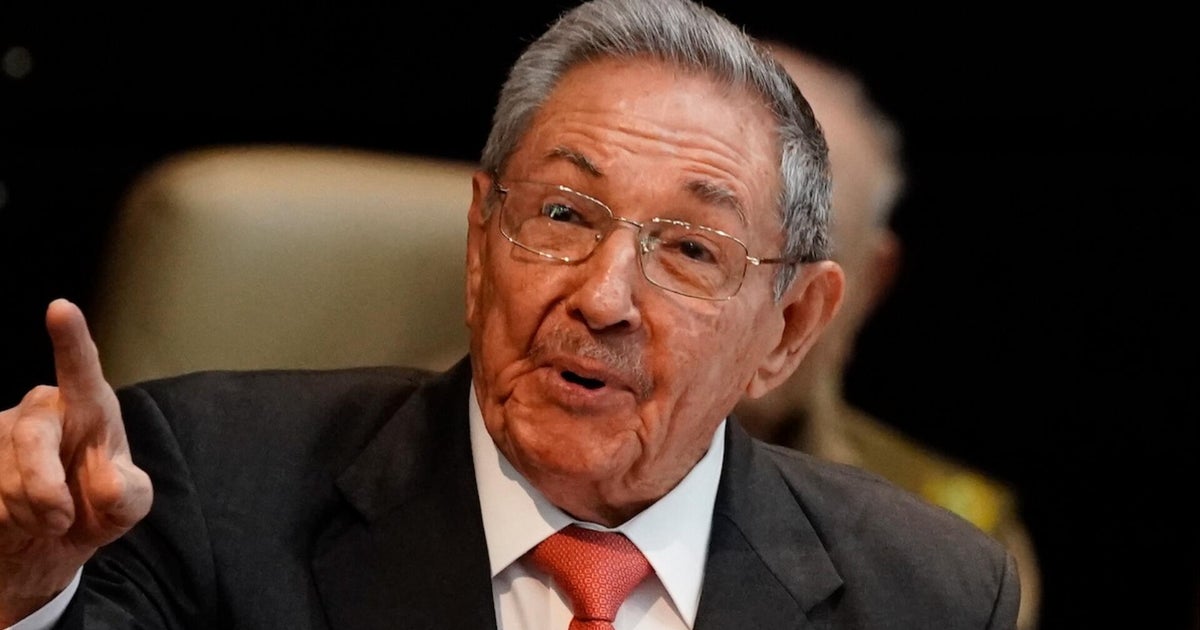
Reports that former Cuban leader Raúl Castro is gravely ill and hospitalized after suffering an apparent stroke are drawing strong reactions in South Florida, particularly among Cuban exiles who see the 95-year-old as one of the last living symbols of the revolution that transformed their homeland.
Diario Las Américas, a Miami-based Spanish-language newspaper, reported Tuesday that Castro is seriously ill, citing a confidential source in Cuba close to his inner circle.
The Cuban government had not publicly confirmed the report as of Tuesday night. State-run Cuban television made no mention of Castro’s health during its nightly newscast or on the government’s daily talk show, “Mesa Redonda.”
In Little Havana, however, the reports quickly became a topic of conversation at Versailles Restaurant, the iconic gathering place where Cuban exiles famously celebrated the death of Fidel Castro in 2016.
A decade later, the cafecito came with a different topic: Raúl Castro — and what his possible death could mean for Cuba.
“It means a lot. I wish he was dead,” said Hector Gonzalez.
Gonzalez said his feelings are rooted in what his family experienced after the Cuban Revolution.
“He took everything from my parents, put my dad in jail, so I wish he was dead,” Gonzalez said.
Fidel Vasquez expressed a similar sentiment, saying in Spanish that Raúl Castro and his brother Fidel caused enormous suffering in Cuba.
“Él y el hermano hicieron mucho daño,” Vasquez said, adding that he believes millions of Cubans were harmed and many died because of the Castro government.
The report about Castro’s health appeared prominently on the front page of Diario Las Américas under a headline declaring that Castro was not dead but was seriously ill.
Ileana Lavastida, executive director of the publication, told CBS News Miami that the newspaper received the information from what she described as a highly reliable confidential source inside Cuba with access to Castro’s inner circle.
Lavastida said the newspaper was told Castro had been intubated.
According to Lavastida, Castro apparently suffered a stroke. The newspaper also reported that Castro had previously been diagnosed with colon cancer in 2021.
Castro was last seen publicly on Aug. 13 during events commemorating what would have been Fidel Castro’s 100th birthday.
For many Cuban Americans in South Florida, the reports raised a larger question: Would Raúl Castro’s death bring meaningful political change to the island?
The answers varied.
“I think if it’s going to change, it will be now,” Gonzalez said. “If it doesn’t change under Trump, I don’t think anybody else is going to do anything.”
Griska Mena said Castro’s death would carry enormous symbolic and emotional significance, but she questioned whether it would alter Cuba’s political system.
“It’s big from an emotional standpoint, but as a regime change, I don’t think it’s going to make a difference at this point,” Mena said.
Vasquez was even more skeptical.
“No, no cambia nada porque está toda su familia,” he said, arguing that Castro’s relatives and allies would remain influential and continue what he views as a political dynasty.
Raúl Castro succeeded his brother Fidel as Cuba’s president and led the country from 2008 to 2018. He later relinquished his position as head of Cuba’s Communist Party in 2021, although he has remained an influential figure in the country.
Castro’s legacy remains deeply controversial in Miami, home to generations of Cuban exiles and their descendants.
In February, the United States marked the 30th anniversary of Cuban fighter jets shooting down two Brothers to the Rescue aircraft in international waters in 1996, killing four people. The U.S. Justice Department subsequently announced an indictment against Castro at Miami’s Freedom Tower in connection with the attack.
Whether Castro would ever face a U.S. courtroom has remained uncertain.
The reports about his health come as Cuba faces significant economic and political challenges and amid reported contacts involving Castro’s grandson, Raúl Guillermo Rodríguez Castro, and the Trump administration over a possible economic and political opening on the island.
Those discussions are currently stalled.