
When State Bill 538 was signed into law by Gov. Ron DeSantis in July, it was lauded as a measure that would no longer allow Florida high school athletes to transfer from one school to another if they had already participated in preseason practice.
The amendment was inserted into what has become known as the “Pay Coaches” bill, and was described as an attempt to stop players from jumping from school to school within a season, or from playing one sport at a school before switching to play that sport (or another) at second school.
Specific circumstances are allowed as exceptions, such as a full family move into a new school district, or students moving in military or foster situations. Athletes were also allowed to transfer if their “home” school did not offer a particular sport.
What schools, athletes and families have learned though, is that the rule is not ironclad since exemptions may be granted via the FHSAA’s appeals process.
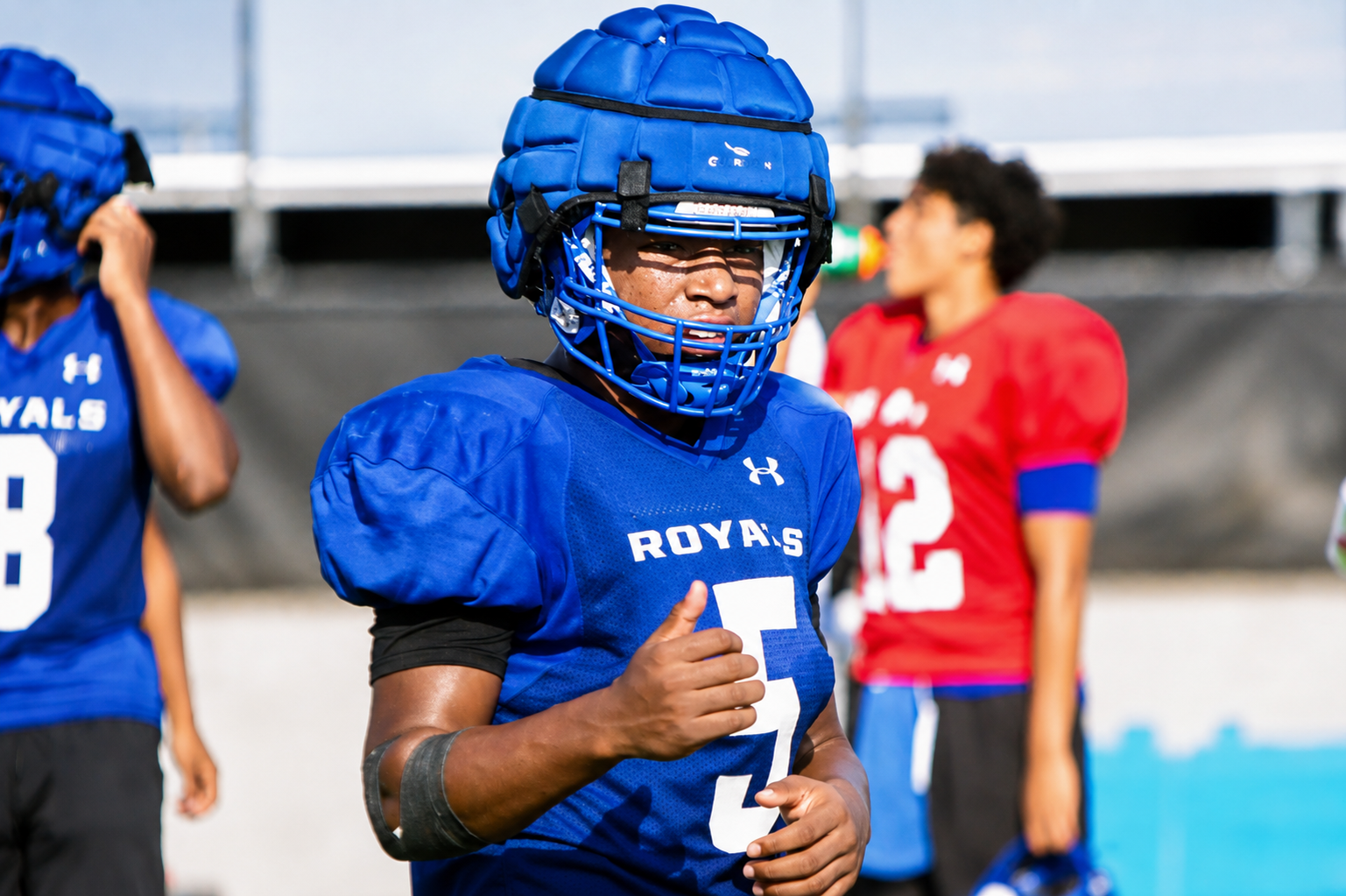
Two Orlando-area football players, Phillip Prioleau at Jones and Tamauri Collins at TFA began fall football practice before deciding to transfer to other schools, prior to playing in a game. Prioleau, a senior linebacker, transferred to Dr. Phillips. Collins, a senior running back, transferred back to his previous school, Tavares.
Dr. Phillips coach Caleb Walls and Tavares coach Gavin Jones confirmed that both players were granted special exemptions from the FHSAA that have allowed them to participate for their new teams in each of the first two games.
“We went through the appeals process and did everything that (FHSAA executive director) Craig Damon and (FHSAA administrator of eligibility and compliance) Malcolm Pollock told us to do,” Jones said. “They cleared (Collins) right before Week 1.”
The FHSAA confirmed there have been a number of successful appeals throughout the state for various fall sports.
“Yes, the first step is an appeal through the sectional appeals committee. They can also choose to mediate with the executive Director if the sectional appeals decision is unfavorable and/or appeal to the Board of Directors,” wrote Ashton Moseley in an email response to the Sentinel. She is one of four FHSAA administrators for eligibility and compliance.
Orlando-area 2026 High School Football Transfer Tracker
Moseley noted that student/athletes may also transfer and be eligible in the “first 20 school days” of the academic year.
FHSAA Administrative Procedures 1.3.1.6 states that: “A student shall qualify under this provision if the student was placed on an official wait list for admission to the school or program and is subsequently offered and accepts enrollment within the first twenty (20) school days of the academic year. Eligibility under this provision is limited to students who applied for admission to the school through the established enrollment process prior to the official start date for fall sports, were placed on a wait list due to lack of available space, and were subsequently admitted from that wait list and enrolled within the first twenty (20) school days.”
That window for Orange County Public Schools would have begun with the first day of classes Aug. 11. The 20th day of the OCPS academic calendar will be Sept. 8, which accounts for the Labor Day holiday.
The Vote
The FHSAA voted 8-2 in June to amend policies to dovetail with SB-538, which was presented in part as a means to to tighten rules on “Non-Traditional” students and close the door on athletes playing sports for more than one school in a school year.
Damon told the board that the rules revisions were made by a consensus of stakeholders after many conversations with legislators and school administrators. He said the statute and the new FHSAA language were built to reel back on the abuses of school choice movements made for athletic reasons.
“School choice is a pillar of what we do here,” said board member Allen Shirley, principal at South Sumter High School. “But the freedom for choice has unintended consequences. You (should) live with your choice for at least one year. ”
FHSAA rules describe Non-Traditional athletes as the rapidly expanding number of students who are not enrolled in and do not physically attend the school for which they participate. Home-schooled students and those in charter schools and private schools that don’t have a specific sport previously were allowed to join teams in or outside the county they live in.
Now, in most cases, revised Bylaw 9.2.2.2 prevents students from joining a team outside their home county.
Chris Hays can be found on X.com @OS_ChrisHays.