
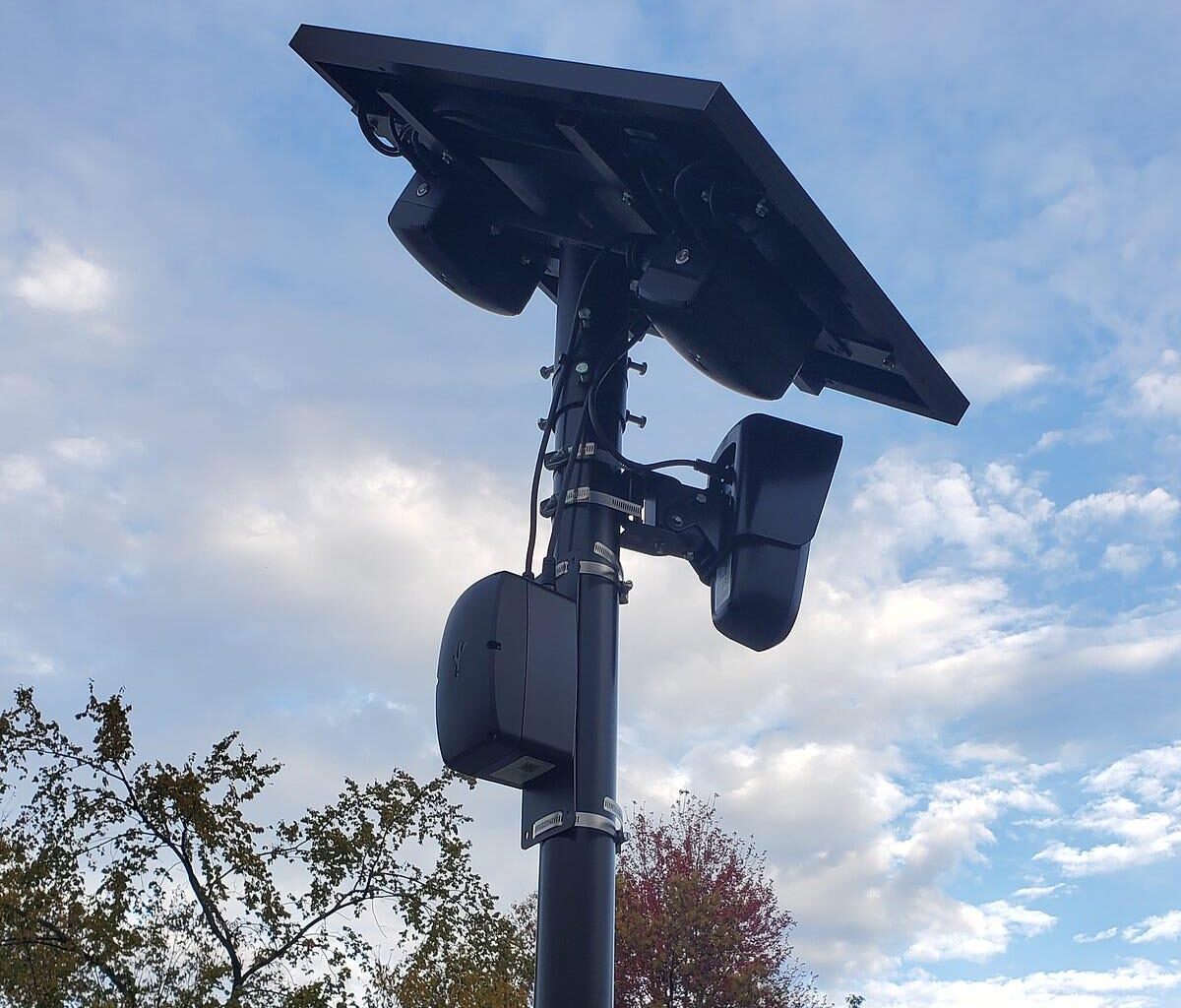
The Osceola County Sheriff’s Office and St. Cloud and Kissimmee police department are among Central Florida police agencies that have agreed to cease use of their Automated License Plate Reader (ALPR) camera systems until the state of Florida creates a stronger framework to define their legal use.
The cameras, called “Flock Cameras” after one of a number of companies that manufactures them, are intended to capture plate information in order to add to and further criminal investigations by law enforcement. But they’ve come under fire because they record all vehicles passing in front of them, and drivers don’t have to be suspected of a crime for their vehicle to enter a database.
There are also documented cases of misuse by law enforcement, including a Brevard County deputy who resigned after an investigation found that he improperly accessed camera data involving his former girlfriend. It led to public resentment that even if the system has rules, somebody still has to enforce them.
It quickly created debate about whether government should be able to build a searchable historical record of where everyone’s vehicle has traveled, how widely that record can be shared, how long it remains available, and what legal threshold should be required to search it.
Gov. Ron DeSantis, critical of license plate readers, blocked their use on state roads, warning the cameras could create a “surveillance state.” Monday he warned of the power of license plate readers and argued the potential of abuse is too great.
“If they can create a dossier on your movements they would be able to make a fortune in selling that to companies for advertising and product placement,” he told the News Service of Florida.
Amid the firestorm, on Monday the Florida Department of Transportation revoked permits for ALPRs located in the rights-of-way of roads on the state highway system. Agencies have 30 days to remove them.
It would be an undertaking. Osceola County Chris Blackmon said Tuesday more than 100 cameras will be turned off. Community mapping data identified 21 ALPRs in Kissimmee limits and 36 in St. Cloud, mostly along the U.S. Highway 192 and John Young Parkway corridors.
Blackmon called the technology a “very, very valuable tool” within a system that needs “checks and balances in place.”
“What I mean by that is it’s like policing the police,” he said Tuesday. “We can do an audit, because we cannot be a police state or surveillance state to where we’re searching after one of you all just because we don’t like you or we’re trying to track you down, or your ex-boyfriend or ex-girlfriend. “That can’t happen, so we need (a system) in place.”
St. Cloud Police reminded the public in a statement this week that the ALPR system provides “valuable investigative capabilities.”
“Automated License Plate Reader systems have provided law enforcement with … tracking Madeline Soto’s killer and recovering her body, locating serial burglars in new home construction areas, arresting felony domestic violence offenders, and more,” the statement said. “We continue to recognize the legitimate public safety benefits of this technology.
“The St. Cloud Police Department will discontinue its use of the Automated License Plate Reader camera network effective immediately, while the State of Florida considers a more consistent framework for ALPR technology … This does not change our view that ALPR can be a critical public safety tool; it reflects our belief that effective policing and responsible safeguards should go hand in hand.”
A Kissimmee Police Department spokesperson said the City “will ensure compliance with FDOT requirements within the required timeline.”
The Orange County Sheriff’s Office has maintained it will keep its ALPS system active.