
By Michael Carroll | Legal Newsline through The Center Square
In Summary:
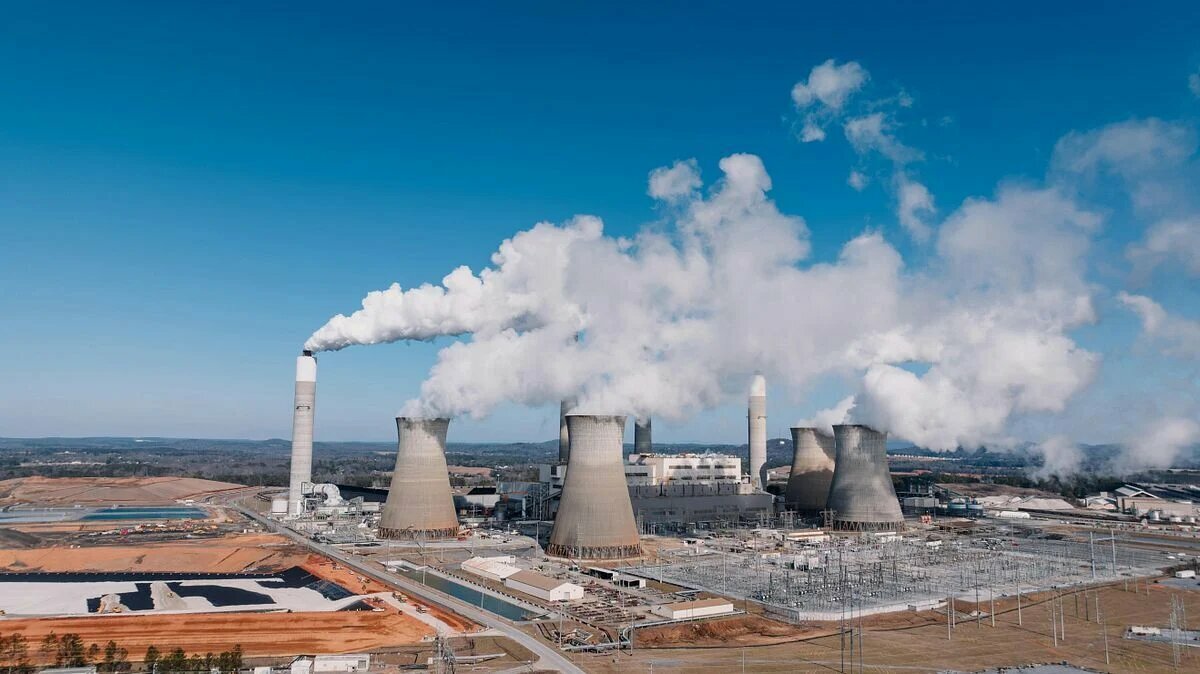
The Environmental Defense Fund, Sierra Club and Florida Rising have challenged a federal order requiring Unit 1 at Orlando’s Stanton coal plant to remain available past its June retirement date. The Department of Energy says potential electricity shortages, including rising demand from planned Florida data centers, justify keeping the unit in service through at least November 30. Opponents contend Orlando Utilities Commission records show sufficient generating capacity and estimate the unit costs $233,560 per day to operate.
*****
Environmental groups have petitioned a federal appeals court to vacate a U.S. Department of Energy (DOE) order that required an aging coal plant in Orlando to remain operating past its planned retirement date.
Related: Feds order an Orange County plant to keep burning coal.
On August 27, the Environmental Defense Fund, Sierra Club, and Florida Rising filed their petition in the District of Columbia Court of Appeals to review the order that has allowed Unit 1 at the Curtis H. Stanton Coal Plant to continue operating for 90 days past its scheduled shutdown date in June. The groups have expressed concern that the order to operate the coal plant could be extended for additional months, as the DOE has done with other U.S. coal plants.
In fact, a DOE statement issued this week said the Stanton unit would remain in service through at least November 30.
“Petitioners respectfully request that this court hold unlawful, vacate and set aside the order, and grant such further relief as may be deemed just and proper,” the environmental groups’ petition states.
Neither the DOE nor the Orlando Utilities Commission (OUC), which operates the coal plant, responded to requests for comment about the petition. An Environmental Defense Fund analysis concluded that continuing to operate the plant would lead to an average rate increase of $21 per month for ratepayers and worsening air quality in the Central Florida region.
The Stanton power plant was scheduled for retirement earlier this year, and OUC planned to offset the loss of electrical capacity by purchasing power generated by solar energy and natural gas.
The DOE’s order, which environmental groups characterize as illegal, argues that the Florida region’s power situation could be strained in the near future, mainly because of the electrical demands of data centers.
“… The 2025 LTRA (long-term reliability assessment) maintains that new data centers for artificial intelligence and the digital economy account for most of the projected increase in North American electricity demand over the next 10 years,” the order says. “As of April 2026, eight data centers are planned for construction in Florida.”
Secretary of Energy Chris Wright has said he has the authority to require the extended operation of the Stanton unit and that the department has determined that a potential emergency could occur due to sudden increases in electrical demand or a lack of generation capacity.
“This could lead to the loss of power to homes and local businesses in the areas affected by curtailments or power outages, presenting a risk to public health and safety,” the DOE order states.
But the environmental groups argue that the utility’s planning documents show that OUC will maintain adequate power generation through at least 2034. In addition, the Sierra Club has calculated that the Stanton power unit will cost $233,560 per day to operate.
“Central Florida families and businesses shouldn’t be forced to pay for an uneconomic coal plant they don’t need and can’t afford,” Ted Kelly, an Environmental Defense Fund attorney, said in a statement. “Cheaper, cleaner and more reliable power has already made this coal plant unnecessary – and yet ratepayers will be left paying the price for keeping it on life support.”
Opponents of the DOE order also contend that Floridians pay the tenth-highest electricity bills in the nation and that the state’s ratepayers are overly vulnerable to global natural gas price fluctuations.
Key Points:
Environmental groups filed their federal court petition Aug. 27.
Stanton Unit 1 had been scheduled to retire in June.
The Department of Energy says the unit will remain in service through at least Nov. 30.
An Environmental Defense Fund analysis projects an average monthly rate increase of $21.
The Sierra Club estimates the coal unit costs $233,560 per day to operate.
Keywords
Stanton coal plant,
Curtis H. Stanton Energy Center,
Orlando Utilities Commission,
OUC,
Department of Energy,
Florida electricity rates,
Central Florida air quality,
coal plant retirement,
Environmental Defense Fund,
Sierra Club,
Florida Rising,
data centers,
Chris Wright,
Orlando energy,
federal appeals court