
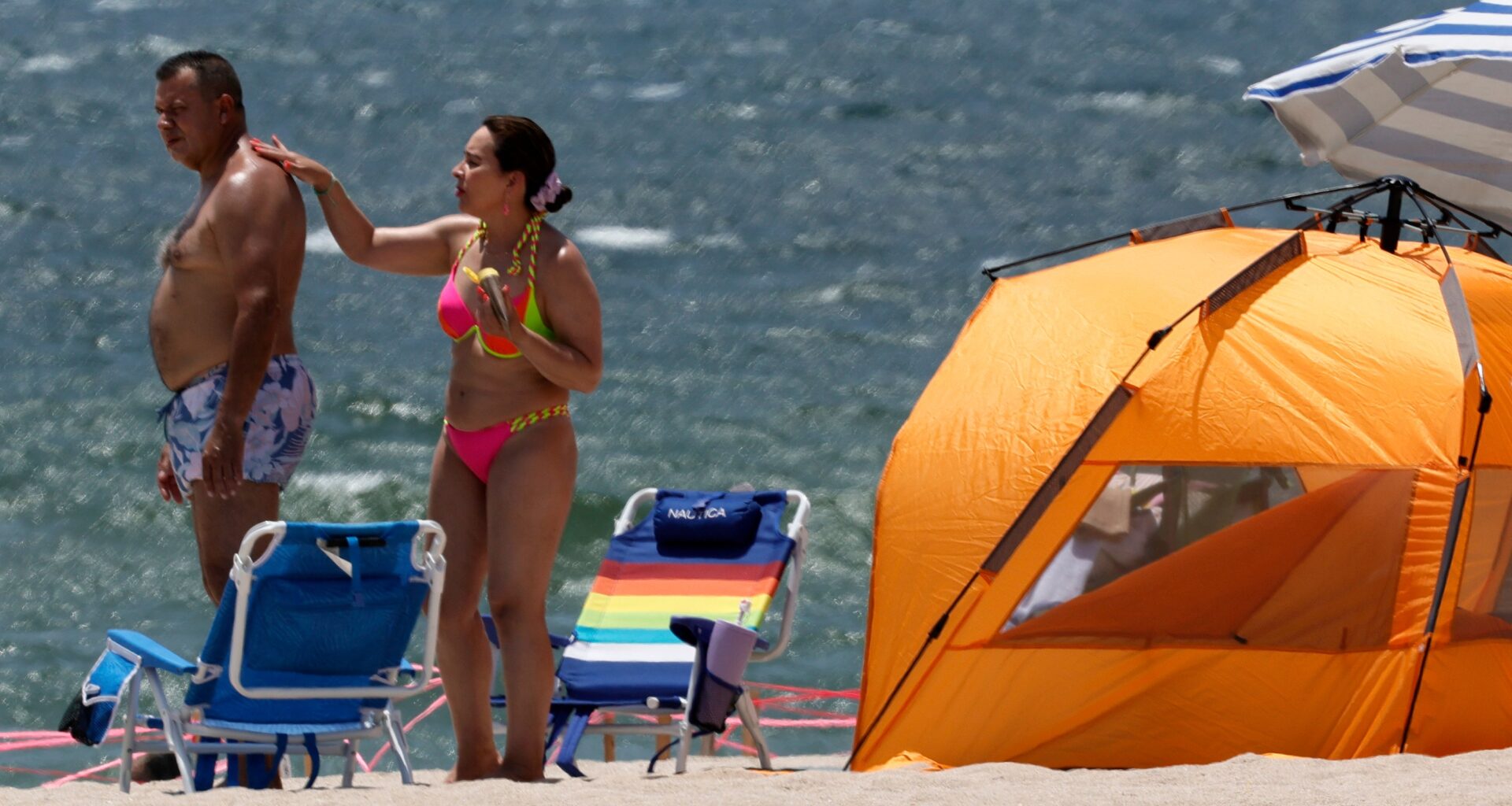
South Florida just lived through its hottest summer ever recorded — and one of its driest in decades.
Meteorological summer wrapped up Monday, and Fort Lauderdale and West Palm Beach just recorded their hottest summers on record, breaking marks that had stood since 2010 for Fort Lauderdale and 2016 for West Palm Beach, according to a National Weather Service Miami report.
Fort Lauderdale averaged 85.3 degrees Fahrenheit this summer, breaking its previous record of 84.6 degrees Fahrenheit, while West Palm Beach averaged 85.1 degrees Fahrenheit, breaking its previous record of 84.8 degrees Fahrenheit.
West Palm Beach’s margin — more than half a degree — was especially meaningful, according to Robert Molleda, meteorologist-in-charge at the National Weather Service’s Miami Forecast Office.
“Our summer temperatures here from year to year typically don’t vary much compared to other parts of the country,” he said. “So when you break a previous record by seven-tenths of a degree, that’s actually pretty significant.”
Miami tied its all-time hottest summer, matching 2023 with an average temperature of 85.6 degrees Fahrenheit. Miami also saw a 56-day streak of 90-degree-plus days, stretching from June into early August.
The heat had a partner: a lack of rain. South Florida’s three major airports landed among their top 10 driest summers on record, with totals running between 8 to nearly 15 inches of rain below normal.
A stubborn dome of high pressure sat over the region for weeks, keeping moisture away. And less rain meant higher temperatures — a familiar pattern in South Florida, but rarely this pronounced, according to forecasters.
Molleda said the dry conditions likely helped amplify the heat. Although dryness doesn’t automatically cause higher temperatures, a dry summer tends to mean less cloud cover, which favors hotter days, he said.
Conditions that normally clear out by June instead lingered all summer, including an “extreme” drought designation over the southern Everglades that persisted through the end of summer. Dry brush also fueled several wildfires that burned for weeks — well past when wildfire season typically winds down.
“We’re seeing wildfires flare up well into August, something that definitely is not common at all,” Molleda said.
Wildfires burned thousands of acres across South Florida this year, including a more than 5,000-acre blaze near the Broward/Palm Beach County line in July and large fires in Palm Beach County. By late August, fires were also burning in parts of Miami-Dade County.
“Those are wildfires that we typically see more of in the spring, definitely not in August,” he said, adding that the lack of rain before and during summer helped keep fires active later than usual.
Heat advisories piled up alongside it, with Miami-Dade and Broward each logging 37 days under advisory, Palm Beach County logging 27 days, and one Excessive Heat Warning issued on Aug. 19.
Molleda said it’s hard to know whether South Florida should expect more summers like this one, since conditions fluctuate year to year.
He’s more concerned that the region is nearing the end of its wet season, when about 70% of the year’s rainfall typically falls, and falling short now would be difficult to make up during the drier months ahead.
The forecast for the next week points to more rain than the region has seen in recent weeks, he said, but “we still have over a month left so, we’ll see how the rest of the wet season plays out.”